UAE Royal’s $500M Trump Crypto Investment Sparks Explosive Geopolitical Scandal
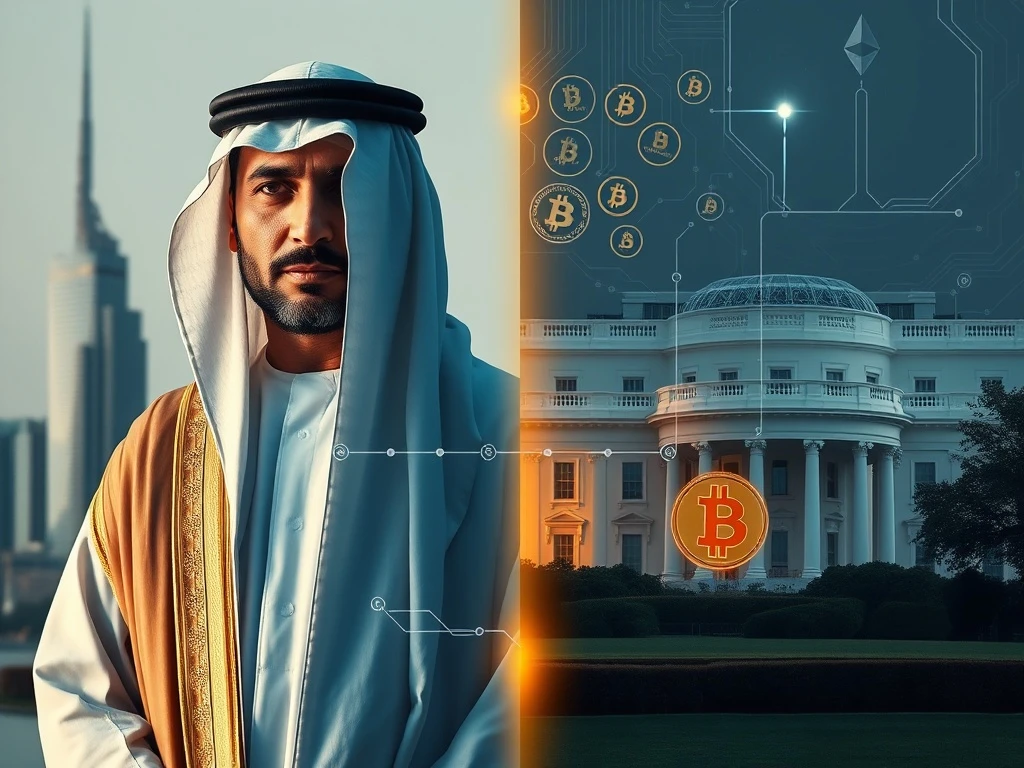
A massive $500 million cryptocurrency investment by a powerful United Arab Emirates royal in a firm linked to the Trump family has ignited a fierce political firestorm in Washington D.C., raising profound questions about influence, national security, and the intersection of digital assets and geopolitics. According to exclusive reports from CNBC and The Wall Street Journal, Sheikh Tahnoon Bin Zayed Al Nahyan, a key national security adviser and brother to the UAE president, directed this substantial capital into World Liberty Financial (WLFI) through his investment vehicle, Aryam Investment, acquiring a 49% stake. Crucially, this transaction preceded a contentious U.S. government decision to approve the export of advanced artificial intelligence semiconductors to the UAE, creating a timeline that has drawn intense scrutiny from lawmakers and ethics watchdogs.
UAE Royal’s $500M Crypto Stake in Trump-Linked Firm
The investment centers on World Liberty Financial (WLFI), a decentralized finance (DeFi) project. While the exact nature of the Trump family linkage is a subject of ongoing reporting, the association has placed the transaction under a powerful microscope. Sheikh Tahnoon is not merely a royal figure; he chairs the UAE’s most influential sovereign wealth funds and runs G42, a sprawling artificial intelligence conglomerate. Consequently, his investment moves carry significant weight in both financial and diplomatic circles. The deal, finalized last year, represents one of the largest known sovereign-linked investments into a cryptocurrency venture with connections to a prominent American political family.
This move occurs against a backdrop of aggressive UAE strategy to position itself as a global hub for both digital assets and state-of-the-art AI technology. The nation has enacted progressive crypto regulations and attracted major industry players. Simultaneously, entities like G42 have pursued partnerships with international tech giants, seeking access to the computational power necessary for AI development. Therefore, Sheikh Tahnoon’s dual roles create a complex web where business investments and national strategic interests are deeply intertwined.
The AI Chip Approval and Mounting Corruption Allegations
Months after the WLFI investment was secured, the U.S. Department of Commerce approved the sale of hundreds of thousands of advanced AI chips from NVIDIA to the UAE. Officials subsequently confirmed that a portion of these chips was designated for G42, the AI company chaired by Sheikh Tahnoon. This sequence of events—a private investment followed by a favorable government decision benefiting the investor’s other ventures—has become the core of the controversy. Critics argue it presents a glaring conflict of interest and potential quid pro quo.
Also read: Bitcoin Treasury Companies Face New Pressure as US-Iran Tensions Shift
Prominent members of the U.S. Congress have voiced severe concerns. Senator Elizabeth Warren, a longtime critic of both cryptocurrency regulatory gaps and corporate influence, labeled the situation a “clear case of corruption.” She has publicly demanded an immediate reversal of the AI chip sale approval, citing the need to safeguard national security and ethical governance. Other lawmakers on relevant oversight committees have echoed these sentiments, calling for investigations into the timing and deliberations behind the export license. The White House and Department of Commerce have firmly denied any wrongdoing, asserting a rigorous and impartial review process focused solely on technical and national security parameters.
Expert Analysis: Working through the New Geopolitics of Tech
Financial compliance and geopolitical analysts highlight the unusual nature of this case. “We are in a new era where cryptocurrency investments, AI supremacy, and geopolitical tap into are converging,” notes Dr. Anya Petrova, a senior fellow at the Center for Strategic Tech Policy. “This incident is a textbook example of the due diligence challenges faced by regulators. A transaction in the decentralized finance space can have ripple effects in traditional geopolitical and trade policy.” Experts point to several key issues:
- Opacity of Crypto Transactions: The inherent pseudonymity and cross-border nature of DeFi investments can obscure beneficial ownership and the full scope of financial relationships.
- Strategic Resource Competition: Advanced AI chips have become a scarce, strategically vital resource, akin to oil in the 20th century, making their allocation a matter of statecraft.
- Blurred Lines: The case highlights the growing difficulty in separating the private commercial interests of influential foreign officials from the public policy decisions of their governments.
A comparative timeline illustrates the tight sequence of events:
Early 2023: Aryam Investment negotiates stake in WLFI.
Mid-2023: $500M investment in WLFI is finalized.
Late 2023: U.S. approves major AI chip exports to UAE, with G42 as a listed end-user.
Early 2024: Reports surface linking the transactions, triggering congressional inquiry.
Broader Implications for Crypto and International Relations
The scandal carries significant implications beyond the immediate parties. For the cryptocurrency industry, it represents a high-profile stress test. Proponents of decentralized finance often argue that it removes intermediaries and reduces corruption. However, critics will use this case to argue that DeFi can also obscure large-scale financial flows with geopolitical consequences, potentially inviting stricter, blanket regulations that could stifle innovation. Regulatory bodies like the SEC and CFTC are likely to scrutinize similar sovereign-linked crypto investments more closely.
For U.S.-UAE relations, the incident introduces friction into a generally strong strategic partnership. The UAE is a key security ally in the Middle East. Balancing ethical governance concerns with broader diplomatic and security interests presents a delicate challenge for the Biden administration. Furthermore, the situation may empower lawmakers seeking to tighten the Committee on Foreign Investment in the United States (CFIUS) rules to cover certain types of digital asset investments that could influence national security.
Finally, the controversy underscores the evolving “tech statecraft” employed by nations like the UAE. By employing sovereign capital to gain footholds in emergent technologies like blockchain and AI, these nations aim to build long-term economic and strategic advantage. This case reveals how those investments can become entangled in the domestic politics of allied nations, creating unforeseen diplomatic challenges.
Conclusion
The $500 million UAE royal investment in the Trump-family-linked crypto firm World Liberty Financial has erupted into a major geopolitical scandal, transcending typical financial news. The core issue is the apparent linkage between a private cryptocurrency transaction and subsequent U.S. government approval for the export of strategically sensitive AI technology. This case powerfully illustrates the new frontiers of conflict in the digital age, where cryptocurrency investments, artificial intelligence, and international diplomacy intersect. It has sparked serious allegations of corruption, prompted congressional demands for action, and forced a re-examination of how nations manage and monitor the flow of both capital and critical technology. The resolution of this scandal will set important precedents for the regulation of digital assets and the ethics of tech-driven geopolitics for years to come.
FAQs
Q1: Who is Sheikh Tahnoon Bin Zayed Al Nahyan?
Sheikh Tahnoon is a senior member of the UAE royal family, the national security adviser of the UAE, and the chairman of several major sovereign investment funds and the AI company G42. He is a highly influential figure in both the financial and strategic sectors of the UAE.
Q2: What is World Liberty Financial (WLFI)?
World Liberty Financial is a decentralized finance (DeFi) project. Details about its specific operations are limited in public reports, but it is the firm that received the $500 million investment from Sheikh Tahnoon’s Aryam Investment vehicle and is reportedly linked to the Trump family.
Q3: What is the alleged conflict of interest?
The alleged conflict arises from the sequence: First, Sheikh Tahnoon’s firm invested heavily in a crypto venture with U.S. political connections. Second, months later, the U.S. government approved the sale of advanced AI chips to the UAE, with some going to G42, another company he runs. Critics argue the investment may have improperly influenced the export decision.
Q4: How has the U.S. government responded?
The White House and Department of Commerce have denied any conflict of interest or improper influence. They maintain that the AI chip export license was reviewed and approved based strictly on national security and technical criteria through the standard regulatory process.
Q5: What could be the long-term impacts of this scandal?
Potential impacts include: stricter U.S. scrutiny of sovereign investments in cryptocurrency and critical tech; increased regulatory pressure on the DeFi sector; temporary strain in U.S.-UAE diplomatic relations; and more comprehensive laws to disclose and review foreign investments that blend finance and technology with geopolitical implications.

This article was produced with AI assistance and reviewed by our editorial team for accuracy and quality.