Trump’s Shocking 25% Tariff Threat on South Korea Sends Ripples Through Global Markets and Crypto
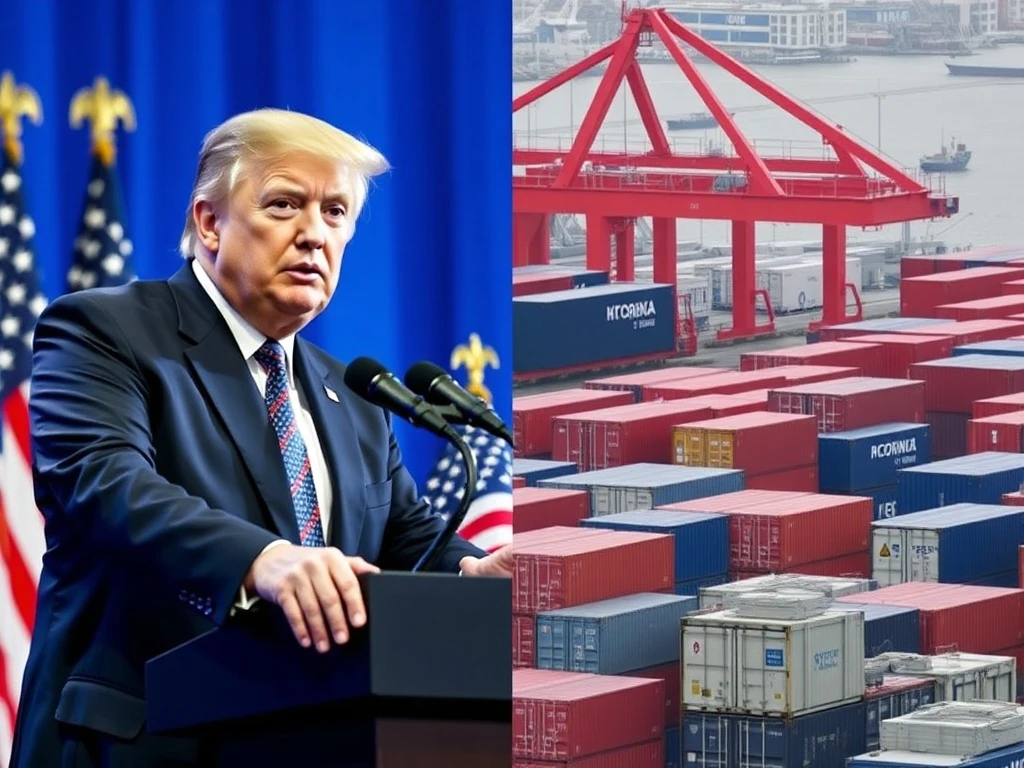
In a move that stunned global financial markets, former President Donald Trump announced plans to impose sweeping 25% tariffs on South Korean goods, citing significant delays in bilateral trade negotiations. This decisive policy shift, revealed on March 15, 2025, immediately triggered volatility across traditional equities and, notably, the cryptocurrency sector, as investors scrambled to assess the implications for digital asset safe-havens.
Trump’s Tariff Announcement and Immediate Market Reactions
President Trump framed the proposed tariff increase as a necessary response to stalled talks. Consequently, he argued that previous agreements failed to adequately protect American manufacturing interests. The announcement specifically targets key South Korean exports like semiconductors, automobiles, and refined petroleum. Financial analysts recorded an immediate sell-off in Asian markets, while the US Dollar Index experienced unusual pressure.
Also read: Bitcoin Strategy Divide: GameStop's 4,710 BTC Hold Contrasts With Nation's Massive Sell-Off
Simultaneously, Bitcoin and Ethereum prices exhibited a sharp, inverse correlation. Market data shows a 4.2% surge in Bitcoin’s value within hours of the news breaking. This pattern mirrors historical behavior during geopolitical trade tensions, where investors often flock to decentralized assets perceived as uncorrelated to traditional fiscal policy. The Korean Won also fell against major currencies, amplifying regional economic uncertainty.
Historical Context of US-South Korea Trade Relations
The United States and South Korea share a complex trade history, governed primarily by the KORUS Free Trade Agreement implemented in 2012. This pact aimed to eliminate nearly 95% of tariffs between the nations within five years. However, subsequent administrations have repeatedly revisited its terms. For instance, the Trump administration previously secured amendments in 2018, focusing on auto exports and steel.
Also read: Bitcoin Volatility Dips Below Major Stocks as European Nation Sells Billions in Crypto Reserves
Experts from the Peterson Institute for International Economics note that the new 25% rate would represent the highest levy on Korean goods in over four decades. A comparative table illustrates the potential escalation:
| Product Category | Previous Rate | Proposed Trump Rate |
|---|---|---|
| Passenger Vehicles | 2.5% | 25% |
| Semiconductors | 0% | 25% |
| Refined Oil Products | 1.4% | 25% |
This drastic hike threatens to increase costs for American consumers and disrupt intricate global supply chains, particularly in technology.
Cryptocurrency as a Geopolitical Hedge
Trade policy shocks often accelerate capital flows into alternative stores of value. Senior analysts at crypto research firm Delphi Digital point to several key mechanisms. First, tariffs can stoke inflation fears, enhancing Bitcoin’s appeal as a hard-capped asset. Second, they may weaken traditional currency valuations, pushing investors toward decentralized finance (DeFi) platforms. Finally, cross-border trade friction can boost utility for blockchain-based settlement networks that bypass traditional banking channels.
Data from CoinMetrics reveals a marked increase in stablecoin transfer volume involving South Korean exchanges following the announcement. This activity suggests merchants and traders may be exploring crypto rails for international settlements to mitigate potential dollar-based transaction risks or capital controls. The situation bears watching, as similar patterns preceded notable crypto rallies during past US-China trade disputes.
Potential Economic Impacts and Sector Analysis
The proposed tariffs carry profound consequences for both economies. South Korea’s export-oriented model faces direct headwinds, potentially slowing GDP growth. Conversely, US industries reliant on Korean components, especially in electronics and automotive manufacturing, may confront higher production costs and supply bottlenecks.
Key impacted sectors include:
- Technology & Semiconductors: Korea’s Samsung and SK Hynix dominate memory chip production. Tariffs could raise prices for everything from smartphones to data servers globally.
- Automotive: Hyundai and Kia represent major players in the US market. Increased costs could alter competitive dynamics with American automakers.
- Cryptocurrency Mining: Given Korea’s role in semiconductor fabrication, tariffs on chipmaking equipment could indirectly affect the availability and cost of mining hardware worldwide.
Market strategists warn of potential stagflationary pressures—slowing growth coupled with rising prices—which historically create a complex environment for both traditional and digital assets.
Legal and Implementation Timeline
Implementing such tariffs requires a formal process. The President must typically cite a specific legal authority, such as Section 301 of the Trade Act or declare a national emergency under the International Emergency Economic Powers Act (IEEPA). Following an announcement, a public comment period and hearings often precede the final implementation, which could take 60 to 180 days.
This timeline provides a window for further negotiation. However, President Trump’s statement indicated frustration with the pace of current talks, suggesting a shorter runway. Legal experts anticipate immediate challenges from affected US industries and potentially at the World Trade Organization (WTO), though its dispute mechanism has faced criticism from the US in recent years.
Expert Insights on Long-Term Crypto Implications
“Geopolitical fragmentation is a powerful catalyst for cryptocurrency adoption,” notes Dr. Elena Torres, Chief Economist at Blockchain Insights Group. “When trust in multilateral trade systems erodes, actors seek neutral, borderless platforms. We observe increased institutional interest in crypto derivatives as hedging tools against precisely this kind of policy risk.”
Furthermore, prolonged trade tensions could incentivize the development of blockchain-based trade finance solutions. These platforms use smart contracts to automate letters of credit and reduce counterparty risk, offering an efficiency advantage if traditional trade routes become more costly or administratively burdensome.
Conclusion
The announcement of 25% tariffs on South Korean goods by President Trump marks a significant escalation in trade policy with far-reaching consequences. While the immediate focus rests on traditional economic channels, the ripple effects into the cryptocurrency ecosystem are already evident. This event underscores the growing interconnection between geopolitical actions, traditional finance, and digital asset markets. As negotiations unfold, market participants will closely monitor capital flows, regulatory responses, and technological adoption, all of which could shape the financial landscape for years to come. The situation reaffirms the critical importance of monitoring fiscal policy developments for anyone engaged in the global crypto economy.
FAQs
Q1: What specific South Korean goods would the 25% Trump tariffs affect?
The tariffs would broadly target major export categories, including passenger vehicles, semiconductors, auto parts, refined petroleum products, and machinery. The exact product list would be finalized during the implementation process.
Q2: How do trade tariffs like these impact Bitcoin and cryptocurrency prices?
Tariffs can create economic uncertainty and inflation concerns. Historically, such conditions have led some investors to allocate funds to cryptocurrencies like Bitcoin, which are perceived as decentralized hedges against traditional market volatility and currency devaluation, sometimes causing short-term price increases.
Q3: Has the US imposed high tariffs on South Korea before?
While the KORUS FTA has been modified, the proposed 25% rate is unprecedented in the modern trade relationship. Previous adjustments focused on specific sectors like steel and automobiles but did not involve across-the-board increases to such a high level.
Q4: Could this push South Korea to adopt or regulate cryptocurrency more favorably?
Potentially. Economic pressure may encourage nations to explore financial innovations. South Korea, already a major crypto market, could see increased political and commercial interest in blockchain technology for trade settlement and as an alternative asset class to bolster economic resilience.
Q5: What is the likely timeline for these tariffs to take effect?
If pursued, the process typically involves a formal notice, a comment period, and finalization. This could take several months, providing time for further negotiations. However, the executive branch has significant leverage to accelerate actions under certain legal authorities.

This article was produced with AI assistance and reviewed by our editorial team for accuracy and quality.