Trump Iran Tariff: Decisive Executive Order Slaps 25% Levy on Nations Trading with Tehran
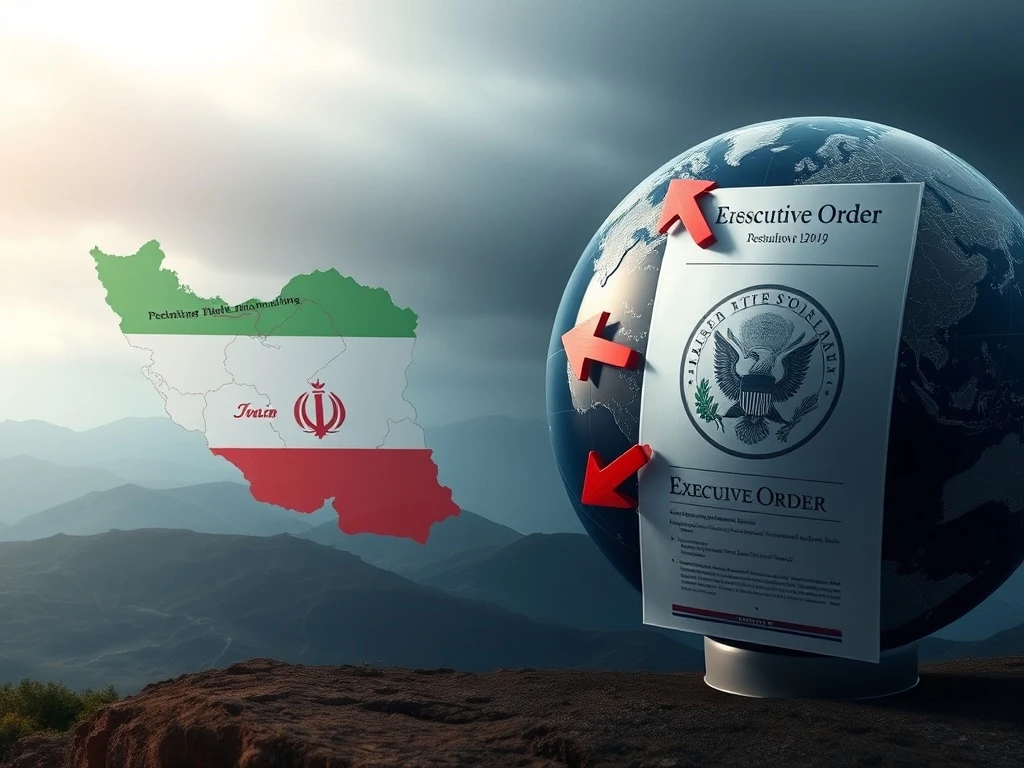
WASHINGTON, D.C. – In a significant escalation of economic pressure, President Donald Trump has issued a decisive executive order imposing a 25% tariff on any nation that engages in trade with Iran, a move first reported by Walter Bloomberg that immediately sent shockwaves through global diplomatic and financial circles. This aggressive policy shift fundamentally alters the United States’ approach to containing Tehran, moving beyond traditional sanctions to directly penalize third-party countries. Consequently, the order threatens to fracture international consensus and redraw global energy and trade routes. The administration frames this action as a necessary measure to cripple the Iranian regime’s funding sources. However, allies and trade partners now face a stark ultimatum: sever commercial ties with Iran or incur substantial new costs on all exports to the world’s largest economy.
Analyzing the Trump Iran Tariff Executive Order
The executive order, signed by President Trump, authorizes the U.S. Treasury and Customs and Border Protection to levy a 25% tariff on goods imported from countries that continue to trade with Iran. This mechanism represents a novel application of tariff policy as a foreign policy tool. Previously, U.S. pressure campaigns relied on secondary sanctions targeting specific entities. This new blanket tariff, however, casts a much wider net. It applies universally, regardless of the specific goods or the nature of the trading entity. The Office of the U.S. Trade Representative will reportedly publish a list of affected countries within 90 days. Furthermore, the order includes provisions for periodic review and adjustment, suggesting a dynamic and long-term strategy.
Legal experts point to authorities under the International Emergency Economic Powers Act (IEEPA) and the National Emergencies Act as the likely foundations for this action. The administration has declared Iran’s activities a continuing threat to U.S. national security. This declaration provides the legal basis for sweeping economic measures. Historically, tariffs have been used for trade and economic objectives, not as a broad foreign policy sanction of this scale. Therefore, this move may face legal challenges on constitutional grounds concerning the delegation of congressional trade authority. Nonetheless, the immediate effect is a powerful economic deterrent.
Historical Context and Policy Evolution
This tariff order did not emerge in a vacuum. It follows years of escalating tension since the U.S. withdrawal from the Joint Comprehensive Plan of Action (JCPOA), or Iran nuclear deal, in 2018. The Trump administration subsequently reinstated a “maximum pressure” campaign using primary sanctions. These sanctions targeted Iran’s oil exports, banking sector, and key industries. While effective in crippling Iran’s economy, they created friction with European allies who remained in the JCPOA. The new 25% tariff escalates this friction into a direct economic confrontation with those allies and other trading partners. It marks a clear shift from pressuring Iran to pressuring the global community to isolate Iran.
Also read: Bitcoin Treasury Companies Face New Pressure as US-Iran Tensions Shift
Immediate Global Reactions and Diplomatic Fallout
International reactions to the Iran trade tariff have been swift and largely critical. European Union officials expressed “deep regret” and are reportedly examining countermeasures. A spokesperson for the European Commission stated the bloc remains committed to the JCPOA and will work to protect its legitimate trade with Iran. Similarly, China, a major importer of Iranian oil, condemned the move as “unilateral bullying” and a violation of international trade norms. Meanwhile, Japan and South Korea, key U.S. allies in Asia, are conducting urgent internal reviews to assess the potential damage to their economies.
The diplomatic fallout is potentially severe. This policy directly challenges the concept of “strategic autonomy” championed by the EU. It also forces nations to choose between economic relations with the U.S. and Iran. For many, this is not a choice at all. The U.S. market is indispensable. Consequently, the order may succeed in further isolating Iran economically. However, it risks alienating allies and pushing them to accelerate efforts to bypass the U.S. financial system. Initiatives like the EU’s Instrument in Support of Trade Exchanges (INSTEX) for humanitarian trade with Iran may gain renewed urgency and scope.
- European Union: Exploring legal countermeasures and reinforcing INSTEX mechanism.
- China: Strong condemnation; likely to seek alternative financial channels.
- India: Major strategic partner caught between energy needs and U.S. ties; reviewing options.
- Turkey: Neighboring country with significant trade; seeking possible exemptions.
- Russia: Criticized the move as “illegitimate,” potentially strengthening ties with Iran.
Economic and Market Impact Analysis
The imposition of a 25% tariff on trading partners carries profound implications for global markets. Initially, oil prices experienced volatility as traders assessed the risk to Iranian crude supplies and potential disruptions to global trade flows. Countries that continue importing Iranian hydrocarbons will see their U.S.-bound goods become significantly less competitive. This dynamic could lead to a reshuffling of global supply chains. For instance, a manufacturer in a country facing the tariff may relocate final assembly to a nation not trading with Iran to avoid the levy.
The broader impact extends to currency markets and inflation. A sustained trade disruption could weaken the currencies of affected nations against the U.S. dollar. Simultaneously, U.S. importers and consumers may face higher prices for goods from tariffed countries. The following table outlines potential sector-specific impacts:
| Sector | Potential Immediate Impact | Long-Term Strategic Shift |
|---|---|---|
| Energy (Oil & Gas) | Price volatility, supply reassessment | Accelerated search for non-Iranian suppliers; investment in alternatives |
| Manufacturing | Increased cost for U.S.-imported components | Supply chain diversification away from affected countries |
| Agriculture | Loss of competitiveness for exporters in tariffed nations | Search for new markets to replace potential U.S. sales loss |
| Financial Services | Increased compliance costs and transaction scrutiny | Growth of non-dollar payment systems to allow continued Iran trade |
Expert Perspectives on Market Stability
Financial analysts emphasize the risk of increased global economic fragmentation. “This policy weaponizes U.S. market access to an unusual degree,” noted a senior fellow at the Council on Foreign Relations. “While it may achieve short-term compliance, it incentivizes the rest of the world to develop parallel systems that ultimately diminish U.S. economic influence.” Meanwhile, trade law specialists highlight the potential for retaliatory tariffs. Affected countries could challenge the measure at the World Trade Organization (WTO), though the U.S. may cite national security exemptions under Article XXI of the GATT. This sets a contentious precedent that other nations might later exploit for their own trade restrictions.
Strategic Aims and Regional Security Implications
The Trump administration’s strategic objectives with this executive order are multifaceted. Primarily, it aims to exhaust the Iranian regime’s financial resources, thereby curtailing its regional activities. These activities include support for proxy groups in Syria, Lebanon, Yemen, and Iraq. By imposing a cost on Iran’s trading partners, the U.S. seeks to create a global economic quarantine. This quarantine is designed to force Tehran back to the negotiating table on terms favorable to Washington. The desired terms likely include a more restrictive nuclear deal and limits on ballistic missile development and regional influence.
Regionally, the move is welcomed by U.S. allies Israel and Saudi Arabia. Both nations view Iran as their primary strategic adversary. They have long advocated for tougher international action. However, the policy also increases instability risks. A cornered Iranian regime may respond with asymmetric aggression, such as naval incidents in the Strait of Hormuz or attacks via its proxies. Additionally, the economic hardship in Iran could exacerbate domestic unrest. The U.S. must balance its pressure campaign with careful management of escalation risks. The next few months will be critical in observing Iran’s response and the cohesion of the international front.
Conclusion
President Trump’s executive order imposing a 25% tariff on countries trading with Iran marks a decisive moment in international economic statecraft. This Trump Iran tariff moves beyond traditional sanctions, directly challenging U.S. allies and trading partners to choose sides. The immediate effects will ripple through global energy markets and supply chains, while the long-term consequences may include a more fragmented global trading system and strengthened resolve among nations to bypass U.S. financial dominance. The order’s success in altering Iran’s behavior remains uncertain, but its impact on diplomatic relations and global economic stability is already profound. As nations formulate their responses, the world watches to see if this remarkable use of tariff power will achieve its strategic aims or accelerate the decline of cooperative multilateralism.
FAQs
Q1: What exactly does President Trump’s executive order on Iran tariffs do?
The order mandates a 25% tariff on all goods imported into the United States from any country that continues to engage in trade with Iran. It uses U.S. market access as utilize to force global economic isolation of Tehran.
Q2: Which countries are most affected by this Iran trade tariff?
Countries with significant existing trade ties to both Iran and the U.S. are most affected. This includes major U.S. allies and partners like the European Union nations, Japan, South Korea, India, and Turkey, as well as strategic competitors like China.
Q3: How is this different from previous U.S. sanctions on Iran?
Previous secondary sanctions targeted specific foreign companies and banks doing business with Iran. This new policy is a blanket, country-level tariff. It applies to all goods from an affected nation, regardless of whether a specific exporter has any connection to Iran, making it broader and more punitive for entire economies.
Q4: Can other countries legally challenge this 25% tariff?
Yes. Affected countries can challenge the measure at the World Trade Organization (WTO). The U.S. will likely defend it under the national security exception (GATT Article XXI). However, this is a legally contentious area and such a case could take years to resolve, leaving the tariff in effect in the meantime.
Q5: What are the potential consequences for global trade and the U.S. economy?
Potential consequences include higher costs for U.S. importers and consumers, disruption of established supply chains, increased global economic uncertainty, and the accelerated development of alternative financial and trading systems by other nations to circumvent U.S. dominance and sanctions power.

This article was produced with AI assistance and reviewed by our editorial team for accuracy and quality.