Trump’s Shocking Military Option for Greenland: Analyzing Arctic Sovereignty and Geopolitical Strategy
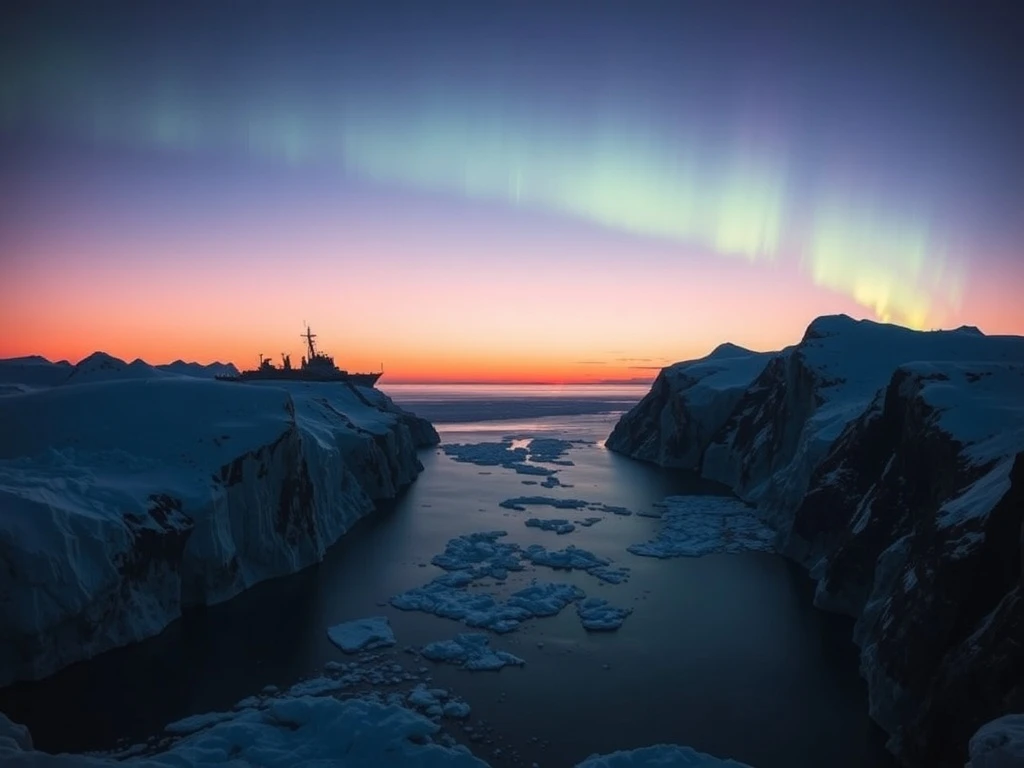
WASHINGTON, D.C., March 2025 – President Donald Trump’s recent statement about not ruling out military options for Greenland has ignited intense geopolitical analysis and strategic discussions about Arctic sovereignty. According to intelligence reports from Solid Intel, the former president’s comments have resurfaced longstanding debates about territorial claims and resource competition in the rapidly changing Arctic region. This development comes amid increasing international focus on polar territories and their strategic military importance.
Trump’s Greenland Military Option Statement
President Trump’s comments about Greenland military options represent a significant geopolitical development. The statement emerged during discussions about Arctic strategy and territorial sovereignty. Historically, Greenland has maintained autonomous governance under Danish sovereignty since 1979. However, the island’s strategic location and resource potential have attracted international attention for decades. The United States maintains Thule Air Base in northwestern Greenland, established in 1943 through a defense agreement with Denmark. This base serves as a critical early-warning radar installation for North American aerospace defense.
Geopolitical analysts immediately recognized the implications of Trump’s statement. The Arctic region contains approximately 13% of the world’s undiscovered oil and 30% of undiscovered natural gas. Furthermore, melting ice caps have opened new shipping routes, including the Northern Sea Route and Northwest Passage. These developments have transformed the Arctic into a zone of increasing strategic competition. Russia has significantly expanded its military presence in the region, reopening Soviet-era bases and establishing new facilities. China has declared itself a “near-Arctic state” and invested heavily in polar research and infrastructure projects.
Historical Context of Greenland Geopolitics
The United States has maintained strategic interests in Greenland since World War II. In 1946, President Harry Truman offered Denmark $100 million for Greenland, but the proposal was rejected. The Cold War intensified American interest in Greenland’s strategic position for monitoring Soviet activities. The 1951 Defense of Greenland Agreement formalized U.S. military presence through Thule Air Base. This agreement remains in effect today, though its terms have been periodically renegotiated.
Also read: Bitcoin Treasury Companies Face New Pressure as US-Iran Tensions Shift
Greenland’s geopolitical significance has evolved with climate change and technological advancements. The island’s location provides optimal positioning for satellite tracking, missile detection, and communications infrastructure. Additionally, Greenland possesses substantial mineral resources, including rare earth elements critical for modern technology. These elements are essential for manufacturing smartphones, electric vehicles, and military equipment. China currently dominates global rare earth production, controlling approximately 80% of processing capacity. Diversifying supply chains has become a strategic priority for Western nations.
| Country | Military Bases | Icebreakers | Recent Investments |
|---|---|---|---|
| Russia | 20+ | 40+ | $10B+ since 2014 |
| United States | 3 | 2 | $4.2B planned |
| Canada | 8 | 15 | $1.7B announced |
| Norway | 4 | 1 | $300M annual |
Strategic Implications and Expert Analysis
Military strategists emphasize Greenland’s unique advantages for northern hemisphere defense systems. The island’s position enables comprehensive radar coverage of potential missile trajectories from multiple vectors. Furthermore, Greenland provides strategic depth for North American defense architectures. Retired General James Mattis, former Secretary of Defense, previously emphasized Arctic readiness as essential for national security. He noted that “the Arctic is a key avenue of approach to North America” requiring sustained attention and investment.
International law experts highlight the complex legal framework governing Arctic territories. The United Nations Convention on the Law of the Sea (UNCLOS) establishes guidelines for maritime boundaries and resource claims. However, the United States has not ratified this convention, creating potential complications for Arctic policy. Territorial disputes in the region generally involve continental shelf extensions rather than land sovereignty. Greenland’s extensive continental shelf could provide additional resource claims beyond its territorial waters.
Diplomatic Reactions and International Response
Danish officials responded cautiously to Trump’s statement about Greenland military options. The Danish Ministry of Foreign Affairs reaffirmed Greenland’s status as an autonomous territory within the Kingdom of Denmark. Meanwhile, Greenland’s own government emphasized its right to self-determination under the 2009 Self-Government Act. This legislation grants Greenland increasing autonomy, particularly regarding resource management. The act includes provisions for potential independence if Greenland’s population approves such a move through referendum.
International reactions revealed broader concerns about Arctic militarization. NATO Secretary General previously warned against escalating tensions in the High North. The alliance has increased Arctic exercises and surveillance activities in response to Russian military expansion. Canada, another Arctic nation, has consistently emphasized sovereignty protection through the North American Aerospace Defense Command (NORAD). This binational command coordinates air defense between the United States and Canada, with Greenland playing a key role in early warning systems.
- Strategic Location: Greenland’s position between North America and Europe provides unique military advantages
- Resource Potential: Untapped mineral deposits and fishing resources increase Greenland’s geopolitical value
- Climate Change Impact: Melting ice creates new shipping routes and accessibility to previously inaccessible areas
- Technological Advancements: Improved ice navigation and resource extraction technologies change economic calculations
Economic Considerations and Resource Competition
Greenland’s economic potential extends beyond military considerations. The island possesses substantial untapped resources that could transform its economy and global supply chains. Rare earth element deposits in southern Greenland contain an estimated 38.5 million metric tons of rare earth oxides. These materials are critical for renewable energy technologies, including wind turbines and solar panels. Additionally, Greenland’s waters contain valuable fisheries, while potential oil and gas reserves remain largely unexplored due to technical challenges and environmental concerns.
Investment patterns reveal growing international interest in Greenland’s resources. Chinese companies have explored mining opportunities, while European and Canadian firms have conducted geological surveys. The United States has supported Greenlandic development through various programs, including educational exchanges and business initiatives. Economic development presents complex challenges for Greenland’s government, balancing environmental protection with economic opportunity. Tourism has emerged as a growing industry, with cruise ship traffic increasing as Arctic waters become more navigable.
Environmental and Indigenous Perspectives
Greenland’s indigenous Inuit population maintains deep cultural connections to the land and sea. Their traditional knowledge provides valuable insights into Arctic ecosystems and climate patterns. Many Greenlanders express concern about rapid environmental changes affecting hunting and fishing traditions. Simultaneously, economic development offers potential solutions to social challenges, including high living costs and limited employment opportunities. The balance between preservation and progress remains a central political issue in Greenlandic society.
Climate scientists emphasize Greenland’s global importance beyond geopolitical considerations. The Greenland ice sheet contains enough water to raise global sea levels by approximately 7.2 meters if completely melted. Current melting rates contribute significantly to sea level rise, affecting coastal communities worldwide. Scientific research stations in Greenland provide key data for climate models and predictions. International cooperation in climate science continues despite geopolitical tensions, reflecting the shared global interest in understanding Arctic changes.
Conclusion
President Trump’s statement about Greenland military options highlights the complex interplay of sovereignty, strategy, and resources in the Arctic region. The evolving geopolitical sector requires careful navigation of international law, diplomatic relations, and environmental considerations. Greenland’s unique position ensures continued attention from global powers seeking strategic advantages and resource security. As climate change transforms the High North, policies must balance national interests with international cooperation and respect for indigenous rights. The Greenland military option discussion ultimately reflects broader questions about sovereignty, security, and sustainable development in a rapidly changing world.
FAQs
Q1: What exactly did President Trump say about Greenland?
According to intelligence reports from Solid Intel, President Trump stated he would not rule out the possibility of using military force in Greenland, though specific context and conditions were not detailed in the initial reporting.
Q2: Why is Greenland strategically important?
Greenland’s location provides optimal positioning for early warning systems, satellite tracking, and northern hemisphere defense. Its resources include rare earth elements and potential energy reserves, while melting ice opens new shipping routes.
Q3: What is Greenland’s current political status?
Greenland is an autonomous territory within the Kingdom of Denmark. The 2009 Self-Government Act grants Greenland increasing control over domestic affairs, with foreign and defense policy remaining under Danish authority.
Q4: How have other countries responded to Trump’s statement?
Danish officials reaffirmed Greenland’s status within their kingdom, while international observers expressed concern about Arctic militarization. NATO has increased Arctic exercises in response to broader regional security developments.
Q5: What are the legal implications of military action in Greenland?
Any military action would involve complex international law considerations, including Danish sovereignty, UN conventions, and indigenous rights. The 1951 Defense Agreement governs current U.S. military presence through Thule Air Base.

This article was produced with AI assistance and reviewed by our editorial team for accuracy and quality.