Trump’s Bold Arctic Gambit: US Secures Critical Military Access Rights in Greenland
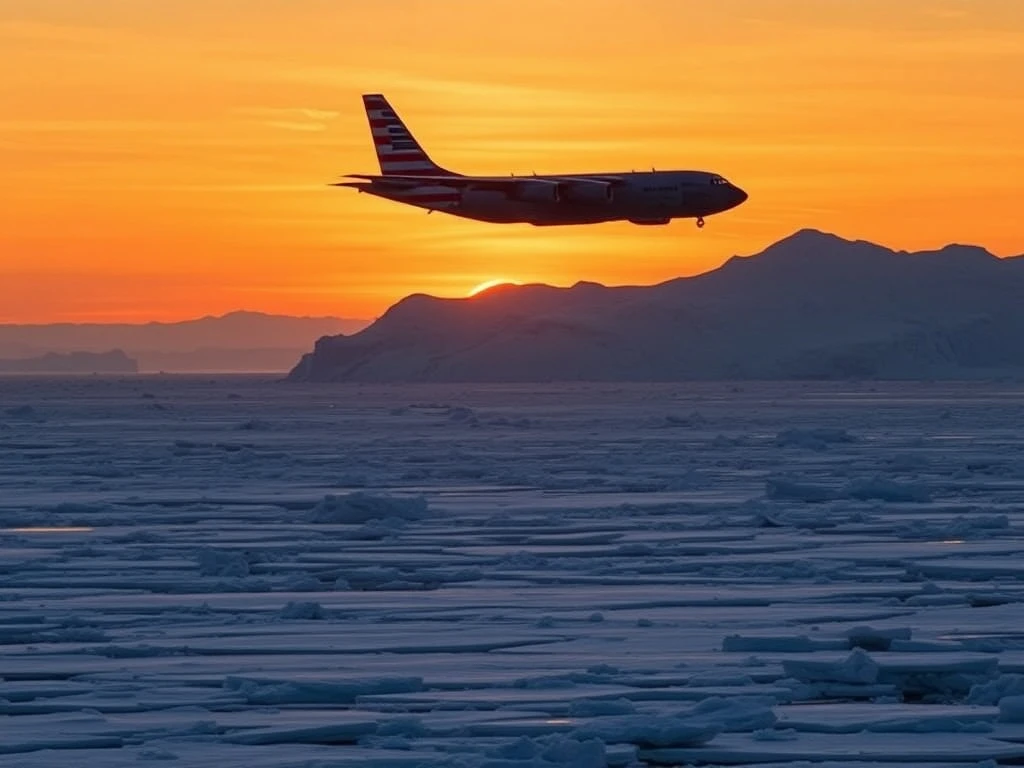
WASHINGTON, D.C., March 2025 – In a significant geopolitical development, former President Donald Trump announced today that the United States will secure comprehensive military access rights in Greenland, fundamentally altering Arctic security dynamics and potentially reshaping relations with Denmark and regional powers. This strategic declaration, reported by Walter Bloomberg, represents the latest chapter in America’s evolving approach to polar security and resource competition.
Trump’s Greenland Military Access Announcement Reshapes Arctic Strategy
President Trump’s statement about securing all necessary military access rights in Greenland follows years of strategic discussions about Arctic positioning. Consequently, this announcement signals a more assertive American posture in a region experiencing rapid geopolitical transformation. The United States maintains Thule Air Base in northern Greenland, which serves as a crucial early-warning radar installation. However, expanded access rights could enable additional military infrastructure, enhanced surveillance capabilities, and greater operational flexibility.
Geopolitical analysts immediately recognized the strategic implications of this development. Greenland’s location provides unique advantages for monitoring northern sea routes and potential missile trajectories. Furthermore, climate change continues to open Arctic waterways, increasing commercial and military traffic. The United States seeks to counterbalance Russian and Chinese activities in the region through this enhanced access. Russia has significantly modernized its Arctic military capabilities over the past decade. Meanwhile, China declares itself a “near-Arctic state” and pursues scientific and economic interests there.
Historical Context and Diplomatic Background
The United States has maintained a strategic interest in Greenland since World War II. In 1946, President Harry Truman actually offered to purchase Greenland from Denmark for $100 million. Denmark rejected that offer, but the two nations subsequently established the 1951 Defense of Greenland Agreement. This agreement granted the U.S. rights to operate Thule Air Base. Recent years have witnessed renewed American interest in Greenland’s strategic value. In 2019, President Trump confirmed his interest in purchasing the territory, generating diplomatic tension with Denmark.
Greenland operates as an autonomous territory within the Kingdom of Denmark. It manages most domestic affairs independently, but Denmark handles foreign and security policy. Therefore, any military access agreement requires negotiation with both Greenland’s Home Rule government and the Danish government in Copenhagen. This complex diplomatic arrangement adds layers to the current announcement. Greenlandic public opinion generally favors greater independence from Denmark but remains cautious about extensive foreign military presence.
Strategic Implications for Arctic Security Architecture
Military experts emphasize several potential impacts of expanded U.S. access rights in Greenland. First, enhanced surveillance capabilities could improve domain awareness across the Arctic region. Second, prepositioned equipment and facilities might enable faster response times during emergencies or conflicts. Third, increased American presence could strengthen deterrence against potential adversaries. Fourth, scientific research partnerships might expand alongside military cooperation.
The Arctic Council, comprising eight circumpolar nations including the United States, Russia, and Denmark, traditionally emphasizes environmental protection and scientific cooperation. However, growing military activities test this cooperative framework. NATO allies, particularly Canada and Norway, monitor these developments closely. They coordinate their own Arctic strategies with American initiatives. Regional security experts note that balanced approaches must consider indigenous communities’ rights and environmental protections alongside defense requirements.
| Country | Primary Arctic Base | Recent Investments |
|---|---|---|
| United States | Thule Air Base (Greenland) | Radar modernization, runway upgrades |
| Russia | Nagurskoye (Alexandra Land) | New airfields, anti-aircraft systems |
| Norway | Evenes Air Station | F-35 operations, allied training |
| Canada | Nanisivik Naval Facility | Refueling station, surveillance |
Economic and Resource Considerations Beyond Military Access
Greenland possesses substantial natural resources, including rare earth elements, oil, and gas deposits. These resources gain accessibility as ice recedes, attracting international interest. China has invested in mining projects and research stations across Greenland. Consequently, American military access could intersect with economic competition for these resources. The United States might seek to secure supply chains for critical minerals through strategic partnerships.
Greenland’s economy currently relies heavily on fishing and annual block grants from Denmark. Economic diversification remains a priority for the local government. Infrastructure development accompanying military access could bring investment and jobs. However, environmental concerns persist about increased activity in fragile ecosystems. Indigenous Inuit communities, who comprise nearly 90% of Greenland’s population, emphasize sustainable development that respects traditional livelihoods.
Tourism represents another growing sector potentially affected by military expansion. Greenland’s pristine landscapes attract adventure travelers and cruise ships. Increased military flights and operations might require careful coordination with civilian airspace and sensitive wildlife areas. The Greenlandic government balances these competing priorities through its self-rule authority.
Expert Analysis on Implementation Challenges
Security analysts identify several implementation challenges for expanded military access. First, Denmark must approve any significant changes to existing defense agreements. Second, Greenland’s Parliament (Inatsisartut) possesses veto power over matters affecting its territory. Third, financial arrangements require negotiation, as Greenland might seek compensation or infrastructure investments. Fourth, environmental impact assessments will likely precede any construction projects.
Legal experts reference the United Nations Convention on the Law of the Sea (UNCLOS), which governs maritime rights in Arctic waters. The United States has not ratified UNCLOS but generally observes its provisions. Extended continental shelf claims add complexity to regional governance. Military activities must respect exclusive economic zones and environmental protocols. Diplomatic channels between Washington, Copenhagen, and Nuuk will see intensified activity following this announcement.
Regional Reactions and Alliance Dynamics
Initial reactions from regional capitals reflect cautious assessment. Danish officials acknowledge ongoing defense consultations with American counterparts but emphasize Greenland’s consent as essential. Norwegian and Canadian defense ministries monitor developments for implications on joint Arctic operations. Russian media outlets portray the announcement as American expansionism threatening regional stability. Chinese foreign ministry statements urge all parties to respect Arctic peace and scientific cooperation.
NATO’s collective defense commitment extends to member territories, including Danish and Canadian Arctic areas. Enhanced American capabilities in Greenland could strengthen alliance deterrence in the High North. However, non-NATO Arctic states like Sweden and Finland maintain their own security partnerships. The European Union’s Arctic policy emphasizes climate action and sustainable development, potentially creating policy alignment challenges with increased militarization.
Key considerations for regional stakeholders include:
- Denmark’s dual role as NATO ally and Greenland’s sovereign authority
- Indigenous rights under the UN Declaration and ILO Convention 169
- Environmental protocols for military operations in sensitive areas
- Search and rescue coordination across vast, remote territories
- Scientific research continuity amid security developments
Conclusion
President Trump’s announcement regarding US military access rights in Greenland represents a pivotal moment in Arctic security policy. This development reflects broader strategic competition in a rapidly changing region. Successful implementation requires careful diplomacy with Denmark and Greenland, respect for indigenous communities, and environmental stewardship. The United States seeks to protect national interests while maintaining stability in the circumpolar north. Consequently, this Greenland military access initiative will likely influence Arctic geopolitics for years to come, affecting alliance relationships, resource development, and regional security architectures.
FAQs
Q1: What existing US military presence exists in Greenland?
The United States operates Thule Air Base in northwestern Greenland under a 1951 defense agreement with Denmark. This base provides missile warning, space surveillance, and satellite command capabilities.
Q2: Does Greenland have authority over military agreements?
Greenland exercises self-government on most internal matters, but Denmark retains authority over foreign, security, and defense policy. Both governments must approve significant changes to military arrangements.
Q3: How does this affect relations with Russia?
Russia has increased its Arctic military presence significantly. Expanded US access in Greenland may be perceived as counterbalancing Russian activities, potentially escalating regional tensions.
Q4: What environmental concerns exist?
Arctic ecosystems are particularly sensitive. Increased military activity raises concerns about pollution, disturbance to wildlife, and impacts on indigenous hunting and fishing traditions.
Q5: How might this announcement affect climate research?
Scientific cooperation has traditionally characterized Arctic relations. Military expansion requires coordination with research institutions to ensure climate monitoring and environmental studies continue uninterrupted.
This article was produced with AI assistance and reviewed by our editorial team for accuracy and quality.