Trump’s Strategic Call: Demands a Fed Chair Like Alan Greenspan to Reignite Growth
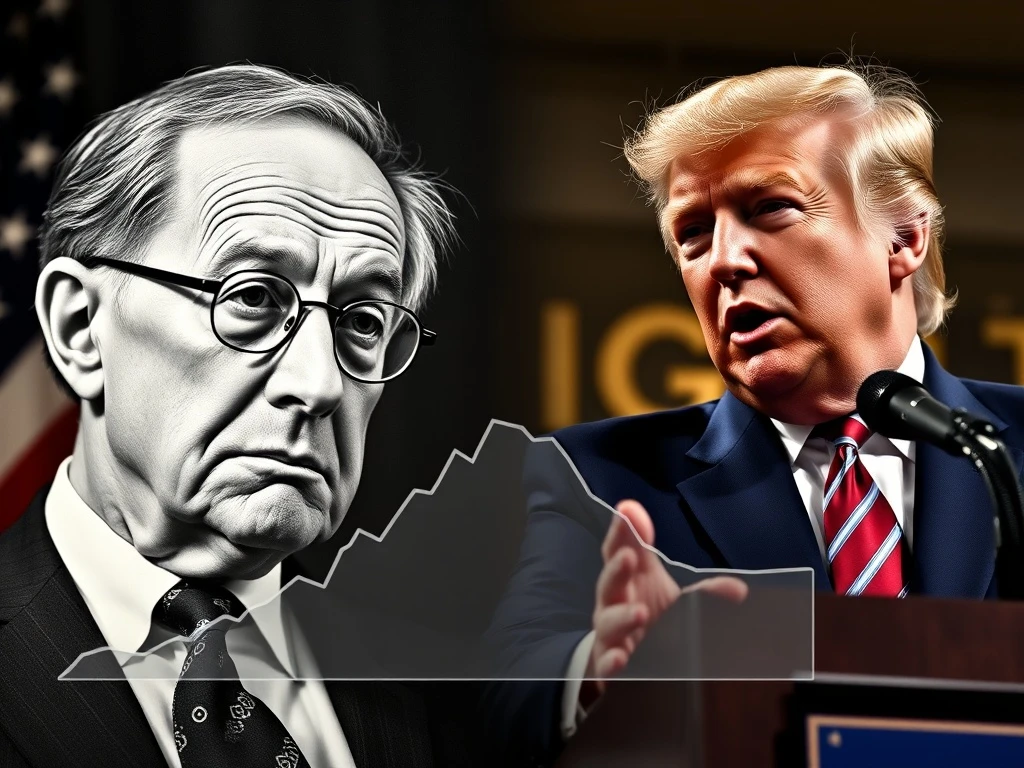
In a significant intervention into monetary policy discourse, former President Donald Trump has explicitly named Alan Greenspan, the influential Federal Reserve chairman of the 1990s, as his ideal model for future central bank leadership. This declaration, made during a recent campaign event, immediately reverberated through financial markets and policy circles, signaling a potential push for a more accommodative Federal Reserve. Consequently, analysts are scrutinizing the historical parallels and the profound implications for interest rates, inflation, and economic growth in a potential second Trump term.
Trump’s Vision for the Federal Reserve Chair
Donald Trump’s public admiration for Alan Greenspan’s tenure represents a clear strategic message. Specifically, he praised the monetary policy framework of the Greenspan era, describing it as both “growth-friendly” and “flexible.” Furthermore, this statement is widely interpreted as renewed, indirect pressure on the current Federal Reserve to pivot toward interest rate cuts. Historically, Trump has frequently criticized the Fed for maintaining rates he considers too high, arguing they stifle economic expansion. Therefore, his invocation of Greenspan serves as a powerful rhetorical benchmark against which he measures current policy.
The immediate context for these remarks is a complex economic space. For instance, the Federal Reserve, under Chair Jerome Powell, has recently concluded an aggressive tightening cycle to combat post-pandemic inflation. However, with price pressures showing signs of moderation, the debate has shifted toward the timing and pace of potential rate reductions. Trump’s comments inject a political dimension into this technically driven discussion. They suggest a preference for a central bank that prioritizes stimulating economic activity, potentially even at the risk of higher inflation, a hallmark of the so-called “Greenspan Put.”
The Greenspan Legacy: A Mixed Blueprint
To understand Trump’s reference, one must examine Alan Greenspan’s 18-year reign from 1987 to 2006. His tenure, often called the “Great Moderation,” was characterized by:
Also read: Bitcoin Treasury Companies Face New Pressure as US-Iran Tensions Shift
- Pragmatic Flexibility: Greenspan was known for a data-dependent, sometimes opaque approach, avoiding strict policy rules.
- Market Sensitivity: He was perceived as responsive to financial market turmoil, famously orchestrating rate cuts after the 1987 stock market crash and the LTCM crisis.
- Growth Emphasis: The 1990s saw a prolonged economic boom with low unemployment, which many attributed to his accommodative stance.
Nevertheless, Greenspan’s legacy is intensely debated. Many economists now critique his policies for contributing to the asset bubbles in technology stocks and housing. Subsequently, these bubbles precipitated the 2000 dot-com crash and the 2008 global financial crisis. His famous 1996 question about “irrational exuberance” highlighted concerns, yet his actions often accommodated rising asset prices. This dual legacy—of encouraging growth while sowing seeds of instability—makes him a controversial but potent symbol.
Historical Context and Political Pressure on the Fed
Presidential commentary on Federal Reserve policy carries substantial historical weight. Traditionally, modern presidents have avoided direct pressure on the Fed to protect its perceived independence, a norm established after the high inflation of the 1970s. However, Trump notably broke with this tradition during his first term, publicly lambasting Jerome Powell for raising rates. His latest comments, therefore, fit an established pattern of seeking to influence monetary policy direction.
A comparison of key economic indicators under different Fed chairs reveals the context of Trump’s preference:
| Fed Chair (Era) | Avg. Fed Funds Rate | Avg. GDP Growth | Avg. Inflation (CPI) | Major Crisis Managed |
|---|---|---|---|---|
| Alan Greenspan (1987-2006) | ~4.5% | ~3.1% | ~2.9% | 1987 Crash, LTCM, Dot-com Bust |
| Ben Bernanke (2006-2014) | ~1.5% | ~1.1% | ~2.1% | 2008 Global Financial Crisis |
| Jerome Powell (2018-Present) | ~2.5%* | ~2.3%* | ~3.8%* | COVID-19 Pandemic, 2022-23 Inflation Surge |
*Averages are approximate and span highly volatile periods.
This data illustrates the relatively sturdy growth and moderate inflation during Greenspan’s peak years. Conversely, it also shows the lower-growth, crisis-management eras of his successors. Trump’s focus clearly aligns with the former set of outcomes.
Expert Analysis and Market Implications
Financial analysts and political economists offer varied interpretations of Trump’s statement. Some view it as mere campaign rhetoric aimed at voters concerned about economic affordability and credit costs. Others see it as a genuine signal of intent regarding future Fed appointments. The term of Chair Jerome Powell expires in 2026, meaning a potential second Trump administration could nominate a new chair who aligns with this “Greenspan-esque” philosophy.
Market reactions have been nuanced. Initially, bond yields dipped slightly on the prospect of a more dovish long-term Fed posture. Meanwhile, equity markets showed muted positivity, as lower interest rates generally boost corporate valuations. However, the longer-term implication introduces uncertainty. A Fed perceived as overly responsive to political pressure or excessively focused on short-term growth could undermine the central bank’s hard-won credibility on inflation. This credibility is significant for anchoring long-term inflation expectations, a cornerstone of modern monetary policy.
The Delicate Balance: Growth Versus Stability
The core tension Trump’s comments highlight is the Fed’s dual mandate: maximum employment and stable prices. The Greenspan era is often remembered for success on the employment front but critiqued on the stability front. Today’s Fed, scarred by the 2021-2023 inflation spike, may prioritize price stability more heavily. A chair modeled on Greenspan might tilt the balance back toward growth, especially if inflation remains near the 2% target. This potential shift carries significant risks and rewards, influencing everything from mortgage rates and business investment to the strength of the U.S. dollar.
Moreover, the global context has changed dramatically since the 1990s. The Fed now operates in an environment of high sovereign debt, geopolitical fragmentation, and persistent supply chain vulnerabilities. A “flexible” policy in this context could mean something very different than it did thirty years ago. Therefore, simply replicating the Greenspan playbook may not be feasible or desirable, a point many institutional economists emphasize.
Conclusion
Donald Trump’s explicit desire for a Federal Reserve chair like Alan Greenspan is a multifaceted political and economic signal. It references a specific historical model of growth-oriented, flexible monetary policy while applying contemporary pressure for interest rate reductions. The remark underscores the ongoing political debate over the Fed’s direction and independence. As the 2024 election approaches and the Fed contemplates its next policy moves, the shadow of the Greenspan legacy—both its celebrated achievements and its later-criticized consequences—will continue to loom large over discussions about interest rates, inflation, and sustainable economic growth. The ultimate impact depends on whether this rhetoric translates into policy appointments and how a future Fed navigates the enduring trade-off between stimulating prosperity and ensuring financial stability.
FAQs
Q1: Who is Alan Greenspan and why is Trump referencing him?
Alan Greenspan served as Chairman of the Federal Reserve from 1987 to 2006. His tenure is associated with a period of strong economic growth and low inflation in the 1990s, though his legacy is also linked to asset bubbles. Trump references him as an ideal model for a Fed chair who is “growth-friendly and flexible,” signaling a preference for a more accommodative monetary policy.
Q2: What is the “Greenspan Put”?
The “Greenspan Put” is a market term describing the perception that under Alan Greenspan, the Federal Reserve would lower interest rates or provide liquidity to support financial markets during periods of distress, effectively putting a floor under asset prices. This perception encouraged risk-taking and is a key part of the policy flexibility Trump admires.
Q3: How does Trump’s comment affect current Federal Reserve policy?
Directly, it does not change current policy, as the Fed operates independently. However, it creates political and public pressure on the Fed to consider cutting interest rates sooner or more aggressively. It also signals Trump’s potential approach to future Fed appointments if he wins the presidency.
Q4: What are the risks of a Fed chair modeled after Greenspan today?
The primary risk is repeating history by promoting asset bubbles or allowing inflation to become unanchored in pursuit of growth. The economic environment today, with high debt levels and complex global challenges, may be less forgiving of the policies that worked in the 1990s, potentially leading to financial instability.
Q5: When could Trump potentially appoint a new Fed chair?
The term of the current Fed Chair, Jerome Powell, expires in March 2026. If Trump were to win the November 2024 election, he would have the opportunity to nominate a new chair (or reappoint Powell) during his term, with that nomination subject to Senate confirmation.

This article was produced with AI assistance and reviewed by our editorial team for accuracy and quality.