US Dollar Value: Trump’s Strategic Insight on Currency Fluctuations and Global Competition
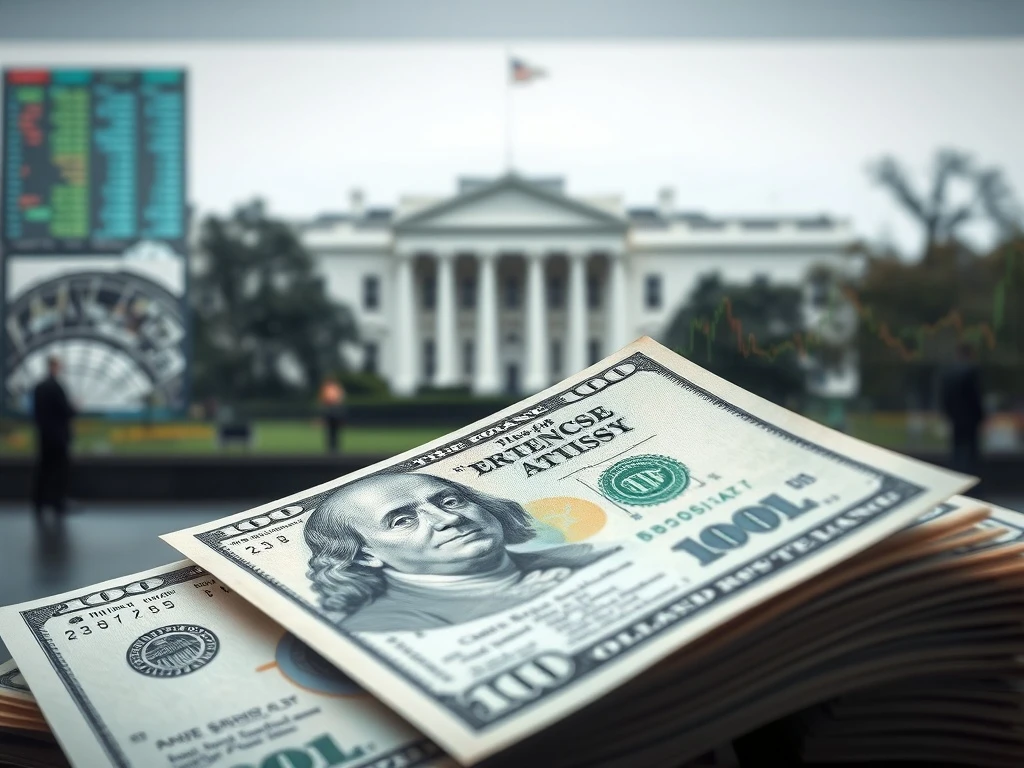
WASHINGTON, D.C., March 2025 – President Donald Trump’s recent comments on the US dollar’s valuation have sparked significant analysis among economists and policymakers worldwide. His assertion that the dollar “has not fallen excessively” represents a nuanced position in global currency markets that warrants detailed examination. This statement comes at a critical juncture for international trade relations and monetary policy coordination.
Understanding Trump’s Dollar Value Assessment
President Trump’s perspective on currency valuation emerges from a complex historical context of global economic competition. During his recent remarks, he specifically referenced past currency practices by China and Japan, noting their historical tendency toward intentional devaluation. These comments reflect ongoing concerns about fair trade practices that have dominated economic discussions for decades.
Also read: Bitcoin Strategy Divide: GameStop's 4,710 BTC Hold Contrasts With Nation's Massive Sell-Off
Currency experts immediately analyzed the implications of Trump’s position. Dr. Eleanor Vance, former IMF economist and current director of the Global Monetary Institute, explains: “Presidential comments on currency valuation always carry substantial market weight. However, Trump’s acknowledgment of natural fluctuation represents a more nuanced approach than previous administrations’ positions.”
The current administration’s stance appears to balance multiple economic priorities:
Also read: Bitcoin Volatility Dips Below Major Stocks as European Nation Sells Billions in Crypto Reserves
- Export competitiveness: A moderately weaker dollar benefits US exporters
- Inflation control: Currency strength affects import prices and inflation
- Global reserve status: Maintaining confidence in dollar stability
- Debt management: Currency value impacts US debt servicing costs
Historical Context of Currency Manipulation Concerns
The President’s reference to China and Japan’s historical currency practices connects to decades of international economic policy debates. Throughout the 2000s and 2010s, multiple US administrations expressed concerns about currency manipulation affecting trade balances. The Treasury Department’s semi-annual reports consistently monitored these practices under various administrations.
China’s management of the yuan, particularly between 2000 and 2015, became a frequent point of contention in bilateral trade discussions. Similarly, Japan’s interventions in yen markets during economic downturns drew international attention. These historical precedents inform current policy discussions about appropriate responses to perceived currency imbalances.
Recent data from the Bank for International Settlements shows evolving patterns in currency intervention:
| Country | 2015-2020 Intervention | 2020-2025 Intervention | Policy Shift |
|---|---|---|---|
| China | High frequency | Moderate frequency | Market-oriented reforms |
| Japan | Periodic intervention | Limited intervention | Yield curve control focus |
| United States | Verbal intervention | Strategic commentary | Natural fluctuation acceptance |
Economic Impacts of Dollar Fluctuations
Currency valuation directly affects multiple sectors of the US economy. A moderately weaker dollar, as referenced by President Trump, typically boosts manufacturing exports by making American goods more competitive internationally. Conversely, it increases costs for import-dependent industries and can contribute to inflationary pressures through higher import prices.
The Federal Reserve’s dual mandate of price stability and maximum employment creates a complex relationship with dollar valuation. While the Fed doesn’t target specific exchange rates, its interest rate decisions significantly influence currency markets. Current Fed Chair’s recent testimony before Congress emphasized the importance of stable currency markets for predictable monetary policy transmission.
International trade patterns show measurable responses to dollar movements. According to Commerce Department data, a 10% depreciation in the dollar’s trade-weighted index historically correlates with a 3-4% increase in manufactured exports within 12-18 months. However, these benefits must be balanced against potential inflationary impacts and effects on foreign investment flows.
The Global Currency Competition Field
President Trump’s comments occur within a transforming global monetary environment. The rise of digital currencies, both sovereign and private, introduces new dimensions to traditional currency competition. Central bank digital currencies (CBDCs) under development by multiple nations could potentially alter traditional currency dynamics in coming years.
The dollar’s role as the world’s primary reserve currency remains substantial but faces evolving challenges. International Monetary Fund data indicates the dollar comprises approximately 59% of global foreign exchange reserves as of late 2024, down from 66% in 2015. This gradual diversification reflects both strategic decisions by foreign governments and natural market evolution.
Regional currency initiatives, particularly in Asia and among BRICS nations, represent additional factors in the global currency market. While none currently threaten the dollar’s dominance, they contribute to a more multipolar currency environment that requires sophisticated policy responses.
Market Reactions and Expert Analysis
Financial markets demonstrated measured responses to the President’s currency comments. The dollar index showed limited immediate movement, suggesting markets had already priced in administration preferences. However, longer-dated currency options indicated increased expectations for volatility, reflecting uncertainty about future policy directions.
Leading economic analysts offered varied interpretations of the administration’s currency philosophy. Michael Chen, chief strategist at Global Markets Advisory, noted: “The administration appears to be articulating a preference for organic currency discovery rather than managed levels. This represents a significant philosophical shift from more interventionist historical approaches.”
International responses emerged gradually through diplomatic channels. European Central Bank officials emphasized the importance of currency stability for global trade, while Asian financial authorities noted the comments without immediate policy adjustments. This measured international reaction suggests recognition of domestic policy sovereignty in currency matters.
Policy Implications and Future Directions
The administration’s stated preference for allowing the dollar to “find a fair level on its own” carries significant policy implications. This approach suggests reduced likelihood of direct intervention in currency markets, potentially increasing market-driven volatility. However, it also reduces risks associated with maintaining artificial currency levels against market forces.
Future policy development will likely consider several key factors:
- Trade negotiation utilize: Currency policy as a bargaining element
- Inflation management: Balancing currency effects on prices
- International coordination: Working with G7 and G20 partners
- Market stability: Preventing excessive or disruptive volatility
Congressional responses have included calls for clearer currency policy frameworks and enhanced monitoring of international practices. Proposed legislation would strengthen reporting requirements on currency practices of major trading partners while providing additional tools for addressing unfair practices.
Conclusion
President Trump’s comments on US dollar value represent a significant articulation of currency policy philosophy with far-reaching implications. His acknowledgment of natural currency fluctuations while expressing concerns about historical manipulation practices reflects complex economic realities. The dollar’s role in global markets continues to evolve amid changing competitive dynamics and technological innovations. Future policy will need to balance domestic economic priorities with international responsibilities as the global monetary system undergoes continued transformation. Market participants and policymakers alike will monitor how these stated preferences translate into concrete actions in coming months.
FAQs
Q1: What did President Trump specifically say about the dollar’s value?
President Trump stated that the dollar “has not fallen excessively” and that while he doesn’t want further decline, he believes it should find a fair level naturally without artificial intervention, acknowledging that its value could fluctuate.
Q2: Why did Trump mention China and Japan in his currency comments?
He referenced historical concerns about both countries intentionally devaluing their currencies in the past, which he stated made it difficult for the United States to compete in international markets during previous periods.
Q3: How do dollar fluctuations affect ordinary Americans?
Dollar strength affects import prices (weaker dollar means more expensive imports), export competitiveness (weaker dollar helps US exporters), travel costs, and can influence inflation and interest rates through various economic channels.
Q4: What is the current administration’s official currency policy?
While no formal policy document has been released, the comments suggest a preference for market-determined exchange rates with monitoring of international practices, representing a shift from more interventionist approaches of some previous administrations.
Q5: How are financial markets responding to these currency policy statements?
Initial market reactions have been measured, with limited immediate dollar movement but increased expectations for future volatility, suggesting markets are processing the implications of potentially reduced intervention in currency markets.

This article was produced with AI assistance and reviewed by our editorial team for accuracy and quality.