Trading bots surge as sideways crypto markets challenge traders: HTX 2025 data reveals explosive growth
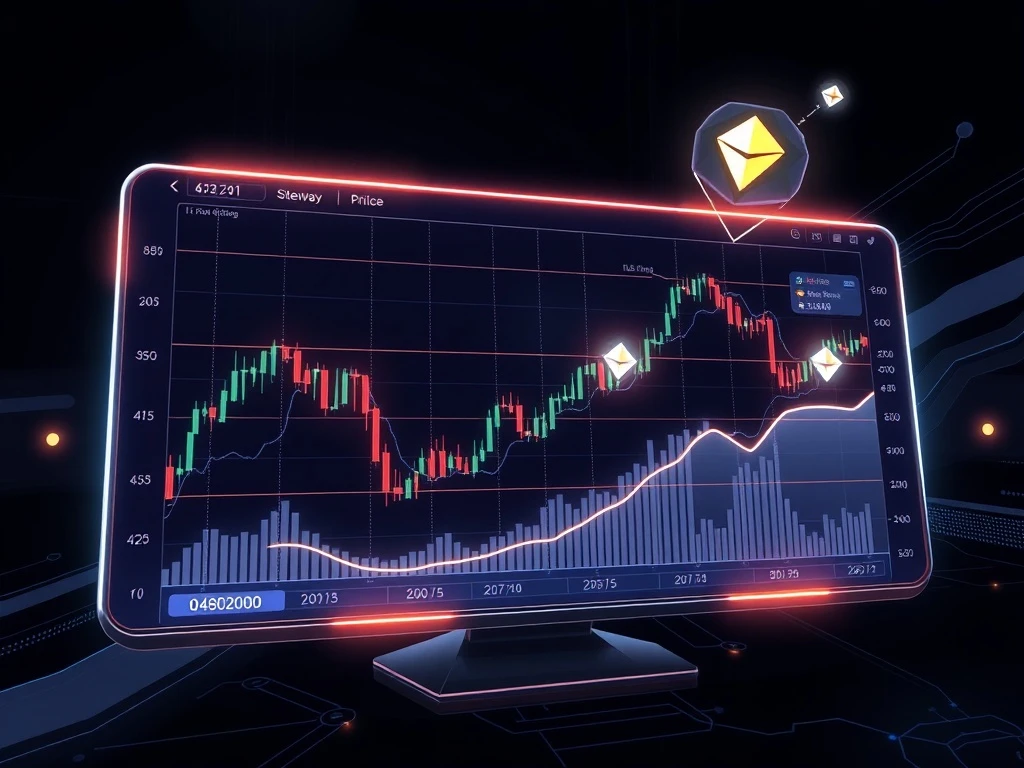
In the nuanced market of 2025, cryptocurrency traders faced a formidable challenge: markets characterized by persistent volatility but lacking clear, sustained directional momentum. Consequently, a significant shift toward automation emerged, with trading bots becoming an indispensable tool for handling these complex conditions. According to a comprehensive year-end recap from the global exchange HTX, formerly known as Huobi, the adoption of automated strategies, particularly grid trading bots, saw unusual growth as investors sought to capitalize on smaller, repeated price swings within defined ranges.
Trading bots dominate during market consolidation
The data from HTX, a platform consistently ranked among the world’s top ten exchanges by metrics like trading volume and liquidity according to CoinMarketCap, paints a clear picture of this trend. The exchange reported a staggering 97% year-over-year increase in grid trading volume for 2025. More impressively, the total capital allocated by users to these automated grid strategies doubled during the same period. This surge in automated activity directly correlates with the market’s technical behavior, where major cryptocurrencies like Bitcoin and Ethereum experienced high volatility but remained largely range-bound, making traditional buy-and-hold or directional swing trading less effective.
Grid trading, a cornerstone of this automated revolution, operates on a relatively simple yet powerful principle. Traders define an upper and lower price boundary for an asset. Within this range, the trading bot automatically places a series of buy orders at descending prices and sell orders at ascending prices. As the market price oscillates within the set band, the bot systematically executes these orders, capturing profit from the micro-fluctuations. This strategy thrives in sideways or consolidating markets, transforming market noise into a potential revenue stream.
Stablecoin pairs lead the automated charge
A deeper analysis of HTX’s data reveals a fascinating divergence in adoption rates. While grid trading volume for major cryptocurrency pairs grew by a strong 122%, the growth for stablecoin pairs was nothing short of explosive, surging by 352% year-over-year. This disparity highlights a strategic preference among automated traders. Stablecoin pairs, such as trading between Tether (USDT) and USD Coin (USDC), typically exhibit even tighter and more predictable ranges than volatile crypto-to-crypto pairs. This environment is theoretically ideal for grid bots, allowing for higher frequency, lower-risk arbitrage on minute price discrepancies between pegged assets.
Also read: SUI Price Tests Critical $1.05 Level as Pepeto's Stunning 300x Surge Captures Market Attention
The evolution from rule-based bots to autonomous AI agents
While rule-based systems like grid bots automate execution, the frontier of automated trading is rapidly advancing toward artificial intelligence. Major industry players are investing heavily in developing AI agents capable of autonomous decision-making. For instance, Coinbase has been a prominent explorer in this domain. As early as August 2024, CEO Brian Armstrong described tests where an AI agent used cryptocurrency tokens to interact with another AI system to purchase training data—a landmark “tokens buying tokens” transaction.
Subsequently, Coinbase launched “Based Agent” in October 2024, a tool enabling users to create AI agents linked to their crypto wallets for automated onchain activities like trading and staking. The innovation continued into 2025 with the October introduction of Payments MCP. This system allows large language models to interact directly with onchain financial services using natural language prompts via the Model Context Protocol, eliminating the need for complex API integrations. This progression signifies a move from simple automation to intelligent, adaptive financial management.
Key differences between traditional bots and AI agents:
- Rule-Based Bots (e.g., Grid Trading): Follow pre-programmed, static instructions. They execute buys and sells based on fixed price levels or technical indicators without understanding market context.
- AI-Powered Agents: Utilize machine learning to analyze vast datasets, recognize patterns, and make predictive or adaptive decisions. They can operate through natural language and learn from outcomes to refine their strategies over time.
Market sentiment and inherent security risks
Public interest in this advanced automation is demonstrably growing. An April 2025 survey by CoinGecko indicated that approximately 36% of cryptocurrency investors would consider allowing AI agents to manage the majority of their digital asset holdings. This statistic underscores a growing trust in algorithmic management, yet it also raises critical security and philosophical questions within the crypto community.
Experts like Aaron Ratcliff, attributions lead at blockchain intelligence firm Merkle Science, provide critical context. He notes that granting AI agents direct access to cryptocurrency wallets introduces a novel layer of trust into systems fundamentally designed to be trustless. This shift moves significant security responsibility back onto the end-user, who must now vet the integrity and safety of the AI agent’s code and operations, a complex task for the average investor. The potential for smart contract exploits, agent logic flaws, or prompt injection attacks creates a new risk vector that the market is only beginning to understand.
Broader market context and regulatory field
The rise of automated trading in 2025 did not occur in a vacuum. It coincided with a broader maturation phase for the cryptocurrency industry, marked by increasing institutional participation and evolving regulatory frameworks. For example, in a parallel development underscoring global exchange expansion, regulatory bodies in Pakistan cleared both Binance and HTX to pursue local cryptocurrency licenses. This move toward regulated operation in new jurisdictions provides a more stable foundation for advanced trading tools to operate, potentially increasing user confidence in deploying capital through automated systems.
Furthermore, the sideways market action itself can be interpreted through various analytical lenses. Some market analysts, referencing metrics like the Pi Cycle Top indicator or prolonged consolidation below key moving averages, have characterized the 2024-2025 period as a transition into a bear market cycle following the 2023 rally. This environment naturally favors tactical, short-term strategies over long-term bullish bets, perfectly aligning with the value proposition of grid and arbitrage bots.
Conclusion
The 2025 cryptocurrency market narrative was profoundly shaped by the explosive adoption of trading bots. As evidenced by HTX’s data showing a 97% surge in grid trading volume, traders actively pivoted to automated strategies to work through challenging, range-bound conditions. This trend represents more than a fleeting tactic; it signals a broader integration of sophisticated technology into mainstream crypto finance. The concurrent development of autonomous AI agents by exchanges like Coinbase points toward a future where machine intelligence plays a central role in portfolio management. However, as this technological frontier expands, the industry must concurrently address the significant security and trust implications highlighted by experts, ensuring that the drive for efficiency does not compromise the foundational principles of user sovereignty and asset safety. The data from 2025 confirms that trading bots are no longer a niche tool but a central feature of the modern digital asset trading sector.
FAQs
Q1: What is grid trading in cryptocurrency?
Grid trading is an automated strategy where a bot places multiple buy and sell orders at predefined price levels within a set range. It aims to profit from an asset’s natural price fluctuations as it moves sideways, buying low and selling high within the grid repeatedly.
Q2: Why did trading bot use spike in 2025 according to HTX?
HTX’s data indicates the spike was a direct response to market conditions. Major cryptocurrencies exhibited high volatility but remained range-bound, making traditional directional trading difficult. Automated bots excelled at capturing profits from these smaller, repeated price swings within consolidating markets.
Q3: What is the difference between a trading bot and an AI agent?
A traditional trading bot follows fixed, pre-programmed rules (e.g., “buy at $X, sell at $Y”). An AI agent uses machine learning to analyze data, make predictive decisions, and can adapt its strategy over time. AI agents can also understand and execute commands given in natural language.
Q4: What were the risks associated with using AI for crypto trading in 2025?
Experts warned that AI agents add a new trust layer to trustless systems. Risks include smart contract vulnerabilities in the agent’s code, potential for logic errors or manipulation (like prompt injection), and the user assuming full responsibility for the agent’s actions, which could lead to unexpected losses.
Q5: How did trading in stablecoin pairs differ from major crypto pairs for bots?
Growth was far more pronounced in stablecoin pairs. HTX reported a 352% year-over-year increase in grid trading volume for stablecoin pairs, compared to 122% for major cryptocurrencies. This is because stablecoin pairs often have even tighter and more predictable price ranges, creating an ideal environment for high-frequency, low-risk arbitrage bots.

This article was produced with AI assistance and reviewed by our editorial team for accuracy and quality.