TPU Cast Film Production Line Demand Surges in Middle East Amid Industrial Transformation
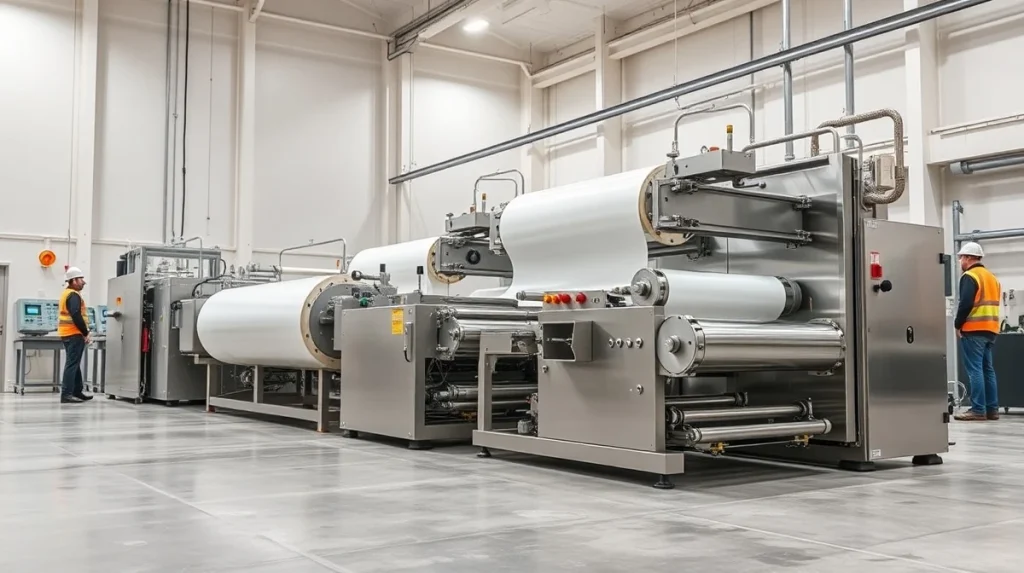
The Middle East’s industrial sector is undergoing a significant transformation, with demand for TPU (Thermoplastic Polyurethane) cast film production lines experiencing notable growth as of March 2026. Regional economic diversification initiatives, particularly in Saudi Arabia, the United Arab Emirates, and Qatar, are driving substantial investments in advanced manufacturing capabilities. Consequently, this strategic shift is creating historic opportunities for equipment suppliers specializing in cast film machinery and production technology.
Market Drivers for Cast Film Production Expansion
Several interconnected factors are fueling the increased demand for cast film production equipment across the Middle East. First, regional governments have implemented ambitious economic diversification programs to reduce dependence on hydrocarbon revenues. These programs specifically target manufacturing sector development through incentives and infrastructure investments. Second, population growth and urbanization continue to accelerate consumption of packaged goods, creating sustained demand for flexible packaging materials.
Also read: M Series ANC Token Presale Launches with Detailed Vesting
Furthermore, environmental regulations are evolving across the Gulf Cooperation Council (GCC) nations. These regulations increasingly favor recyclable and sustainable packaging solutions. TPU films offer specific advantages in this context due to their durability, clarity, and potential for recyclability compared to traditional materials. Industrial analysts note that regional manufacturers are responding to these regulatory changes by upgrading their production capabilities.
Packaging Industry as Primary Catalyst
The food and beverage sector represents the largest end-user of cast films in the region. Rapid expansion of modern retail, coupled with growing consumer preference for convenience foods, requires sophisticated barrier packaging. This packaging must extend shelf life in challenging climatic conditions. High-performance films produced on advanced cast lines provide essential oxygen and moisture barriers. Additionally, the pharmaceutical and personal care industries are contributing to demand growth, requiring specialized films for product protection.
Also read: Pepeto Presale Attracts Investor Interest Amid Meme Coin Rally
Renewable Energy Sector Creating New Applications
Beyond traditional packaging, the Middle East’s substantial investments in renewable energy infrastructure are generating novel applications for cast films. Large-scale photovoltaic projects, particularly in Saudi Arabia’s NEOM development and the UAE’s Mohammed bin Rashid Al Maktoum Solar Park, require specialized backsheet and encapsulation films for solar panels. These films must withstand extreme ultraviolet exposure and temperature fluctuations common in desert environments.
TPU-based films demonstrate excellent performance characteristics for these demanding applications. Their weatherability and mechanical strength make them suitable for long-term outdoor use. Consequently, equipment capable of producing these specialized films is seeing increased procurement interest from manufacturers supplying the region’s renewable energy projects. This diversification into industrial applications beyond packaging provides market stability for machinery suppliers.
Regional Production Capacity and Technology Adoption
Middle Eastern manufacturers are actively expanding their domestic production capacity to reduce import reliance and capture more value within regional supply chains. This trend is particularly evident in Saudi Arabia under the Vision 2030 initiative, which includes specific targets for increasing local content in manufacturing. Cast film production lines represent a strategic investment area because they enable local production of high-value packaging materials previously imported from Europe and Asia.
The technology adoption pattern shows a preference for modular, automated production lines that offer operational flexibility. Manufacturers seek equipment that can handle multiple polymer types, including TPU, polyethylene, and polypropylene, to serve diverse market segments. Energy efficiency has become a critical selection criterion, given regional commitments to sustainability and the economic importance of reducing operational costs in energy-intensive extrusion processes.
Supply Chain Considerations and Logistics
Geopolitical factors and global supply chain reconfiguration are influencing equipment procurement strategies. Middle Eastern companies are increasingly evaluating supply security and after-sales service availability when selecting machinery suppliers. European and Asian equipment manufacturers have responded by establishing stronger local service partnerships and inventory hubs in Dubai, Dammam, and Jebel Ali. This localization of support services reduces downtime risks for production facilities operating in remote industrial zones.
Competitive Field and Market Entry
The market for cast film production equipment in the Middle East features competition between established European manufacturers, particularly German and Italian engineering firms, and emerging Asian suppliers from China and Taiwan. European equipment traditionally commands premium pricing but offers advanced automation and precision engineering. Asian manufacturers compete effectively on price and delivery timelines, with improving technological capabilities.
Regional industrial projects often involve international engineering consultants who specify equipment based on technical requirements rather than solely on cost considerations. This professional specification process favors suppliers with proven reliability data and comprehensive technical documentation. Successful market entrants typically participate in regional industrial exhibitions like Arabplast in Dubai and provide localized training programs for operational staff.
Economic Indicators and Investment Climate
Macroeconomic indicators support continued investment in industrial equipment across the region. GCC countries maintain substantial sovereign wealth reserves that buffer against global economic volatility. Government-led industrial development funds provide favorable financing for capital equipment purchases, especially for projects aligned with national diversification strategies. The table below summarizes key regional factors influencing equipment investment decisions:
Regional Investment Drivers for Cast Film Equipment
- Government manufacturing subsidies and tax incentives
- Growing domestic consumption of packaged goods
- Export opportunities to African and Asian markets
- Infrastructure development in industrial cities
- Regulatory push toward sustainable packaging
Technical Requirements and Specifications
Regional manufacturers specify cast film lines with particular attention to several operational parameters. Production width capabilities typically range from 2 to 8 meters to accommodate various packaging formats. Line speeds of 300-500 meters per minute are standard for high-volume operations. Advanced temperature control systems are essential for maintaining film quality in facilities experiencing significant ambient temperature variations. Additionally, integrated quality monitoring systems using infrared and laser measurement technologies are increasingly specified to ensure consistent output.
Future Outlook and Projected Developments
Industry analysts project steady growth in cast film production capacity across the Middle East through the remainder of the decade. This growth will likely concentrate in economic zones offering integrated infrastructure and regulatory simplicity. Saudi Arabia’s Ras Al-Khair and Jubail industrial cities, along with the UAE’s Khalifa Industrial Zone Abu Dhabi (KIZAD), are expected to see significant capacity additions. The trend toward larger, more automated production lines will continue as manufacturers seek economies of scale.
Technological evolution will focus on energy recovery systems, reduced material waste through edge trim recycling, and enhanced digital integration for predictive maintenance. These advancements align with regional sustainability goals and operational efficiency targets. Furthermore, potential applications in agricultural films for desert farming and water conservation present additional growth avenues for specialized film production.
Conclusion
The demand for TPU cast film production lines in the Middle East reflects broader regional economic transformation toward advanced manufacturing and industrial diversification. Driven by packaging sector growth, renewable energy investments, and supportive government policies, this market segment offers significant opportunities for equipment suppliers with appropriate technological solutions and regional market understanding. As Middle Eastern manufacturers continue to expand their capabilities, the requirement for sophisticated, efficient production technology will remain reliable, positioning cast film machinery as a key component of the region’s industrial development through 2026 and beyond.
FAQs
Q1: What is driving the increased demand for cast film production lines in the Middle East?
The primary drivers include economic diversification programs reducing oil dependence, population growth increasing packaged goods consumption, renewable energy projects requiring specialized films, and regulatory shifts toward sustainable packaging solutions.
Q2: Which countries in the Middle East are leading in cast film production capacity expansion?
Saudi Arabia, the United Arab Emirates, and Qatar are implementing the most substantial capacity expansion projects, supported by national vision programs and industrial development funds that incentivize manufacturing investments.
Q3: What are the key technical specifications Middle Eastern manufacturers consider when purchasing cast film lines?
Manufacturers prioritize production width (typically 2-8 meters), line speed (300-500 meters/minute), energy efficiency ratings, temperature control precision for variable climates, and integrated quality monitoring systems for consistent output.
Q4: How does the renewable energy sector influence cast film equipment demand?
Large-scale solar projects require specialized backsheet and encapsulation films that must withstand extreme desert conditions, creating demand for equipment capable of producing these high-performance, weather-resistant films.
Q5: What competitive advantages do European equipment manufacturers hold in the Middle Eastern market?
European suppliers maintain advantages in precision engineering, advanced automation technology, reliability track records, and comprehensive technical support, though they face price competition from improving Asian manufacturers.

This article was produced with AI assistance and reviewed by our editorial team for accuracy and quality.