Tokenized Gold Skyrockets as Dollar Plunge Sparks Historic Digital Safe-Haven Rush
Global financial markets are witnessing a historic pivot as a weakening US dollar propels unusual demand for tokenized gold, a digital asset class merging ancient value with blockchain technology. Data from early 2026 reveals a market capitalization exceeding $2.6 billion for gold-backed stablecoins, led by Tether Gold (XAUT), as investors and institutions seek a transparent, liquid alternative to traditional safe havens. This shift signals a potential reconfiguration of global monetary reserves in the digital age.
Tokenized Gold Captures Market Amid Currency Instability
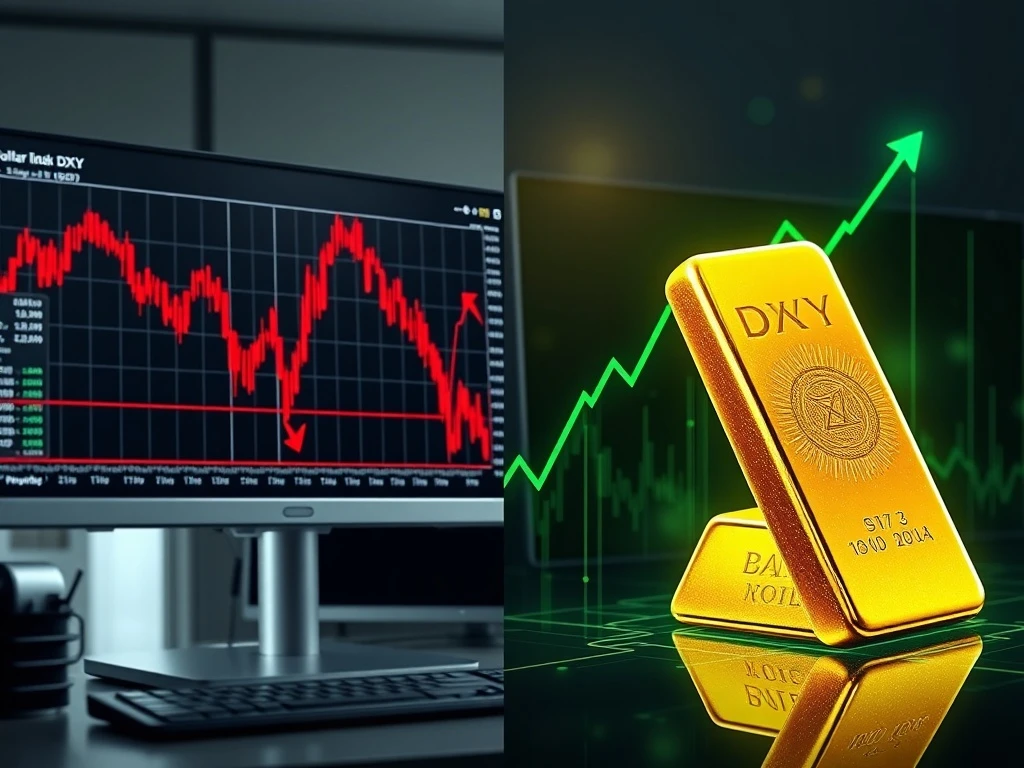
The dramatic rise of tokenized gold is directly linked to a sustained decline in the US dollar’s strength. The Dollar Index (DXY), a key measure of the dollar’s value against a basket of major currencies, recorded a 9.4% loss in 2025, marking its worst annual performance in nearly a decade. Early 2026 data confirms this bearish trend with an additional 2.4% decline. Consequently, investors are actively diversifying away from dollar-denominated assets. Tokenized gold offers a compelling solution by providing direct exposure to physical gold’s price through a digital token, combining the stability of a millennia-old store of value with the efficiency of modern blockchain networks.
Also read: AI Trading Agents: The Revolutionary Path to Mastering Your Crypto Portfolio in 2025
This movement is not confined to retail investors. Major financial institutions and sovereign wealth funds, traditionally cautious of cryptocurrency volatility, are increasingly allocating capital to these digital gold products. The appeal lies in their operational transparency and regulatory compliance. Each XAUT token, for instance, represents a claim on one fine troy ounce of physical gold stored in a professional vault in Switzerland. Independent audits regularly verify these reserves, ensuring full backing and building important trust in the asset class.
Tether Gold Leads a Burgeoning Digital Asset Class
Tether Gold (XAUT) has emerged as the dominant force in this sector. By the end of 2025, more than 520,000 XAUT tokens were in circulation. The project’s market capitalization surged past $2.6 billion in January 2026, commanding over half of the entire gold-backed stablecoin market. Paolo Ardoino, CEO of Tether, has noted that the fund’s size now rivals certain national gold reserves, highlighting its scale and institutional adoption. The token’s infrastructure allows for 24/7 global trading, instant settlement, and fractional ownership—features physical gold bullion cannot easily provide.
Also read: RunBot AI Trading Bot: Revolutionizing Automated Cryptocurrency Strategies with Machine Learning
The Institutional Appeal of Blockchain-Verified Gold
Institutional adoption is driven by several key factors beyond mere dollar hedging. Persistent global inflation and heightened geopolitical tensions have eroded confidence in traditional financial instruments. Tokenized gold addresses specific institutional needs:
- Transparency: Every transaction is recorded on a public blockchain, providing an immutable audit trail.
- Security: The underlying physical gold is insured and held in high-security, accredited facilities.
- Liquidity: Tokens can be traded on multiple digital asset exchanges worldwide, unlike allocated physical gold which requires complex logistics to sell.
- Compliance: Issuers like Tether work within evolving regulatory frameworks, offering KYC/AML-compliant products.
This combination makes tokenized gold a unique hybrid asset, attracting capital that might otherwise flow into US Treasury bonds or physical bullion.
Broader Market Dynamics and Gold’s Price Surge
The tokenized gold phenomenon exists within a broader renaissance for the precious metal. Central banks globally have been net buyers, purchasing approximately 220 tons of gold in the third quarter of 2025 alone according to the World Gold Council. This strategic buying aims to diversify foreign exchange reserves away from the US dollar. The traditional gold market has reacted strongly. On January 26, 2026, the price of a gold ounce on the COMEX futures exchange surpassed $5,100, setting a new record. Analysts at major banks like Société Générale have published research suggesting a potential climb toward $6,000 per ounce by the end of 2026 if current macroeconomic conditions persist.
The following table contrasts the performance of key assets driving this trend:
| Asset | 2025 Performance | Key Driver (2025-2026) |
|---|---|---|
| US Dollar Index (DXY) | -9.4% | Monetary policy divergence, de-dollarization efforts |
| Physical Gold (Spot) | +18.2% | Central bank demand, inflation hedge, geopolitical risk |
| Tokenized Gold Market Cap | +210% (Est.) | Digital adoption, institutional inflow, demand for hybrid assets |
This data illustrates a clear correlation: as the dollar weakens and physical gold strengthens, its digital representation experiences exponential growth due to added technological utility.
Implications for the Future of Finance and Digital Dedollarization
The rapid ascent of tokenized gold poses significant questions for the future global financial system. It represents a credible step toward a form of digital dedollarization, where blockchain technology facilitates the move away from dollar-centric reserves and trade settlements. While it does not replace the dollar’s role as the world’s primary reserve currency overnight, it establishes a viable, scalable alternative for storing and transferring value digitally. The technology enables smooth cross-border transactions without exposure to dollar volatility or traditional banking intermediaries.
Furthermore, the success of gold tokenization paves the way for the digitization of other real-world assets (RWAs), such as commodities, real estate, and treasury bonds. This trend, often called the “tokenization of everything,” could increase market efficiency, liquidity, and accessibility for a wide range of asset classes. However, its growth depends on continued regulatory clarity, solid custodial solutions, and the maintenance of a one-to-one verifiable backing for all issued tokens.
Conclusion
The surge in tokenized gold demand is a definitive market response to a weakening US dollar and broader macroeconomic uncertainty. Assets like Tether Gold have successfully bridged the gap between the tangible security of physical bullion and the operational efficiency of digital assets, attracting a new wave of institutional capital. As gold prices hit record highs and central banks continue their diversification strategies, the digital gold sector is poised for further expansion. This trend underscores a broader shift in finance, where blockchain technology is creating new, hybrid forms of value storage that could reshape concepts of monetary safety and reserve assets in the years to come.
FAQs
Q1: What exactly is tokenized gold?
Tokenized gold is a digital representation of physical gold ownership. Each digital token (like XAUT) is backed by a specific amount of real gold held in secure vaults. The token can be bought, sold, or transferred on a blockchain, offering the value of gold with the flexibility of a digital asset.
Q2: Why is tokenized gold gaining popularity as the dollar weakens?
Historically, gold performs well when confidence in fiat currencies like the US dollar wanes. Tokenized gold offers a modern, efficient way to access this hedge. Its digital nature provides easier liquidity, fractional ownership, and faster settlement than buying and storing physical bars, making it an attractive alternative during dollar volatility.
Q3: How is Tether Gold different from buying physical gold or a gold ETF?
Tether Gold is directly backed 1:1 by physical gold in a vault, similar to some ETFs. However, as a token on a blockchain, it allows for direct ownership and transfer without a traditional financial intermediary, enables 24/7 global trading, and can be used in decentralized finance (DeFi) applications, which ETFs cannot.
Q4: What are the main risks associated with tokenized gold?
Key risks include custodial risk (reliance on the issuer to properly safeguard the physical gold), regulatory risk (changing laws for digital assets), and technological risk (smart contract bugs or exchange security). It is vital to use reputable, audited, and compliant issuers.
Q5: Could tokenized gold replace physical gold for central banks?
In the near term, it is unlikely to fully replace physical reserves held in central bank vaults for strategic and security reasons. However, tokenized gold could become a complementary tool for managing liquidity, executing certain transactions, or engaging in the digital asset ecosystem as its regulatory and institutional framework matures.

This article was produced with AI assistance and reviewed by our editorial team for accuracy and quality.