Tether USDt Shatters Records: $187B Market Cap Defies 2025 Crypto Downturn

In a stunning display of resilience, Tether’s USDt (USDT) stablecoin has surged to an unprecedented $187.3 billion market capitalization in the fourth quarter of 2025, defying a broader cryptocurrency market slump triggered by a major liquidation event in October. This milestone, reported from Tether’s headquarters, solidifies USDt’s commanding position in the digital asset ecosystem during a period of significant market stress.
Tether USDt Market Cap Growth Defies Market Trends
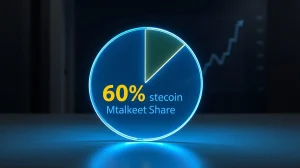
Despite a challenging final quarter for digital assets, Tether’s dollar-pegged stablecoin expanded its market valuation by a substantial $12.4 billion. This growth occurred against a backdrop where many other cryptocurrencies experienced significant volatility and decline. The expansion highlights a critical flight to stability within the crypto sector, as investors and users increasingly gravitate toward assets perceived as secure and liquid during uncertain times. Consequently, USDt’s market share among stablecoins has widened considerably.
Also read: Bitcoin Price Rally Explained: The Real Reasons Behind Today's Crypto Surge
For context, the broader market downturn followed a liquidation cascade on October 10, 2025, which erased billions in leveraged positions across exchanges. In contrast to USDt’s gains, competitor stablecoins faced headwinds. Circle’s USDC (USDC), the second-largest stablecoin, saw its market cap fluctuate throughout Q4 before closing the period largely unchanged. More dramatically, Ethena’s synthetic dollar USDe, ranked third, plummeted by approximately 57% in market capitalization during the same timeframe.
Comparative Stablecoin Performance Q4 2025
| Stablecoin | Q4 Market Cap Change | Key Driver |
|---|---|---|
| Tether USDt (USDT) | +$12.4B | Flight to safety, increased adoption |
| Circle USDC (USDC) | Largely Unchanged | Market volatility, cautious user base |
| Ethena USDe | -57% | Post-liquidation de-risking, synthetic model scrutiny |
Onchain Activity and User Adoption Reach New Highs
Beyond mere market capitalization, onchain metrics underscore USDt’s deepening integration into the global digital economy. The network effect is powerful, with the average number of monthly active USDt wallets climbing to 24.8 million. This figure represents nearly 70% of all stablecoin-holding wallets globally, indicating a dominant user base. Furthermore, quarterly transfer volume for USDt surged to an astonishing $4.4 trillion, while the total number of onchain transfers rose to 2.2 billion.
Also read: Bitcoin ETF Outflows Surge: Investors Pull Billions From Crypto Funds
Analysts point to several factors driving this activity:
- Remittance and Payments: USDt is increasingly used for cross-border payments in emerging markets due to its speed and lower cost compared to traditional systems.
- Decentralized Finance (DeFi): It remains the primary liquidity and trading pair asset across countless DeFi protocols.
- Savings and Hedging: A significant portion of the supply is held in savings wallets and on centralized exchanges as a dollar-equivalent safe haven.
Reserve Strength and US Treasury Holdings
Tether’s latest quarterly report provides detailed insight into the reserves backing USDt, a topic of perennial interest to the market. At the end of Q4 2025, the company reported total reserves of $192.9 billion, an increase of $11.7 billion from the previous quarter. This resulted in a net equity of $6.3 billion, exceeding the outstanding token supply. A key component of these reserves is the firm’s exposure to U.S. Treasury bills, which grew to $141.6 billion.
This Treasury holding is significant for several reasons. Firstly, it places Tether among the world’s largest holders of U.S. debt, ahead of several sovereign nations. Secondly, these highly liquid and secure assets bolster confidence in USDt’s peg to the U.S. dollar. The composition of reserves is regularly attested to by independent auditors, although the company has faced calls for more frequent and detailed real-time reporting.
Addressing Illicit Finance Concerns
The report also acknowledges challenges. Data from blockchain analytics firm Bitrace indicated that in 2024, approximately $649 billion in stablecoins, or 5.14% of total transaction volume, flowed through high-risk addresses linked to illicit activity. Tron-based USDt accounted for over 70% of this flagged volume, a statistic tied to the network’s high throughput and adoption in certain regions. In response, Tether has significantly ramped up compliance efforts. The company has launched collaborative programs with analytics firms like TRM Labs and works directly with the Tron network to monitor, track, and proactively freeze funds associated with sanctioned addresses or illegal activities.
Strategic Expansion: USAt and Opera Partnership
Looking beyond its core product, Tether is strategically expanding its ecosystem. In January 2025, the company launched USAt, a new dollar-pegged stablecoin built specifically for the U.S. market. Issued in partnership with Anchorage Digital Bank, a federally chartered digital asset bank, USAt is explicitly designed to be compliant with the proposed U.S. GENIUS Act regulatory framework. It launched with an initial supply of $10 million on the Ethereum blockchain.
Simultaneously, Tether is pushing for broader adoption in emerging markets. A recent partnership with web browser company Opera integrates USDt and Tether Gold (XAUT) into Opera’s MiniPay wallet. This move aims to simplify access to digital payments and dollar-denominated savings for millions of users in regions with volatile local currencies or limited banking infrastructure.
Conclusion
Tether USDt’s record $187.3 billion market capitalization in Q4 2025 is more than a numerical milestone; it is a testament to its entrenched role as a cornerstone of the cryptocurrency market. During a period of sector-wide downturn, USDt demonstrated remarkable resilience, attracting capital and users while competitors stalled or declined. Its growth is supported by record onchain activity, robust and transparent reserves heavy in U.S. Treasuries, and a dual strategy of enhancing compliance while expanding into new markets and regulatory frameworks. As the digital asset landscape evolves, USDt’s performance suggests it will remain a critical barometer for market stability and user trust.
FAQs
Q1: What caused Tether USDt’s market cap to grow during a crypto downturn?
The growth is primarily attributed to a flight to safety. During the market volatility following the October 2025 liquidation event, investors and users moved capital into USDt as a stable, dollar-pegged asset. Its deep liquidity and established reputation made it a preferred harbor.
Q2: How does Tether’s US Treasury holding compare to countries?
With $141.6 billion in U.S. Treasury holdings, Tether ranks among the top global holders. This reserve size exceeds the sovereign debt holdings of nations like the United Arab Emirates, Turkey, and Mexico, underscoring the scale of its asset backing.
Q3: What is the new USAt stablecoin?
USAt is a separate dollar-pegged stablecoin launched by Tether in January 2025. It is specifically designed for the U.S. market and is built to be compliant with anticipated U.S. regulations like the GENIUS Act. It is issued through Anchorage Digital Bank.
Q4: What are the main uses of USDt?
USDt is used primarily as a trading pair on exchanges, a liquidity source in DeFi, a tool for cross-border payments and remittances, and a digital dollar savings instrument for users worldwide.
Q5: Is Tether taking steps to prevent illicit use of USDt?
Yes. Tether has implemented proactive measures including partnerships with blockchain analytics firms like TRM Labs, direct collaboration with the Tron network foundation, and a policy of freezing wallets associated with sanctioned entities or criminal activity identified by law enforcement.

This article was produced with AI assistance and reviewed by our editorial team for accuracy and quality.