Sui Network Outage: Critical 6-Hour Blockchain Disruption Halts $1B+ in Transactions
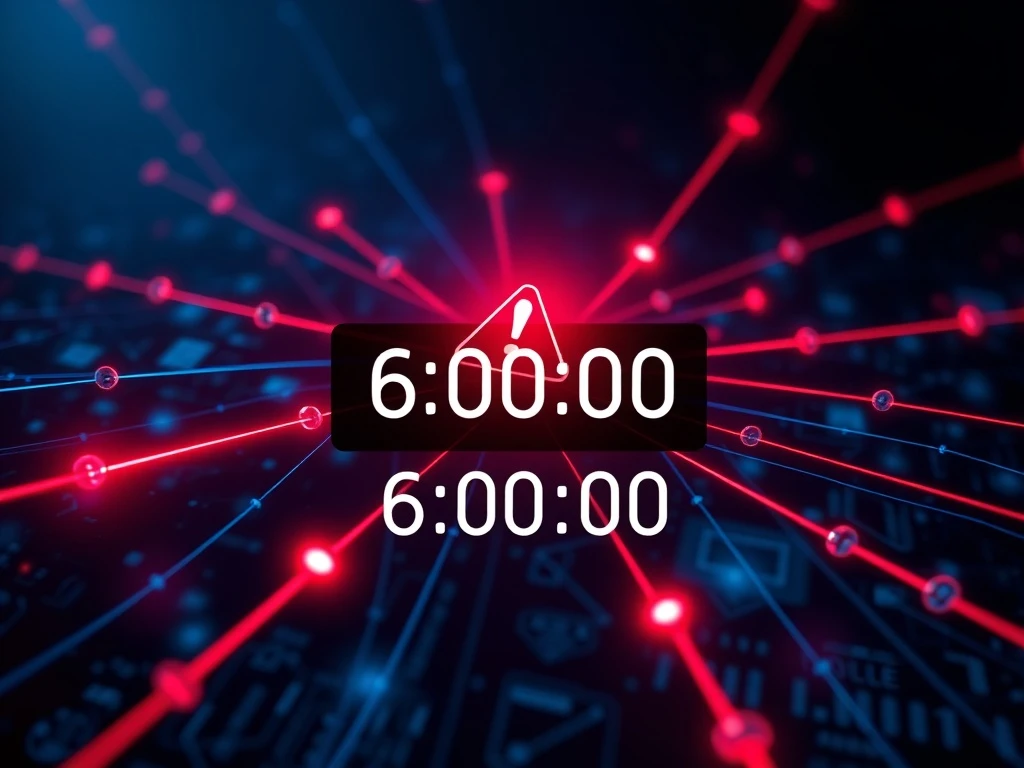
On Wednesday, March 19, 2025, the high-speed Sui blockchain experienced a severe network outage that completely halted transactions for nearly six hours, marking the platform’s second major operational failure since its 2023 launch and restricting over $1 billion in on-chain value. The Sui network outage began at approximately 2:52 PM UTC when core developers first detected consensus mechanism failures, ultimately requiring extensive troubleshooting before restoring full functionality at 8:44 PM UTC. This significant disruption raises important questions about blockchain reliability and network stability in an increasingly digital financial ecosystem.
Sui Network Outage Timeline and Immediate Impact
The Sui Foundation officially confirmed the blockchain disruption at 3:24 PM UTC through its X social media account, alerting its 1.1 million followers about ongoing technical issues. During the nearly six-hour Sui network outage, users experienced complete transaction failures, preventing any movement of assets or execution of smart contracts on the layer-1 platform. Network validators and node operators reported consensus mechanism failures that prevented the blockchain from processing new blocks, essentially freezing the entire distributed ledger system.
Also read: Bitcoin ETP Flows Surge: Fidelity's Macro Chief Spots Critical Capital Rotation from Gold
Core developers worked continuously to diagnose and resolve the underlying technical problem, implementing a fix that restored network operations after 5 hours and 52 minutes of downtime. The Sui Foundation announced the resolution with a simple message: “Transactions are flowing normally. If you are still seeing issues, please refresh your app or browser window.” Despite this restoration, the foundation has not provided specific technical details about what triggered the consensus outage, leaving the cryptocurrency community seeking more transparency about the root cause.
Financial Implications and Market Response
The Sui network outage had immediate financial consequences, with over $1 billion in total value locked across various DeFi protocols, NFT marketplaces, and user wallets becoming temporarily inaccessible. Interestingly, the native SUI token displayed unexpected price behavior during the disruption, briefly spiking approximately 4% before settling around $1.84 according to CoinGecko data. This counterintuitive market movement suggests some traders may have interpreted the outage as a potential buying opportunity or anticipated a swift resolution.
Also read: BlockDAG's Defiant $0.000022 Presale Emerges as TRUMP Slumps and TAO Soars
Market analysts note that blockchain networks often experience mixed price reactions during technical disruptions. Some investors view outages as concerning reliability indicators, while others perceive temporary dips as entry points before network restoration. The SUI token’s relative price stability throughout the event indicates market confidence in the development team’s ability to resolve critical issues, though the repeated nature of these outages may test investor patience over time.
Historical Context: Sui’s Previous Network Instability
This recent Sui network outage represents the blockchain’s second major operational failure since its mainnet launch in May 2023. The platform previously experienced significant downtime in November 2024, establishing a concerning pattern of network instability within its relatively short operational history. These repeated disruptions contrast with the network’s marketed capabilities as a high-performance, scalable layer-1 solution designed to handle thousands of transactions per second with minimal latency.
Blockchain reliability has become an increasingly critical metric as cryptocurrency adoption expands beyond speculative trading into real-world financial applications. When networks like Sui experience extended downtime, they potentially undermine confidence in blockchain technology’s capacity to support essential financial infrastructure. The technology’s value proposition heavily depends on consistent availability and predictable performance, making repeated outages particularly damaging to institutional adoption prospects.
Comparative Analysis with Other Blockchain Networks
Network outages represent a common challenge across the blockchain industry, with even established platforms experiencing significant downtime during their development. Solana, another high-performance layer-1 blockchain, faced multiple network disruptions in 2021 and 2022 that drew criticism from the cryptocurrency community. However, Solana has maintained 18 consecutive months of uninterrupted operation since implementing improved validator coordination protocols and emergency update mechanisms.
The table below compares recent network performance between Sui and Solana:
| Metric | Sui Network | Solana Network |
|---|---|---|
| Major Outages (Last 24 Months) | 2 | 0 |
| Longest Downtime | 6 hours (March 2025) | 17 hours (September 2021) |
| Time Since Last Outage | 0 days | 540+ days |
| Public Root Cause Analysis | Not provided | Detailed post-mortems |
This comparative analysis reveals that while network disruptions occur across the industry, transparency and improvement protocols significantly influence community perception and trust. Solana’s approach of publishing detailed post-mortem reports following outages has helped rebuild confidence, whereas Sui’s current lack of technical explanation may prolong uncertainty among users and developers.
Technical Architecture and Consensus Vulnerabilities
Sui utilizes a unique delegated proof-of-stake consensus mechanism combined with a parallel execution engine called Narwhal-Bullshark, designed to maximize throughput and minimize latency. The network’s architecture theoretically enables horizontal scaling by processing independent transactions simultaneously across multiple validator sets. However, Wednesday’s “consensus outage” suggests potential vulnerabilities in this novel approach, particularly regarding validator coordination during edge-case scenarios or unexpected network conditions.
Blockchain consensus mechanisms represent the fundamental coordination layer that ensures all network participants agree on transaction validity and ordering. When consensus fails, validators cannot agree on the current state of the ledger, causing complete transaction halts until developers implement fixes. The specific nature of Sui’s consensus failure remains unclear without technical details from the foundation, but several potential causes exist:
- Validator Software Bugs: Undetected code errors in validator client software
- Network Partitioning: Communication failures between validator groups
- Resource Exhaustion: Validators overwhelmed by transaction volume or complexity
- Protocol Edge Cases: Unanticipated transaction sequences triggering consensus deadlocks
Understanding these technical vulnerabilities becomes increasingly important as blockchain networks transition from experimental platforms to critical financial infrastructure. The cryptocurrency industry has witnessed multiple consensus failures across different networks, each providing valuable lessons about distributed system design and failure recovery protocols.
Industry Response and Validator Coordination Protocols
Following the Sui network outage, industry observers have emphasized the importance of strong validator coordination protocols and emergency response mechanisms. Just last week, the Solana Status account called on validators to upgrade to a new client version containing “a critical set of patches,” demonstrating proactive maintenance approaches that potentially prevent full network outages. This contrast highlights differing operational philosophies between blockchain development teams regarding network stability and upgrade management.
Effective validator coordination represents a critical component of blockchain resilience, particularly during emergency situations requiring rapid software updates or configuration changes. Networks that establish clear communication channels and standardized procedures for validator actions during crises typically experience shorter recovery times and less severe impacts. The Sui Foundation’s relatively brief public communications during Wednesday’s outage may indicate either efficient internal coordination or insufficient transparency, depending on perspective.
Broader Implications for Blockchain Adoption and Trust
Repeated network outages like Wednesday’s Sui disruption potentially slow institutional cryptocurrency adoption by reinforcing perceptions of blockchain technology as unreliable for mission-critical applications. Financial institutions considering blockchain integration for settlement, custody, or transaction processing require extremely high availability standards, typically measuring downtime in seconds per year rather than hours per incident. Each major outage provides ammunition for skeptics arguing that decentralized networks cannot match the reliability of traditional financial infrastructure.
However, blockchain advocates counter that all technological systems experience failures during their maturation phases, citing early internet outages and banking system disruptions as historical precedents. The significant differentiator lies in how development teams respond to failures, implement preventive measures, and communicate transparently with users. Networks that embrace rigorous post-mortem analysis, public reporting, and continuous improvement often emerge stronger from technical challenges, while those lacking transparency may struggle to rebuild trust.
The cryptocurrency industry faces increasing regulatory scrutiny regarding network reliability and consumer protection. As digital assets become more integrated with traditional finance, network stability transforms from a technical concern to a regulatory compliance issue. Future frameworks may establish minimum uptime requirements or incident reporting standards for blockchain networks handling significant financial value, potentially forcing more formalized reliability engineering across the sector.
Developer and User Community Reactions
Following the Sui network outage, developer forums and social media platforms displayed mixed reactions ranging from concerned criticism to supportive understanding. Some developers expressed frustration about building applications on platforms with unpredictable availability, while others acknowledged the technical challenges of operating complex distributed systems. The diversity of responses reflects the cryptocurrency community’s ongoing maturation, with increasing expectations for professional-grade reliability alongside recognition of blockchain technology’s developmental stage.
Application developers building on Sui now face difficult decisions regarding platform commitment versus diversification across multiple blockchain networks. The recent outage may accelerate existing trends toward multi-chain development strategies, where applications deploy across several platforms to mitigate single-point failure risks. This architectural approach increases development complexity but provides valuable redundancy when specific networks experience technical difficulties.
Conclusion
The recent Sui network outage represents a significant test for the emerging blockchain platform, highlighting both the technical challenges of operating decentralized networks and the importance of transparent incident response. As the Sui Foundation works to restore full confidence following this six-hour disruption that halted over $1 billion in transactions, the broader cryptocurrency industry observes how different networks address reliability concerns during their growth phases. The ultimate impact of this Sui network outage will depend largely on the development team’s willingness to provide detailed technical explanations, implement preventive measures, and establish more solid validator coordination protocols. Blockchain technology continues evolving toward greater stability, but Wednesday’s incident serves as a reminder that distributed systems require continuous refinement to achieve the reliability standards expected for mainstream financial adoption.
FAQs
Q1: What caused the Sui network outage on March 19, 2025?
The Sui Foundation has not provided specific technical details about the root cause, describing it only as a “consensus outage.” Core developers resolved the issue after nearly six hours of investigation and implementation, but the exact trigger remains undisclosed to the public.
Q2: How long was the Sui blockchain offline during this incident?
The network experienced approximately 5 hours and 52 minutes of downtime, with investigation beginning at 2:52 PM UTC and resolution completed at 8:44 PM UTC on Wednesday, March 19, 2025.
Q3: Has Sui experienced similar network outages before?
Yes, this marks the second major outage since Sui’s mainnet launch in May 2023. The network previously experienced significant downtime in November 2024, establishing a pattern of instability that concerns some users and developers.
Q4: How did the SUI token price react to the network outage?
Surprisingly, the SUI token briefly increased approximately 4% during the outage before settling around $1.84. This counterintuitive movement suggests some traders viewed the disruption as a temporary buying opportunity or anticipated a swift resolution.
Q5: What are the implications of repeated blockchain network outages for cryptocurrency adoption?
Frequent network disruptions potentially slow institutional adoption by reinforcing perceptions of blockchain technology as unreliable for mission-critical applications. However, advocates note that all technological systems experience failures during maturation, with response transparency and improvement implementation determining long-term trust.

This article was produced with AI assistance and reviewed by our editorial team for accuracy and quality.