Stellar Foundation Strategically Reorganizes 2.7B XLM Holdings in New Transparency Move
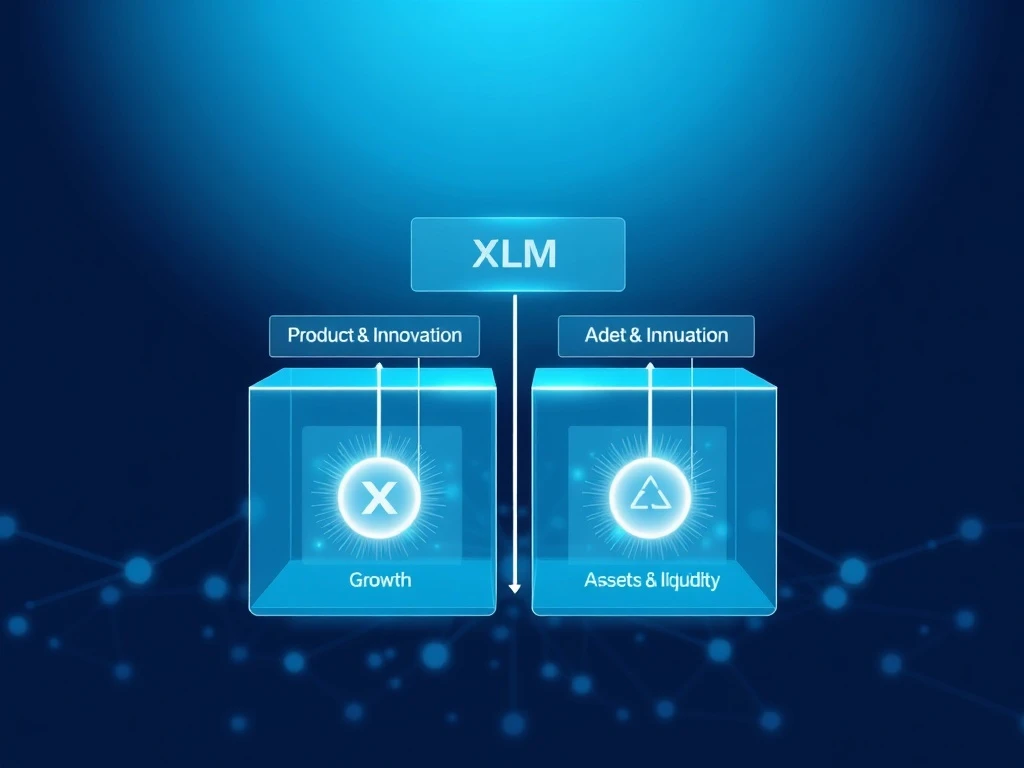
In a significant move toward enhanced organizational clarity, the Stellar Development Foundation has strategically reorganized its substantial 2.7 billion XLM holdings under a newly defined mandate structure. This restructuring, announced on November 15, 2024, represents a decisive shift in how one of cryptocurrency’s most established foundations manages its considerable assets. Consequently, the foundation now categorizes its XLM funds into four distinct operational pillars: Development, Product & Innovation, Growth, and Assets & Liquidity. This reorganization follows increasing industry demands for greater transparency and strategic asset management within major blockchain organizations.
Stellar Foundation’s New Mandate Structure Explained
The Stellar Development Foundation’s recent internal transfer of 2.7 billion XLM tokens marks a deliberate shift toward structured financial governance. Specifically, the foundation has moved these assets to align with its updated operational framework. This framework establishes clear budgetary categories for all future expenditures and investments. The four newly defined mandate categories provide distinct operational boundaries and reporting structures.
Also read: Crypto Clarity Act Gains Significant Backing as Armstrong Shifts Stance, Pressuring Congress
Firstly, the Development category funds core protocol improvements, developer tools, and network security enhancements. Secondly, Product & Innovation supports the creation of new applications and services built on the Stellar network. Thirdly, the Growth mandate focuses on ecosystem expansion, partnerships, and user adoption initiatives. Finally, Assets & Liquidity manages the foundation’s treasury, market operations, and liquidity provisioning strategies.
Industry analysts immediately recognized this move as a response to growing regulatory scrutiny. Furthermore, it addresses community expectations for clearer stewardship of foundation resources. The reorganization follows similar transparency initiatives by other major crypto entities like the Ethereum Foundation and Cardano’s IOG. Stellar’s approach, however, introduces a particularly granular level of public accountability through its integration with Stellar Expert.
Also read: XRP Price Prediction: Analyst Eyes $2 Target Before Potential Retest of Gaussian Channel Support
The Technical Implementation and Tracking Mechanism
Stellar Expert, the network’s primary blockchain explorer and analytics platform, now publicly labels and tracks all foundation accounts according to their new mandate classifications. This technical implementation allows any user to monitor fund allocations and expenditures in real-time. The platform displays each account’s specific mandate, transaction history, and current balance. This level of visibility is historic among major blockchain foundations and sets a new industry standard for financial transparency.
The tracking system operates through on-chain account labeling verified by the foundation. Each transaction between mandate categories appears publicly on the Stellar ledger. This creates an immutable audit trail for all foundation financial movements. The system also enables automated reporting and reduces administrative overhead for compliance purposes.
Historical Context and Industry Precedents
The Stellar Development Foundation’s decision emerges within a broader industry trend toward institutional-grade governance. Over the past three years, multiple cryptocurrency projects have faced criticism for opaque treasury management. Notably, the 2022 market downturn exposed weaknesses in many organizations’ financial controls. In response, industry leaders began adopting more traditional corporate governance structures.
For comparison, consider these recent transparency initiatives:
| Organization | Transparency Initiative | Year Implemented |
|---|---|---|
| Ethereum Foundation | Quarterly financial reports | 2023 |
| Cardano (IOG) | Public treasury dashboard | 2022 |
| Polkadot Treasury | On-chain voting for spending | 2023 |
| Stellar Foundation | Mandate-based account labeling | 2024 |
Stellar’s approach differs significantly through its real-time, on-chain verification system. Unlike quarterly reports or dashboards, the Stellar Expert integration provides continuous transparency. This method eliminates reporting delays and potential discrepancies between internal and public records.
Immediate Impacts on the Stellar Ecosystem
The reorganization immediately affects several aspects of the Stellar network’s operations and perception. Market analysts observed increased confidence among institutional observers following the announcement. The clear categorization of funds reduces uncertainty about how the foundation might deploy its substantial XLM reserves. This clarity particularly benefits:
- Developers seeking grants from the Development category
- Enterprises evaluating long-term partnership viability
- Regulators monitoring foundation compliance
- Investors assessing organizational stability
Additionally, the new structure creates predictable funding pathways for ecosystem projects. Teams can now identify which mandate category aligns with their proposals and track available budgets directly on-chain. This reduces application ambiguity and accelerates funding decisions. The system also enables better long-term planning for multi-year initiatives across all operational areas.
Expert Analysis on Treasury Management Evolution
Dr. Elena Martinez, a blockchain governance researcher at Stanford University, commented on this development. “The Stellar Foundation’s mandate restructuring represents a maturation point for crypto organizational design,” she noted. “By creating discrete operational categories with transparent tracking, they’re addressing fundamental governance challenges that have plagued the industry since its inception.”
Martinez further explained that this approach combines traditional nonprofit fund accounting with blockchain’s inherent transparency. “They’re essentially creating a public, real-time general ledger for foundation operations,” she stated. “This could become a model for how decentralized organizations manage substantial treasuries while maintaining community trust and regulatory compliance.”
Financial compliance expert Michael Chen added perspective on the regulatory implications. “As cryptocurrency foundations increasingly interact with traditional financial systems, they need demonstrable controls,” Chen observed. “Stellar’s system provides auditable proof of proper fund segregation and designated use. This directly addresses concerns raised by financial authorities worldwide regarding crypto organization governance.”
Long-Term Strategic Implications
The mandate reorganization positions the Stellar Development Foundation for sustainable long-term operations. By clearly defining spending categories, the foundation establishes guardrails against mission drift or disproportionate resource allocation. This structured approach supports several strategic objectives:
First, it ensures balanced investment across all critical operational areas rather than reactive spending. Second, it creates accountability mechanisms that align with both community expectations and potential regulatory requirements. Third, the system enables data-driven decision making through transparent tracking of each mandate’s effectiveness.
From a network growth perspective, the reorganization signals stability to potential enterprise adopters. Large organizations considering blockchain integration often evaluate the supporting foundation’s governance as carefully as the technology itself. Stellar’s transparent mandate structure addresses this evaluation criterion directly. It demonstrates professional treasury management comparable to traditional financial institutions.
The Assets & Liquidity category deserves particular attention for its market implications. By formally separating market operations from development and growth activities, the foundation clarifies its approach to XLM token management. This distinction helps market participants understand whether transactions represent strategic treasury management versus ecosystem development activities.
Technical Implementation Challenges and Solutions
Implementing this mandate structure presented several technical challenges that the foundation’s engineering team addressed systematically. The primary requirement involved creating a reliable account labeling system within Stellar Expert that couldn’t be spoofed or manipulated. The solution utilizes cryptographic verification from foundation-controlled signers to validate mandate labels.
Another challenge involved designing intuitive user interfaces for tracking funds across multiple accounts. Stellar Expert’s development team created specialized visualization tools showing fund flows between mandate categories. These tools help users understand not just current balances but also how funds move through the foundation’s operational cycle.
The system also needed to accommodate future mandate adjustments without disrupting tracking continuity. The engineering team implemented versioned labeling that maintains historical accuracy even if category definitions evolve. This forward-thinking design ensures the transparency system remains useful as the foundation’s operations mature.
Community and Market Response
Initial reactions from the Stellar community have been overwhelmingly positive. Community forum discussions highlight appreciation for the increased transparency. Many members have noted that this level of openness was frequently requested during previous community governance discussions. The ability to independently verify foundation activities aligns with cryptocurrency’s core principles of decentralization and transparency.
Market analysts have observed subtle but meaningful changes in XLM trading patterns following the announcement. While no dramatic price movement occurred immediately, trading volume indicators suggest increased institutional interest. Several cryptocurrency funds have reportedly accelerated their due diligence processes on Stellar following the transparency enhancement.
Notably, the reorganization has sparked conversations about governance standards across the broader cryptocurrency industry. Other project communities are now discussing whether similar transparency measures should be implemented within their ecosystems. This demonstrates Stellar’s potential influence on industry-wide governance practices.
Conclusion
The Stellar Development Foundation’s reorganization of 2.7 billion XLM holdings under a new mandate structure represents a significant advancement in blockchain organizational transparency. By categorizing funds into Development, Product & Innovation, Growth, and Assets & Liquidity categories with public tracking through Stellar Expert, the foundation establishes new standards for accountable treasury management. This strategic move addresses both community expectations for transparency and potential regulatory requirements for demonstrable financial controls. As the cryptocurrency industry continues maturing toward institutional adoption, such governance innovations become increasingly vital. The Stellar Foundation’s mandate-based approach provides a replicable model for how blockchain organizations can manage substantial assets while maintaining trust, compliance, and strategic focus across all operational areas.
FAQs
Q1: What exactly did the Stellar Development Foundation reorganize?
The foundation internally transferred 2.7 billion XLM tokens to align with a newly created mandate structure that categorizes all funds into four operational areas: Development, Product & Innovation, Growth, and Assets & Liquidity.
Q2: How can the public track these reorganized holdings?
Stellar Expert, the network’s blockchain explorer, now publicly labels and tracks all foundation accounts according to their mandate categories, allowing real-time monitoring of fund allocations and expenditures.
Q3: Why is this reorganization significant for the cryptocurrency industry?
It establishes new transparency standards for foundation treasury management, addresses regulatory concerns about financial controls, and provides a model for accountable governance that other projects may emulate.
Q4: Does this reorganization affect the total supply or circulating supply of XLM?
No, this involves internal transfers between foundation-controlled accounts, not new token issuance or burning, so it doesn’t change XLM’s total or circulating supply metrics.
Q5: How does this compare to transparency measures by other cryptocurrency foundations?
Stellar’s approach provides real-time, on-chain verification through mandated account labeling, offering more immediate transparency than quarterly reports or dashboards used by some other foundations.
Q6: What are the practical benefits of this new mandate structure?
It enables predictable funding pathways for ecosystem projects, reduces uncertainty about foundation resource deployment, supports regulatory compliance efforts, and demonstrates professional treasury management to potential enterprise partners.

This article was produced with AI assistance and reviewed by our editorial team for accuracy and quality.