Spacecoin’s Strategic Partnership with World Liberty Financial Pioneers a Revolutionary DeFi and Satellite Internet Fusion
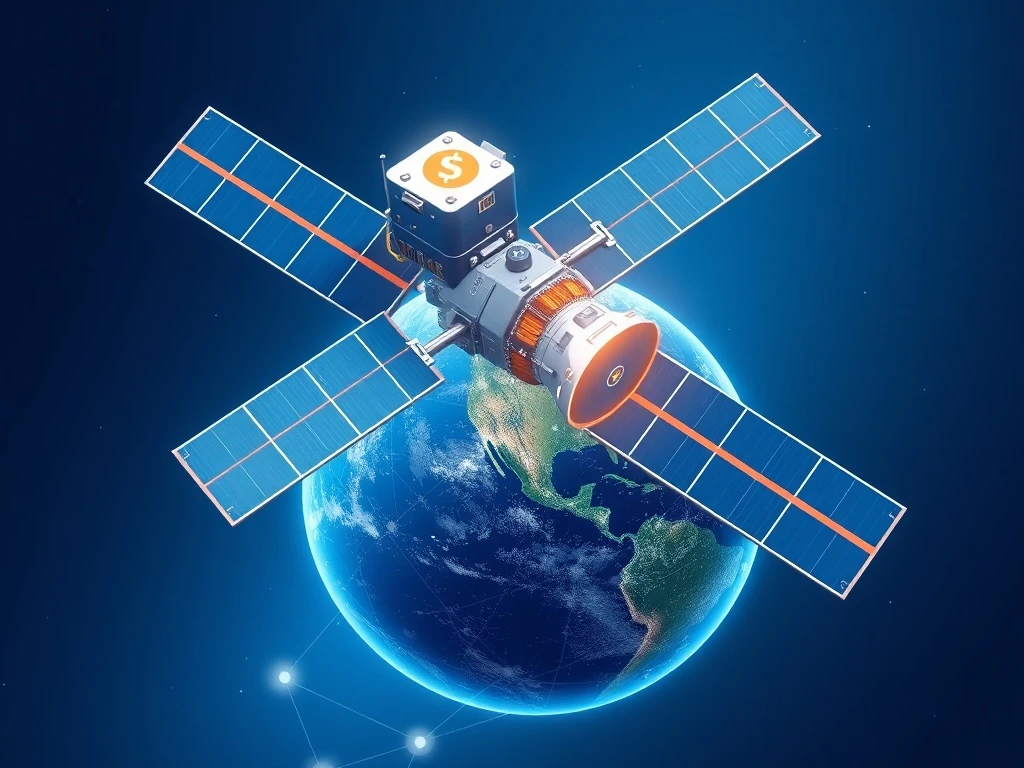
In a significant move for the decentralized finance (DeFi) and telecommunications sectors, Spacecoin (SPACE) has announced a pivotal token swap partnership with World Liberty Financial (WLFI). This collaboration, revealed via the project’s official X account, aims to create a novel synergy between blockchain-based financial services and global satellite internet connectivity. The agreement notably involves WLFI’s native stablecoin, USD1, which will facilitate payment and settlement for new users on the Spacecoin network. This partnership represents a tangible step toward solving real-world financial inclusion challenges through technological convergence.
Analyzing the Spacecoin and World Liberty Financial Token Swap
The core of this announcement is a strategic token swap agreement. Essentially, Spacecoin and World Liberty Financial will exchange portions of their respective native tokens to align their economic incentives. This mechanism fosters deeper collaboration than a simple marketing alliance. Consequently, both projects’ communities gain direct exposure to the other’s ecosystem. Token swaps have become a common tool for blockchain projects seeking synergistic growth, as seen in past collaborations between major DeFi protocols.
For instance, the partnership follows a growing trend where infrastructure-focused cryptocurrencies seek partnerships with financial service providers. The primary objective is to integrate DeFi liquidity and tools with physical-world infrastructure projects. World Liberty Financial brings its regulated financial technology expertise and the USD1 stablecoin to the table. Meanwhile, Spacecoin contributes its blockchain architecture designed for connectivity-based applications. This fusion could potentially unlock new use cases for decentralized applications (dApps) in remote or underserved regions.
The Vision: Merging DeFi with Satellite Connectivity
The partnership’s stated goal is to integrate DeFi with satellite internet connectivity. This is not merely a theoretical concept. Satellite internet providers, such as Starlink, are rapidly expanding global coverage. However, payment and financial services for users in these new networks often remain traditional and limited. Spacecoin and WLFI plan to embed financial functionality directly into the connectivity layer. Specifically, World Liberty Financial intends to use USD1 to provide payment and settlement services for new Spacecoin network users.
This integration could manifest in several practical ways. Users might pay for satellite bandwidth using the USD1 stablecoin directly from a crypto wallet. Alternatively, they could collateralize connectivity services within DeFi protocols. Furthermore, the partnership could enable microloans or insurance products tied to internet access. The underlying technology likely involves smart contracts on the Spacecoin blockchain that interact with WLFI’s financial rails. This approach mirrors early internet models where service and payment were bundled, but with decentralized, user-owned infrastructure.
Expert Insight on Market Impact and Feasibility
Industry analysts view this partnership as a logical evolution for both sectors. “We are observing a maturation phase in crypto,” notes a fintech research director at a major advisory firm. “Projects are moving beyond speculative assets to solve tangible infrastructure problems. The merger of connectivity and finance is a frontier with immense potential, particularly for the estimated 3 billion people who remain underbanked and often poorly connected.” The success of similar, though smaller-scale, projects in Africa using mobile money and blockchain provides a precedent.
The technical feasibility hinges on several factors. First, the stability and regulatory compliance of the USD1 stablecoin are paramount for user trust. Second, Spacecoin’s blockchain must demonstrate the scalability and low transaction costs necessary for millions of micro-payments. Third, the actual integration with satellite internet hardware and billing systems presents a significant engineering challenge. The timeline for tangible user products will be a key metric to watch. If successful, this model could pressure traditional telecom and finance giants to adopt similar blockchain-based solutions.
Understanding the Role of the USD1 Stablecoin
A critical component of this partnership is the USD1 stablecoin issued by World Liberty Financial. Unlike volatile cryptocurrencies like Bitcoin or SPACE itself, a stablecoin is designed to maintain a steady value, typically pegged to a fiat currency like the US dollar. USD1 will act as the primary medium of exchange and unit of account within the integrated services. This provides users with price predictability for paying internet bills or accessing DeFi services.
The use of a native stablecoin, rather than an established one like USDC or Tether, is strategic. It allows World Liberty Financial to control the economic layer and potentially offer unique features like interest-bearing accounts or loyalty rewards directly tied to the stablecoin’s use within the Spacecoin ecosystem. However, it also places the burden of maintaining robust reserves and transparent audits squarely on WLFI to ensure peg stability. The table below outlines key comparisons:
| Stablecoin | Issuer | Primary Use Case in Partnership | Key Consideration |
|---|---|---|---|
| USD1 | World Liberty Financial | Core payment & settlement for Spacecoin network services | Requires proven 1:1 dollar reserves |
| USDC | Circle | Common DeFi liquidity (not used in this deal) | Widely adopted, highly regulated |
| DAI | MakerDAO | Decentralized collateralized stablecoin (not used) | Algorithmic, crypto-collateralized |
This choice underscores the partnership’s desire for a vertically integrated financial stack. Ultimately, the credibility of USD1 will be a major determinant of the partnership’s long-term adoption.
Potential Challenges and Regulatory Landscape
While the vision is ambitious, the path forward involves navigating significant hurdles. The regulatory environment for both cryptocurrency and telecommunications is complex and varies by jurisdiction. Operating a stablecoin, especially for cross-border payments for internet services, may attract scrutiny from financial regulators like the SEC or international bodies. Furthermore, providing satellite internet often involves national security and data sovereignty concerns.
- Financial Compliance: WLFI must ensure USD1 operations comply with money transmitter and securities laws in every region it operates.
- Telecom Regulations: Integrating crypto payments may require approvals from national telecommunications authorities.
- Technology Integration: Seamlessly linking blockchain smart contracts with legacy satellite billing systems is a non-trivial technical task.
- Market Adoption: Convincing users to adopt a new payment method for an essential service requires clear usability and cost benefits.
These challenges are substantial but not insurmountable. The partners will likely adopt a phased rollout, starting in regions with favorable regulations and clear demand for both improved connectivity and alternative finance.
Conclusion
The Spacecoin and World Liberty Financial token swap partnership marks a compelling experiment at the intersection of two transformative technologies: decentralized finance and satellite internet. By leveraging a token swap for aligned incentives and planning to use the USD1 stablecoin for settlements, the collaboration aims to build a unified platform for connectivity and economic participation. This move reflects a broader industry shift toward practical, infrastructure-focused blockchain applications. The partnership’s success will depend on execution, regulatory navigation, and demonstrating clear value to end-users. If successful, it could pioneer a new model for how the world accesses and pays for essential digital services, making the Spacecoin token swap a case study for future integrations.
FAQs
Q1: What is a token swap partnership?
A token swap partnership is an agreement where two blockchain projects exchange portions of their native cryptocurrencies. This aligns their economic interests and encourages collaboration between their respective developer and user communities, creating a more integrated ecosystem.
Q2: How will USD1 be used on the Spacecoin network?
World Liberty Financial plans for its USD1 stablecoin to serve as the primary payment and settlement method for new users accessing services on the Spacecoin network. This could include paying for satellite internet bandwidth or settling transactions within DeFi applications built on the platform.
Q3: What are the main benefits of combining DeFi with satellite internet?
The main benefits include providing seamless, borderless financial services to users gaining internet access, enabling innovative models like pay-as-you-go connectivity via micro-payments, and fostering greater financial inclusion in remote areas where traditional banking is unavailable.
Q4: What are the biggest risks for this partnership?
The key risks involve navigating the uncertain regulatory landscape for crypto and telecom, ensuring the technical stability and security of the integrated system, and achieving sufficient user adoption to create a sustainable economic model.
Q5: Has this been done before?
While several projects have explored blockchain for telecom payments or DeFi for connectivity, a partnership of this scale specifically targeting satellite internet integration with a dedicated stablecoin is a novel approach, positioning it at the forefront of this emerging niche.