Spacecoin’s Central Tech Seminar with KAIST Electrical Engineering Fuels Satellite Internet Ambitions
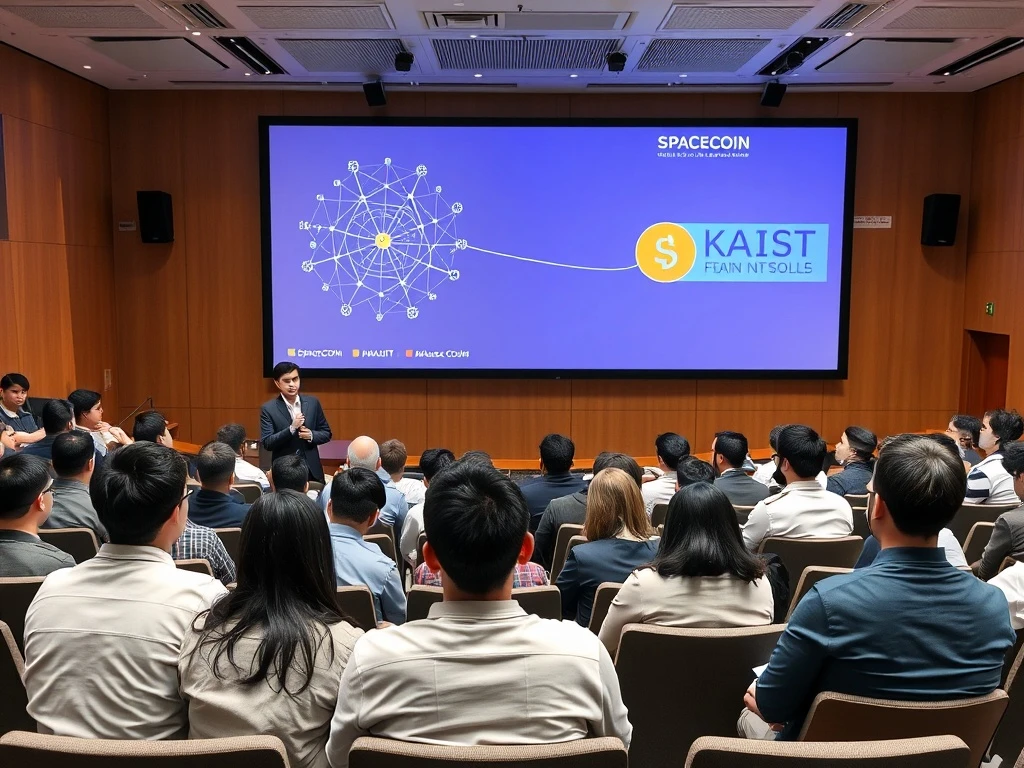
In a significant move bridging blockchain innovation with academic research, the decentralized satellite internet project Spacecoin (SPACE) recently convened a major technology seminar with the prestigious School of Electrical Engineering at the Korea Advanced Institute of Science and Technology (KAIST). This collaborative event, held at KAIST’s main campus in Daejeon, South Korea, marks a significant step in translating the ambitious vision for Spacecoin’s SpaceNetwork into a technically viable implementation plan. The seminar brought together the project’s core team, including founder Taelim Oh and an advisory group of former senior Samsung Electronics engineers, with leading academic minds from five distinct KAIST research labs, spearheaded by Professor Jun-hyuk Kang.
Spacecoin and KAIST Forge a Strategic Alliance
The partnership between Spacecoin and KAIST represents a deliberate strategy to ground a bold cryptocurrency vision in rigorous engineering and scientific research. Consequently, this seminar served as a formal nexus between theoretical blockchain applications and practical aerospace and telecommunications engineering. The School of Electrical Engineering at KAIST is globally renowned for its contributions to information and communication systems, making it an ideal academic partner for a project like Spacecoin. Furthermore, the involvement of former Samsung Electronics senior engineers provides a critical link to Korea’s world-class industrial manufacturing and electronics expertise. This triad of blockchain innovators, academic researchers, and industry veterans creates a formidable foundation for tackling the complex challenges of building a decentralized satellite network.
Also read: Bitcoin Strategy Divide: GameStop's 4,710 BTC Hold Contrasts With Nation's Massive Sell-Off
Decoding the SpaceNetwork Vision
The core focus of the seminar was Spacecoin’s SpaceNetwork, a proposed decentralized constellation of low-earth orbit (LEO) satellites designed to provide global internet coverage. Unlike traditional satellite internet providers, which operate centralized, corporate-owned fleets, SpaceNetwork aims to tap into blockchain technology to create a decentralized ownership and governance model. Essentially, the network would allow individuals to participate by operating nodes or contributing resources, potentially earning SPACE tokens in return. This model promises several potential advantages, including enhanced network resilience, reduced costs through decentralization, and censorship-resistant access. However, the technical hurdles for such a system are immense, spanning satellite design, launch logistics, orbital mechanics, secure ground station communication, and integrating these systems with a blockchain-based incentive layer.
Technical Challenges and Collaborative Research Pathways
The seminar agenda likely addressed several key technical domains where KAIST’s expertise is directly applicable. For instance, researchers would explore efficient signal processing and data routing protocols for a dynamic satellite mesh network. Additionally, they would investigate power management systems for small satellites and resilient encryption methods for securing data transmission across the decentralized system. The presence of multiple research labs indicates a multidisciplinary approach, potentially covering:
Also read: Bitcoin Volatility Dips Below Major Stocks as European Nation Sells Billions in Crypto Reserves
- Communication Systems: Designing protocols for high-throughput, low-latency links between satellites and ground stations.
- Network Security: Developing cryptographic frameworks to protect the network from intrusion and ensure data integrity.
- Embedded Systems & Hardware: Optimizing the onboard computing and power systems for the satellite nodes.
- Distributed Computing: Architecting the software layer that manages network consensus and token incentives.
This collaborative research is essential for moving Spacecoin from a conceptual whitepaper to a testable prototype. The seminar provided a platform to identify the most critical research questions and establish formal channels for ongoing collaboration between Spacecoin’s developers and KAIST’s postgraduate researchers.
The Broader Context of Satellite Internet and Blockchain
Spacecoin’s initiative enters a rapidly evolving market. Established players like SpaceX’s Starlink and Amazon’s Project Kuiper are aggressively deploying their own LEO constellations. Meanwhile, other blockchain projects, such as Helium Network, have pioneered decentralized wireless infrastructure for IoT devices, though on a terrestrial scale. Spacecoin’s unique proposition is to merge these two trends. The KAIST seminar underscores a recognition within the Spacecoin team that competing in this arena requires more than just blockchain expertise; it demands world-class aerospace and telecommunications engineering. This academic partnership is a clear signal of intent to build a project with substantive technological depth, aiming to satisfy not only crypto investors but also the rigorous scrutiny of the scientific and engineering communities.
Implications for the Cryptocurrency and Telecom Sectors
The collaboration has several potential implications. First, it could enhance the credibility and legitimacy of the Spacecoin project within both the tech and finance sectors. Second, successful research outcomes could lead to patented technologies or open-source protocols that benefit the wider industry. Third, it establishes a model for how other ambitious Web3 projects might engage with top-tier academic institutions to solve complex real-world problems. For KAIST, the partnership offers applied research opportunities for its students and faculty at the modern of two convergent fields: satellite technology and decentralized systems. The involvement of former Samsung advisors further suggests potential pathways for future commercialization or manufacturing partnerships within South Korea’s solid tech ecosystem.
Conclusion
The recent technology seminar between Spacecoin and KAIST’s School of Electrical Engineering is far more than a routine corporate presentation. It represents a strategic, depth-oriented approach to building the SpaceNetwork. By engaging directly with one of Asia’s premier engineering institutions, Spacecoin is investing in the foundational research required to make its decentralized satellite internet vision technically plausible. This move aligns with broader trends of increasing sophistication in the cryptocurrency sector, where long-term success increasingly depends on verifiable technological progress and legitimate partnerships. The ongoing collaboration between Spacecoin’s team and KAIST’s research labs will be a critical metric for observers to gauge the project’s potential to transition from an ambitious concept into a functional, global infrastructure network.
FAQs
Q1: What is the primary goal of Spacecoin’s SpaceNetwork?
The primary goal is to create a decentralized, global internet service using a constellation of low-earth orbit satellites, managed and incentivized through blockchain technology and the SPACE token.
Q2: Why is KAIST a significant partner for this project?
KAIST’s School of Electrical Engineering is a globally top-ranked institution with deep expertise in communications, networking, and embedded systems—all critical disciplines for designing and launching a functional satellite network.
Q3: How does a decentralized satellite network differ from services like Starlink?
While both aim to provide internet from space, Starlink is a centrally owned and operated by SpaceX. SpaceNetwork proposes a decentralized model where infrastructure ownership and network governance could be distributed among token holders and node operators.
Q4: What role do the former Samsung Electronics engineers play?
They provide invaluable industry experience in hardware development, mass production, supply chain management, and electronics engineering, bridging the gap between academic research and commercial-scale implementation.
Q5: What are the next likely steps following this seminar?
The next steps likely involve formalizing research agreements, defining specific thesis or project topics for KAIST graduate students, conducting simulation-based studies, and potentially moving toward the design and testing of prototype hardware components.

This article was produced with AI assistance and reviewed by our editorial team for accuracy and quality.