South Korea’s Democratic Party Boldly Drafts Its Own Digital Asset Bill Amid Government Delays
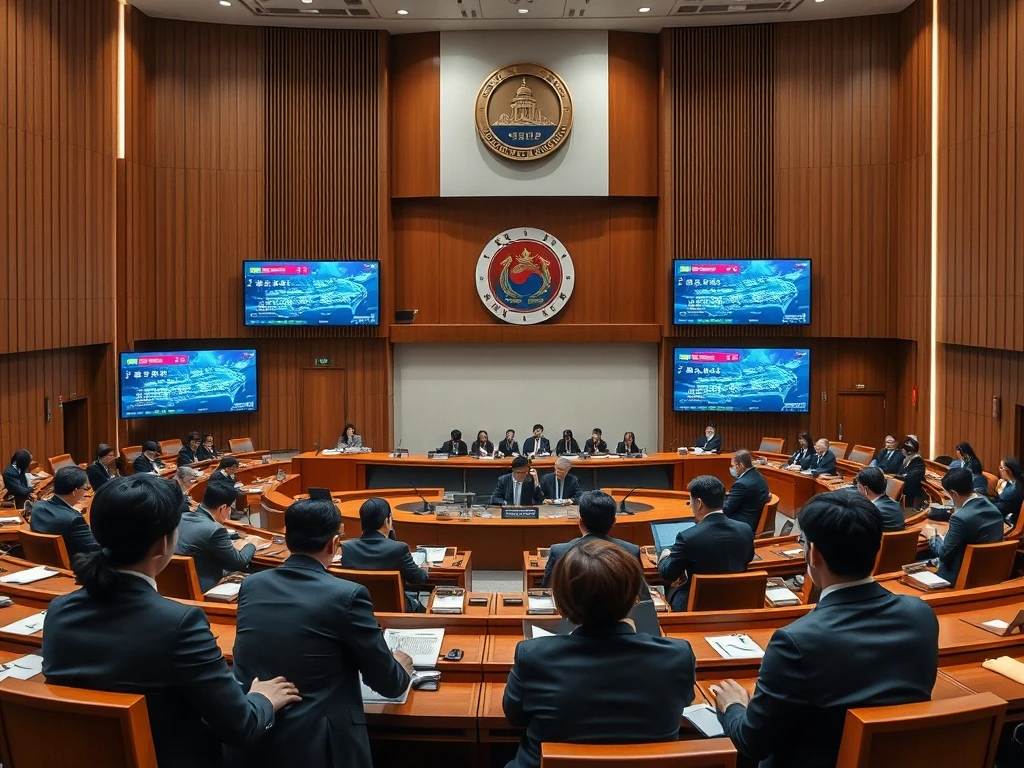
SEOUL, South Korea – March 2025 – In a significant development for Asia’s cryptocurrency field, South Korea’s ruling Democratic Party has initiated the drafting of its own comprehensive digital asset legislation. This proactive move directly addresses growing concerns about regulatory uncertainty as the government’s proposed Digital Asset Basic Act faces substantial delays. The party’s Digital Asset Task Force now consolidates multiple member proposals into a single bill that could reshape how South Korea regulates cryptocurrencies, stablecoins, and blockchain technologies.
South Korea’s Digital Asset Bill Emerges From Legislative Gridlock
The Democratic Party’s decision to draft independent legislation follows months of stalled progress on the government’s Digital Asset Basic Act. Financial authorities and the National Assembly have repeatedly clashed over fundamental regulatory approaches. Consequently, the legislative vacuum threatens South Korea’s position as a global cryptocurrency hub. The party’s task force aims to bridge this gap by creating workable regulations that balance innovation with consumer protection.
Industry analysts note this development represents a strategic shift in Korean cryptocurrency policy-making. Previously, regulatory initiatives primarily originated from government agencies like the Financial Services Commission. Now, the legislative branch actively shapes the regulatory framework. This parliamentary approach could accelerate the implementation of clear rules for digital asset exchanges, token issuers, and service providers.
Contrasting Approaches to Cryptocurrency Regulation
The Democratic Party’s bill will likely differ substantially from the government’s proposal, particularly regarding stablecoin issuance. Financial authorities previously advocated restricting stablecoin issuance to consortiums with majority bank ownership. However, industry participants strongly opposed this requirement, arguing it would stifle innovation and concentrate power among traditional financial institutions.
Also read: Bitcoin Treasury Companies Face New Pressure as US-Iran Tensions Shift
Market observers anticipate the party’s legislation will incorporate more industry-friendly provisions. The Democratic Party has consistently engaged with cryptocurrency businesses during previous policy discussions. Their approach typically balances regulatory oversight with support for technological advancement. This philosophy may produce a more nuanced stablecoin framework than the government’s initially proposed restrictions.
Expert Analysis on Korea’s Regulatory Crossroads
Financial policy experts highlight several critical factors influencing this legislative development. First, South Korea maintains one of the world’s most active retail cryptocurrency markets. Second, the country hosts major global exchanges like Upbit and Bithumb. Third, Korean technology companies increasingly integrate blockchain solutions. These realities create urgent pressure for coherent regulations that protect investors while building innovation.
Professor Kim Jae-hyun of Seoul National University’s Blockchain Research Center explains, “The Democratic Party’s initiative reflects practical recognition that cryptocurrency markets cannot wait indefinitely for perfect legislation. Their approach acknowledges industry concerns while establishing necessary safeguards. This balanced perspective could serve as a model for other jurisdictions facing similar regulatory challenges.”
Key Provisions and Potential Impacts
The consolidated bill will address multiple aspects of digital asset regulation beyond stablecoin issuance. Industry sources indicate likely provisions include:
- Exchange licensing requirements – Clear criteria for operating cryptocurrency trading platforms
- Investor protection mechanisms – Standards for custody, disclosure, and dispute resolution
- Token classification framework – Distinctions between securities, utilities, and payment tokens
- Anti-money laundering protocols – Enhanced compliance requirements for virtual asset service providers
- Taxation guidelines – Clarification on capital gains and transaction taxes
These provisions could significantly impact South Korea’s cryptocurrency ecosystem. Exchanges may face stricter operational requirements but gain clearer compliance pathways. Investors could benefit from enhanced protections against fraud and market manipulation. Technology companies might receive guidance for token-based fundraising and blockchain implementation.
Comparative Analysis: Government vs. Party Approaches
The following table illustrates potential differences between the government’s proposed Digital Asset Basic Act and the Democratic Party’s emerging legislation:
| Regulatory Aspect | Government Proposal | Democratic Party Approach |
|---|---|---|
| Stablecoin Issuance | Restricted to bank-majority consortiums | Likely broader participation criteria |
| Regulatory Philosophy | Caution-first, risk minimization | Balance of innovation and protection |
| Industry Consultation | Limited formal engagement | Active task force with industry input |
| Implementation Timeline | Delayed by inter-agency disputes | Accelerated through legislative process |
Historical Context and Legislative Precedents
South Korea’s current cryptocurrency regulatory journey began with the 2017 boom when the country emerged as a global trading hotspot. Initial responses included exchange regulations and initial coin offering bans. Subsequently, the 2020 Act on Reporting and Using Specified Financial Transaction Information established anti-money laundering frameworks. However, comprehensive digital asset legislation remained incomplete despite multiple proposals.
The Democratic Party previously demonstrated cryptocurrency policy leadership through individual member bills. Representative Kim Byung-wook proposed the Digital Asset Basic Act in 2021. Representative Lee Yong-woo submitted legislation addressing decentralized finance in 2023. Now, the party consolidates these efforts into unified legislation that reflects accumulated expertise and evolving market understanding.
International Implications and Regional Leadership
South Korea’s legislative developments carry significance beyond its borders. As Asia’s fourth-largest economy and a technology innovation leader, Korean cryptocurrency regulations influence regional standards. Japan established comprehensive crypto regulations years earlier. China implemented strict prohibitions. Singapore developed progressive frameworks. South Korea’s approach could establish a middle path that other developing markets might emulate.
Furthermore, consistent regulations could strengthen South Korea’s position in global cryptocurrency markets. International exchanges considering Asian expansion often prioritize jurisdictions with clear regulatory environments. The Democratic Party’s bill, if passed, might attract additional investment and talent to Korea’s blockchain sector. This potential economic benefit adds urgency to the legislative process.
Conclusion
South Korea’s Democratic Party has taken decisive action by drafting its own digital asset bill amid government legislative delays. This initiative addresses critical regulatory gaps while incorporating industry perspectives that differ from earlier government proposals. The resulting legislation will particularly influence stablecoin regulation and broader cryptocurrency framework development. As the Digital Asset Task Force progresses, market participants await details that could shape South Korea’s cryptocurrency market for years. The party’s bill represents not just alternative legislation but a strategic effort to maintain South Korea’s relevance in the rapidly evolving global digital economy.
FAQs
Q1: Why is South Korea’s Democratic Party drafting its own digital asset bill?
The party aims to address legislative delays surrounding the government’s Digital Asset Basic Act. Disagreements between financial authorities and the National Assembly have created regulatory uncertainty. Consequently, the Democratic Party seeks to establish workable regulations through its consolidated bill.
Q2: How might the Democratic Party’s bill differ from the government’s proposal?
Key differences will likely appear in stablecoin regulation. The government proposed restricting issuance to consortiums with majority bank ownership. However, the Democratic Party’s bill may allow broader participation, reflecting industry concerns about innovation stifling.
Q3: What is the Digital Asset Task Force?
This Democratic Party committee consolidates various digital asset proposals from party members. The task force engages with industry stakeholders while drafting comprehensive legislation. Their work addresses exchange regulation, investor protection, token classification, and compliance requirements.
Q4: How will this legislation affect cryptocurrency exchanges in South Korea?
Exchanges will likely face clearer licensing requirements and operational standards. While compliance costs may increase, regulatory certainty could benefit legitimate platforms. Enhanced investor protections might also boost market confidence and participation.
Q5: When might the Democratic Party’s digital asset bill become law?
The legislative process involves drafting, committee review, parliamentary debate, and voting. While no official timeline exists, the party’s proactive approach suggests accelerated consideration compared to stalled government proposals. Market observers anticipate potential progress within the current parliamentary session.

This article was produced with AI assistance and reviewed by our editorial team for accuracy and quality.