Solana Price Outlook 2026: Critical Juncture as SOL Confronts $85.55 Resistance Amid Transformative Network Upgrades
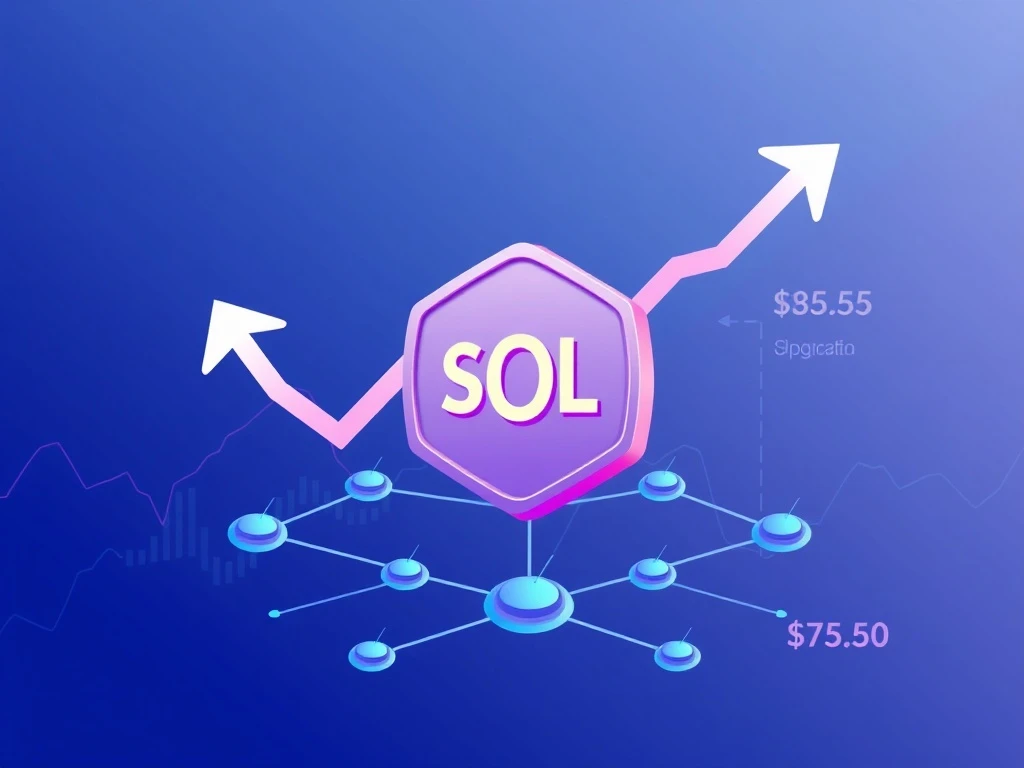
As Solana approaches 2026, the blockchain network faces a pivotal technical moment that could define its market trajectory for years to come. The cryptocurrency’s native token, SOL, currently navigates between crucial technical levels at $85.55 resistance and $76.70 support, creating a decisive trading range that technical analysts worldwide monitor closely. This price consolidation occurs against the backdrop of scheduled network upgrades that promise to enhance Solana’s scalability and transaction efficiency. Market participants now question whether SOL can break through its current resistance barrier or if it will test lower support levels instead.
Solana’s Technical Landscape: Understanding the $85.55 Resistance and $76.70 Support
Technical analysis reveals that Solana’s current price action centers around two critical levels. The $85.55 resistance represents a significant psychological and technical barrier that SOL has tested multiple times throughout late 2025. Conversely, the $76.70 support level has provided consistent buying interest during market corrections. These levels form what technical analysts call a “compression zone,” where price volatility typically decreases before a decisive breakout occurs. Historical data shows that previous encounters with similar technical formations have preceded substantial price movements in either direction.
Market analysts emphasize the importance of trading volume during these technical tests. Higher volume during resistance tests suggests stronger conviction among buyers, while low volume breakouts often prove unsustainable. The 200-day moving average currently sits between these two levels, adding another technical factor to consider. Furthermore, the Relative Strength Index (RSI) for SOL has fluctuated between neutral and slightly overbought territory, indicating balanced buying and selling pressure. These technical indicators collectively create a comprehensive picture of Solana’s current market position.
Network Upgrades: The Fundamental Backdrop for Solana’s 2026 Trajectory
Beyond technical analysis, Solana’s fundamental developments provide crucial context for its 2026 outlook. The blockchain network has scheduled multiple upgrades throughout 2026 aimed at addressing historical challenges and enhancing performance. These improvements focus primarily on network stability, transaction throughput, and validator efficiency. The development team’s roadmap includes implementation of Firedancer, a validator client designed to improve network reliability and performance. This upgrade represents a significant engineering achievement that could substantially reduce network congestion during high-demand periods.
Additionally, Solana plans to implement localized fee markets, which would allow different parts of the network to have independent fee structures based on demand. This technical improvement aims to prevent network-wide congestion caused by activity in specific applications. The development team also continues work on QUIC protocol implementation and stake-weighted quality of service, both designed to improve network performance under heavy load. These technical advancements occur alongside growing institutional adoption, with several traditional finance entities announcing Solana integration plans for 2026.
Market Context and Comparative Analysis
Solana’s position within the broader cryptocurrency market provides additional perspective for its 2026 outlook. The network continues to maintain its position as one of the leading smart contract platforms by total value locked (TVL) and developer activity. Comparative analysis with competing layer-1 blockchains shows Solana maintaining advantages in transaction speed and cost efficiency, though challenges remain in network stability during peak usage. The growing decentralized finance (DeFi) ecosystem on Solana, particularly in perpetual trading and liquid staking derivatives, creates fundamental demand for SOL tokens beyond speculative trading.
Institutional research reports from major financial institutions indicate increasing attention on Solana’s technological developments. Several analysts note that successful implementation of scheduled upgrades could position Solana favorably against both established competitors like Ethereum and emerging layer-1 solutions. However, these same reports caution that technical execution risks remain, particularly given the complexity of the proposed upgrades. The cryptocurrency’s correlation with broader market trends, especially Bitcoin’s price movements, continues to influence SOL’s price action, though this correlation has decreased slightly throughout 2025.
Historical Performance Patterns and Future Projections
Analysis of Solana’s historical price patterns reveals several relevant trends for understanding its 2026 outlook. The cryptocurrency has demonstrated strong recovery capabilities following network outages and technical challenges, suggesting resilient underlying demand. Previous resistance and support levels have often become significant psychological barriers that influence future price action. Technical analysts note that SOL’s volatility typically increases during major network upgrades, creating both trading opportunities and risks for market participants.
Several quantitative models project potential price ranges for SOL throughout 2026 based on different technical scenarios. These models consider factors including network growth metrics, developer activity, and macroeconomic conditions. While specific price predictions vary widely, most models converge on the importance of the current $85.55 resistance and $76.70 support levels as determinants of medium-term price direction. The table below summarizes key technical levels and their significance:
| Price Level | Technical Significance | Historical Context |
|---|---|---|
| $85.55 | Primary Resistance | Previous rejection point, psychological barrier |
| $76.70 | Primary Support | Multiple bounce points, accumulation zone |
| $92.40 | Next Resistance | 2025 high, Fibonacci extension level |
| $68.90 | Next Support | 200-day moving average, volume profile low |
Market participants should monitor trading volume patterns around these levels, as volume confirmation often validates breakouts or breakdowns. Additionally, the options market provides insight into trader expectations, with put-call ratios and implied volatility offering clues about market sentiment. The growing institutional presence in Solana derivatives markets adds sophistication to price discovery mechanisms, potentially reducing extreme volatility during technical tests.
Risk Factors and Market Considerations for 2026
Several risk factors could influence Solana’s price trajectory throughout 2026. Technical execution risk remains paramount, as complex network upgrades always carry implementation challenges. Market-wide factors including regulatory developments, macroeconomic conditions, and cryptocurrency adoption trends will inevitably affect SOL’s price action alongside network-specific developments. The competitive landscape continues evolving, with both established platforms and new entrants vying for market share in the smart contract platform sector.
Investors should consider these key factors when evaluating Solana’s 2026 outlook:
- Network performance during and after scheduled upgrades
- Developer adoption and ecosystem growth metrics
- Institutional participation in staking and governance
- Regulatory clarity regarding blockchain technology
- Market liquidity conditions during volatile periods
These factors interact in complex ways, creating a multifaceted investment landscape. Successful navigation of this environment requires attention to both technical developments and broader market trends. The cryptocurrency’s historical resilience suggests capacity to overcome challenges, though past performance never guarantees future results in this rapidly evolving sector.
Conclusion
Solana stands at a technical crossroads as it approaches 2026, with the $85.55 resistance and $76.70 support levels defining its immediate price trajectory. The cryptocurrency’s ability to break through resistance or hold support will likely determine its medium-term market direction. These technical developments occur alongside fundamental network upgrades that promise to enhance Solana’s scalability and reliability. Market participants should monitor both price action around critical levels and successful implementation of scheduled technical improvements. The Solana price outlook for 6 ultimately depends on the interplay between technical market dynamics and fundamental network development, creating a complex but potentially rewarding landscape for informed participants.
FAQs
Q1: Why are the $85.55 and $76.70 levels particularly important for Solana’s price?
These levels represent significant technical barriers where buying and selling pressure has historically concentrated. The $85.55 resistance has previously rejected price advances, while $76.70 support has provided buying opportunities during corrections, creating a defined trading range that often precedes decisive price movements.
Q2: What network upgrades is Solana implementing in 2026?
Solana’s 2026 upgrade roadmap includes Firedancer implementation for improved validator performance, localized fee markets to prevent network-wide congestion, QUIC protocol enhancements, and stake-weighted quality of service features designed to maintain performance during high demand periods.
Q3: How do Solana’s technical levels compare to other major cryptocurrencies?
Like other cryptocurrencies, Solana’s price action respects technical support and resistance levels, though its volatility often exceeds more established assets. The defined nature of SOL’s current trading range reflects both technical patterns and fundamental developments specific to the Solana ecosystem.
Q4: What factors could help Solana break through the $85.55 resistance level?
Sustained buying volume, successful network upgrade implementations, positive broader market sentiment, increased institutional adoption, and growing developer activity on the platform could collectively provide the momentum needed for a decisive breakout above resistance.
Q5: How might regulatory developments affect Solana’s 2026 price trajectory?
Regulatory clarity regarding blockchain technology and cryptocurrency classification could significantly impact institutional participation and mainstream adoption. Positive regulatory developments typically support price appreciation, while restrictive measures often create headwinds for cryptocurrency markets including Solana.
This article was produced with AI assistance and reviewed by our editorial team for accuracy and quality.