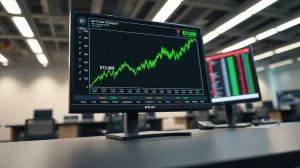
Critical Solana Retest Underway as Analysts Pinpoint $75 Support

NEW YORK, March 21, 2026 – The Solana (SOL) blockchain network faces a decisive technical juncture this week as its native token undergoes a critical retest of its foundational market structure. Analysts across major trading desks are now monitoring the $75 price zone, a key support level that will determine whether the asset’s 2026 recovery narrative remains intact. This retest follows a volatile first quarter and arrives amid shifting macroeconomic sentiment toward digital assets. The outcome at this level is widely seen as a bellwether for mid-cap cryptocurrency resilience in the current cycle.
Solana Confronts a Defining Market Structure Test
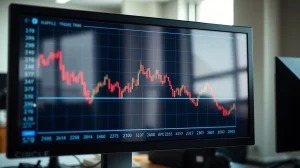
Market technicians identify the $74 to $78 range as a critical confluence zone for Solana. This area represents the 200-day simple moving average, a prior major resistance-turned-support level from Q4 2025, and the 0.618 Fibonacci retracement of the asset’s rally from its 2025 low. A sustained breakdown below this zone, particularly on a weekly closing basis, would violate the higher-low sequence that has characterized SOL’s price action since November 2025. Consequently, analysts at firms like Glassnode and IntoTheBlock have flagged this retest as paramount for the asset’s medium-term trajectory. Data from CoinMarketCap shows SOL trading at $76.83 at press time, having bounced from an intraday low of $75.12.
Also read: Android Crypto Vulnerability: Microsoft Exposes Critical Flaw Threatening 30 Million Wallets
The current pressure stems from a broader recalibration of risk appetite following the Federal Reserve’s latest policy statement on March 19. However, Solana’s drawdown of approximately 18% from its late-February high slightly outpaces the broader CoinDesk Market Index (CMI), suggesting some chain-specific headwinds are at play. On-chain metrics reveal a notable increase in token movement from long-term holders to exchanges over the past seven days, a signal often associated with distribution or profit-taking.
Implications for Solana’s 2026 Recovery Narrative
The success or failure of this retest carries significant implications for investor confidence and network growth initiatives. A firm hold above $75 would validate the recovery thesis, potentially setting the stage for a challenge of the $100 psychological resistance. Conversely, a breakdown could trigger a deeper correction toward the $60 support cluster, undermining the positive momentum built through Q1 2026. The impact extends beyond spot markets into Solana’s vibrant decentralized finance (DeFi) and non-fungible token (NFT) ecosystems, where total value locked (TVL) and user activity are sensitive to SOL’s market performance.
Also read: Bitcoin Cash Price Prediction: Can BCH Realistically Reach $1000 by 2030?
- DeFi Protocol Health: A falling SOL price increases liquidation risks for leveraged positions across lending protocols like Marginfi and Solend, potentially creating reflexive selling pressure.
- Validator Economics: The staking yield, currently around 6.2% annually, becomes less attractive in a bearish price environment, which could impact network security if staked SOL decreases.
- Developer Sentiment: Sustained price weakness may dampen the launch of new projects and dApps, slowing the network effect that has been central to Solana’s comeback story.
Expert Analysis on Key Support Levels
James Fotheringham, lead technical analyst at Arcane Research, provided context in a research note published this morning. “The $75 area isn’t just a random number,” Fotheringham stated. “It’s where we saw aggressive institutional accumulation throughout January. Losing that level would mean those key buyers are now underwater, which changes the entire supply-demand picture.” He emphasized monitoring volume profiles, noting that any bounce from this zone must be accompanied by significantly higher buying volume to be considered credible. Separately, a report from Kaiko Research highlighted that liquidity depth on major exchanges for SOL has improved by 15% year-to-date, which should help absorb volatility but may not prevent a trend shift if macro conditions worsen.
Broader Cryptocurrency Market Context and Comparisons
Solana’s test mirrors similar challenges for other major layer-1 blockchains outside of Bitcoin and Ethereum. The performance divergence between large-cap “blue chip” assets and mid-cap contenders like SOL, Avalanche (AVAX), and Polygon (POL) has widened in recent weeks. This suggests a potential rotation of capital toward perceived safer harbors during periods of uncertainty. The table below compares key technical and on-chain metrics for select layer-1 assets as of March 20, 2026, illustrating Solana’s relative position.
| Asset | Price vs. 200-Day MA | 30-Day Active Addresses (Change) | Q1 2026 TVL Growth |
|---|---|---|---|
| Solana (SOL) | +2.1% | +8.5% | +22% |
| Avalanche (AVAX) | -1.8% | +4.2% | +15% |
| Polygon (POL) | -3.5% | +2.1% | +9% |
| Sui (SUI) | +5.7% | +12.3% | +45% |
This comparative data, sourced from Artemis and DefiLlama, shows Solana maintaining relatively reliable fundamentals in user growth and ecosystem development, even as its price tests critical technical ground. Its position highlights the complex interplay between on-chain utility and market price discovery.
Forward-Looking Analysis: What Happens Next?
The immediate catalyst for resolution will likely be the weekly candle close on Sunday, March 23. Traders and algorithms often use such milestones to confirm or invalidate technical levels. Beyond price action, market participants are watching for two fundamental signals: announcements regarding major protocol upgrades scheduled for Q2 2026, and any changes in network activity metrics, particularly average transactions per second (TPS) and fee revenue. The Solana Foundation’s developer conference, scheduled for April 10-12, could serve as a positive catalyst if the price stabilizes before then.
Trader and Community Sentiment Reactions
Sentiment across social platforms and trading forums is notably divided. Derivatives data from Coinglass shows a slight skew toward put options (bearish bets) for April expiries, indicating professional trader hedging. However, perpetual swap funding rates remain marginally positive, suggesting retail utilize traders are still cautiously optimistic. On community channels, long-term holders, often called “Degens,” point to the network’s proven resilience after the 2022-2023 bear market and its subsequent rebuild. Skeptics, however, cite the need for Solana to demonstrate it can withstand market downdrafts without the systemic outages that plagued its past.
Conclusion
Solana stands at a critical technical crossroads, with the $75 support level serving as the primary battleground for its 2026 recovery thesis. The outcome of this retest will provide a clear signal regarding the asset’s underlying strength and the market’s conviction in its ecosystem growth. While on-chain fundamentals and developer activity remain supportive, macro headwinds and sector-wide rotations are applying significant pressure. Investors and observers should monitor weekly closing prices above $75 and any shifts in exchange flow data for confirmation of trend continuation. The next 72 hours are ready to deliver a decisive verdict on Solana’s near-term path.
Frequently Asked Questions
Q1: Why is the $75 level so critical for Solana right now?
This price zone represents a confluence of several major technical indicators, including the 200-day moving average and a key Fibonacci retracement level. It also aligns with a prior resistance area that turned into support, meaning a break below it would invalidate the recent pattern of higher lows that has supported Solana’s 2026 recovery.
Q2: What happens if Solana breaks below $75 support?
A confirmed weekly close below $75 could trigger further selling, with analysts identifying the next significant support cluster around $60. This would likely delay any near-term attempts to reach the $100 level and could pressure ecosystem metrics like Total Value Locked (TVL) in DeFi protocols.
Q3: What are the key dates or events to watch following this retest?
The immediate focus is the weekly candle close on March 23. Following that, the Solana Foundation’s developer conference (April 10-12) and the scheduled implementation of the Firedancer upgrade testnet in Q2 2026 are major fundamental events that could influence price action.
Q4: How does Solana’s situation compare to other major cryptocurrencies?
Solana is experiencing a sharper test than Bitcoin or Ethereum but is broadly in line with other mid-cap layer-1 tokens. Its on-chain user growth remains stronger than several peers, indicating a divergence between its utility and its current market valuation.
Q5: What on-chain metrics are most important to watch during this volatility?
Key metrics include the Netflow of SOL to/from exchanges (indicating selling or accumulation pressure), the supply held by long-term holders, and the health of the derivatives market (funding rates and open interest).
Q6: How does this price action affect everyday users of the Solana network?
For most users transacting or using dApps, short-term price volatility has minimal direct impact. However, a sustained downturn could affect developer incentives and the pace of new application launches, indirectly influencing the network’s growth and utility over time.

This article was produced with AI assistance and reviewed by our editorial team for accuracy and quality.