Smart Material Active Vibration Isolators: The Indispensable Shield for High-Tech Precision Manufacturing
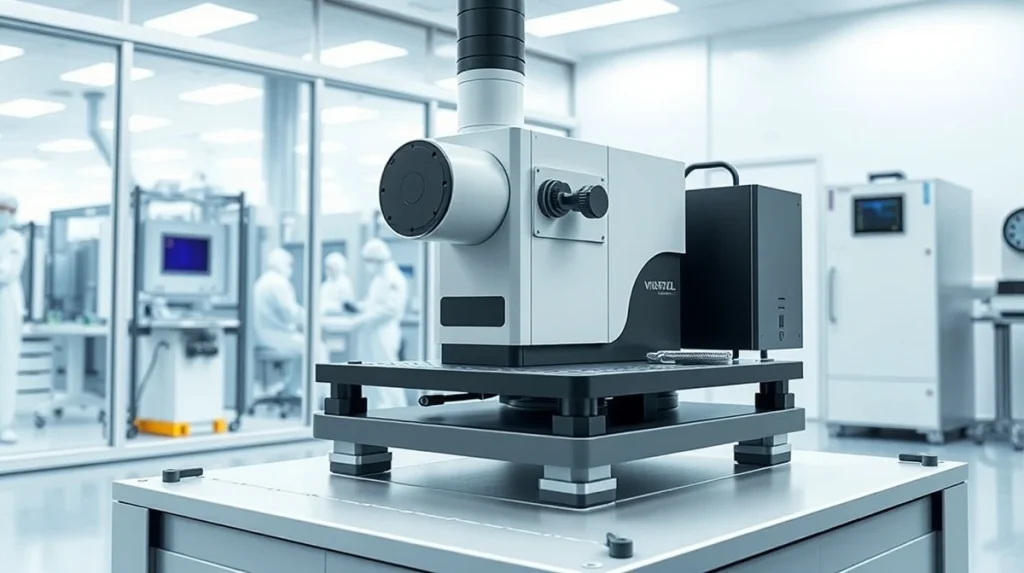
In the silent, sterile environments where computer chips are etched and life-saving drugs are formulated, an unseen enemy threatens billions in research and production: vibration. As of March 2026, a technological revolution in stability is underway, with smart material active vibration isolators transitioning from specialized tools to mission-critical infrastructure for global high-tech industries.
The Rising Demand for Absolute Stability
Modern technological advancement hinges on precision measured in nanometers. Semiconductor fabrication, for instance, requires equipment stability far beyond the tolerance of traditional passive isolation systems. Similarly, biotechnological research involving electron microscopes or genomic sequencing can be ruined by minute vibrations from urban traffic, building systems, or even footfall. Consequently, industries are investing heavily in advanced solutions that guarantee operational integrity. This investment is not merely about protecting equipment; it is about safeguarding the entire value chain of innovation.
Also read: M Series ANC Token Presale Launches with Detailed Vesting
How Smart Material Active Isolators Work
Unlike passive isolators that use springs, rubber, or air, active systems sense and counteract disturbance in real time. They employ a closed-loop control system. First, sensors continuously monitor motion. Then, a processor analyzes this data. Finally, actuators made from smart materials—like piezoelectric ceramics or magnetostrictive alloys—generate precise counter-forces to neutralize the vibration. This process happens thousands of times per second.
- Piezoelectric Actuators: These materials change shape minutely when an electric voltage is applied, allowing for ultra-fast, nanometer-scale adjustments.
- Magnetostrictive Actuators: These alloys change length in response to a magnetic field, offering high force output for heavier payloads.
- Hybrid Systems: Many modern isolators combine active smart materials with optimized passive elements for broadband performance.
The High Cost of Instability
The financial imperative for this technology is stark. A single misaligned wafer in a semiconductor fab can represent a loss of millions of dollars. In pharmaceutical development, compromised imaging data can delay regulatory approval by years. Reports from industry analysts in early 2026 indicate that unplanned downtime and yield loss due to environmental factors, including vibration, cost advanced manufacturing sectors tens of billions annually. Therefore, the return on investment for advanced isolation is often measured in months, not years.
Also read: Pepeto Presale Attracts Investor Interest Amid Meme Coin Rally
Key Industries Driving Adoption
Several sectors are leading of adopting this mission-critical technology. Their specific needs dictate the evolution of isolator design and capability.
| Industry | Primary Application | Critical Need |
|---|---|---|
| Semiconductor Manufacturing | Extreme Ultraviolet (EUV) Lithography | Sub-nanometer stability for patterning chips |
| Biotechnology & Pharmaceuticals | Cryo-Electron Microscopy, Mass Spectrometry | Atomic-scale image clarity for drug discovery |
| Aerospace & Defense | Inertial Guidance Testing, Satellite Assembly | Isolation from ground-borne and acoustic vibration |
| Advanced Optics & Photonics | Laser Interferometry, Telescope Mirrors | Maintaining optical alignment over long paths |
Integration into Core Infrastructure
The most significant trend observed by mid-2020s is the shift from treating vibration control as an aftermarket add-on to embedding it into the initial design of facilities. Leading-edge semiconductor foundries being built now specify active isolation systems as part of the building’s foundational design. This integration considers the entire ecosystem, from seismic base isolation to the precise control of individual tool platforms. Moreover, these systems are increasingly connected to facility-wide monitoring networks, providing data for predictive maintenance and continuous optimization of the production environment.
Technological and Market Evolution
The development of these isolators parallels advancements in materials science, sensor technology, and control algorithms. Early systems were large, expensive, and power-hungry. Current generations are more compact, energy-efficient, and capable of handling wider frequency ranges. Market analysis indicates consistent growth in this niche sector, driven by the global expansion of high-tech manufacturing and research capabilities. While specific future projections vary, the consensus is that demand will continue to outpace general industrial growth as precision thresholds become ever more stringent.
Conclusion
Smart material active vibration isolators have evolved from laboratory curiosities to indispensable components of modern technological infrastructure. They provide the foundational stability required for the next generation of manufacturing and scientific discovery. As industries push the boundaries of precision, the role of these advanced isolation systems will only become more critical, acting as a silent guardian for innovation in an increasingly vibrating world.
FAQs
Q1: What is the main difference between passive and active vibration isolation?
Passive isolation uses materials like rubber or air springs to absorb and dampen vibrations after they occur. Active isolation uses sensors, processors, and actuators to detect vibrations in real time and generate opposing forces to cancel them out before they reach the sensitive equipment.
Q2: Why are smart materials important for active isolators?
Smart materials, such as piezoelectrics, can change shape or size almost instantly when stimulated by electricity or magnetism. This allows them to act as extremely fast and precise actuators, making the minute, rapid adjustments needed to counteract subtle vibrations.
Q3: Which industry currently uses active vibration isolation the most?
The semiconductor manufacturing industry is arguably the largest and most demanding adopter. The production of advanced computer chips requires equipment stability at the nanometer scale, making active isolation systems essential for lithography and inspection tools.
Q4: Can active isolators protect against all types of vibration?
No system can eliminate all vibration perfectly. However, modern active isolators are highly effective against a broad spectrum of disturbances, from low-frequency floor vibrations to higher-frequency acoustic noise. Their performance is typically specified within certain frequency and amplitude ranges.
Q5: Is this technology only for new facilities?
While it is most efficiently integrated into new construction, active isolation platforms are routinely retrofitted into existing laboratories and production floors. They are designed as standalone units that can be installed under specific pieces of critical equipment to upgrade their performance.

This article was produced with AI assistance and reviewed by our editorial team for accuracy and quality.