Smart Fish Counting Technology: Revolutionizing Stock Assessment and Feeding Efficiency in Global Aquaculture
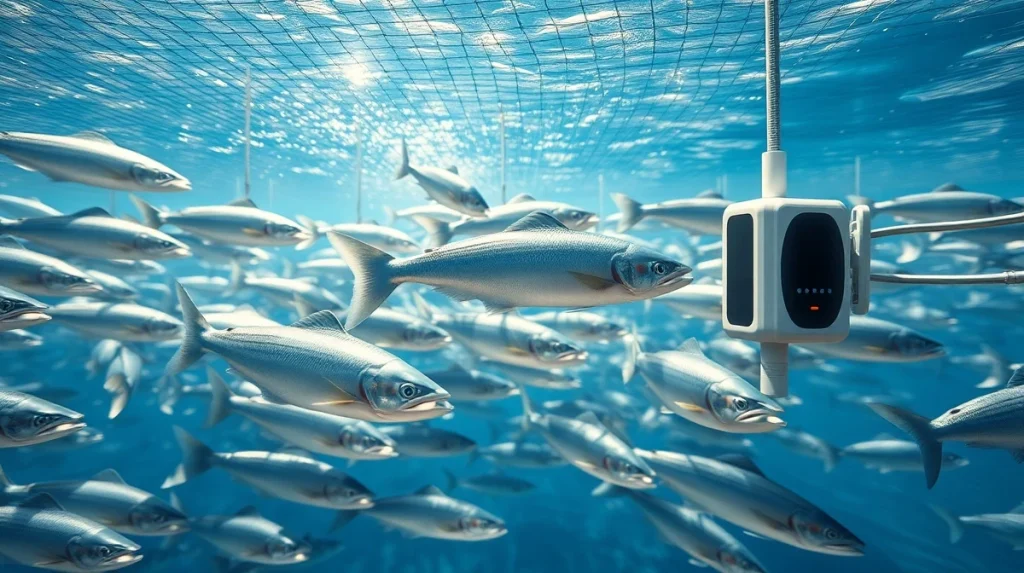
Global aquaculture operations are undergoing a technological revolution as smart fish counting systems transform how farmers monitor stock, optimize feeding, and ensure sustainable production. These advanced systems, deploying computer vision, artificial intelligence, and sophisticated sensors, provide real-time data that is fundamentally changing management practices from Norway to Chile. The integration of this technology addresses critical industry challenges including resource efficiency, animal welfare, and environmental impact.
The Evolution of Stock Assessment in Aquaculture
Traditional methods for counting fish in aquaculture have relied on manual sampling, which is labor-intensive, stressful for stock, and often inaccurate. Farmers typically extrapolate total population numbers from small samples, a process vulnerable to significant error. Consequently, these methods can lead to overstocking or understocking, directly affecting growth rates, feed conversion ratios, and ultimately profitability. The industry has long needed a precise, non-invasive solution.
Also read: M Series ANC Token Presale Launches with Detailed Vesting
Smart fish counting technology emerged as a viable commercial solution in the early 2020s. Initially developed from underwater surveillance and military sonar applications, these systems have rapidly advanced. Modern installations now combine high-resolution cameras with advanced software algorithms capable of identifying, counting, and tracking individual fish as they pass through designated zones. This provides a continuous census rather than a periodic estimate.
Core Technologies Driving the Change
Several technological pillars enable accurate automated fish counting. Underwater camera systems, often mounted in strategic locations like feeding zones or passageways, capture video footage. This visual data is then processed using computer vision algorithms trained to recognize specific fish species despite challenging conditions like murky water or low light. Some systems utilize stereoscopic cameras to create 3D models, allowing for size and biomass estimation alongside simple counts.
Also read: Pepeto Presale Attracts Investor Interest Amid Meme Coin Rally
Furthermore, acoustic systems using sonar play a complementary role, especially in larger pens or where visibility is poor. These systems emit sound waves and analyze the returning echoes to detect and count fish. The most advanced operations integrate both optical and acoustic data, cross-referencing information to achieve accuracy rates reportedly exceeding 95%. This multi-sensor approach significantly reduces the margin of error compared to manual methods.
Data Integration and Farm Management Systems
The true power of smart counting lies not just in data collection but in integration. Counting units connect to centralized farm management software platforms. This software aggregates count data with other parameters like water temperature, oxygen levels, and feeding schedules. Managers can then view dashboards showing real-time population estimates, biomass trends, and feeding activity. This broad view supports data-driven decision-making that was previously impossible.
Transforming Feeding Efficiency and Sustainability
One of the most significant impacts of precise fish counting is on feeding protocols. Feed represents the largest operational cost in most aquaculture operations, often exceeding 50% of total expenses. Overfeeding wastes money and pollutes the water with excess nutrients. Underfeeding stunts growth and compromises fish health. Smart counting systems help optimize this critical process.
By knowing exactly how many fish are in a pen and monitoring their feeding behavior in real-time, automated systems can adjust feed delivery dynamically. For example, if a camera detects reduced feeding activity, the system can signal a feeder to slow or stop distribution. This precise approach can lead to substantial feed savings. Industry reports suggest reductions in feed waste of 10-20% are achievable, translating to major cost savings and a reduced environmental footprint per kilogram of fish produced.
The sustainability benefits extend beyond feed. Accurate stock data prevents overstocking, which is a primary cause of disease outbreaks and poor water quality within pens. Better stock management promotes animal welfare and reduces the need for medical treatments. Consequently, this technology supports the industry’s response to increasing consumer and regulatory pressure for environmentally responsible and ethical protein production.
Global Adoption and Market Trajectory
Adoption rates for smart fish counting technology vary globally but are accelerating. Norway’s salmon industry, a global leader in aquaculture innovation, has been an early adopter. Major companies there have integrated counting systems into their standard operations. Similarly, Chile’s salmon farmers and Scotland’s aquaculture sector are increasingly deploying this technology. In Asia, where pond-based aquaculture dominates, different system adaptations are being developed for species like shrimp and tilapia.
The market for these systems has grown consistently. While comprehensive 2026 market size figures are still being finalized, analysis of the aquaculture technology sector indicates strong investment in automation and data analytics. The drive for efficiency, traceability, and compliance with stricter regulations is fueling this growth. The technology is no longer seen as a luxury but as a core component of modern, competitive aquaculture.
Implementation Challenges and Considerations
Despite the clear benefits, implementation presents challenges. The initial capital investment for a comprehensive smart counting system can be significant, potentially putting it out of reach for smaller-scale farmers. Furthermore, the technology requires reliable power and data connectivity, which can be limited at remote marine sites. Maintenance of underwater hardware against biofouling (the accumulation of marine organisms) is an ongoing operational consideration.
Perhaps the most critical challenge is data management and interpretation. Generating vast amounts of data is useless without the expertise to analyze it and implement changes. Therefore, successful adoption often requires training existing staff or hiring new personnel with data science skills. The technology is a tool, and its effectiveness depends on the people using it.
Future Directions and Industry Impact
The future of smart fish counting lies in enhanced analytics and predictive capabilities. Current systems excel at counting and measuring, but next-generation platforms aim to predict health issues by analyzing fish behavior patterns. Early detection of disease or stress through changes in swimming or feeding behavior could allow for preemptive intervention, further improving welfare and reducing losses.
Integration with other automated systems, such as autonomous underwater vehicles (AUVs) for net inspection or robotic cleaners, will create increasingly autonomous aquaculture facilities. The industry is moving toward the concept of the “digital twin,” where a virtual, real-time model of the entire farm allows for simulation and optimization of management decisions before they are applied in the physical environment.
Conclusion
Smart fish counting technology represents a fundamental shift in aquaculture management, replacing estimation with precise measurement. By providing accurate, real-time data on stock levels and behavior, this technology empowers farmers to optimize feeding, improve animal welfare, and enhance environmental sustainability. As the global demand for seafood continues to rise, such innovations are critical for ensuring the aquaculture industry can meet this need efficiently and responsibly. The adoption of smart fish counting is not merely a technological upgrade but a necessary step toward a more data-driven and sustainable future for global fish farming.
FAQs
Q1: How accurate is smart fish counting technology compared to manual methods?
Smart fish counting systems that combine optical and acoustic sensors can achieve accuracy rates above 95% in controlled conditions, significantly surpassing the accuracy of manual sampling methods, which involve extrapolation and are prone to human error.
Q2: What is the main benefit of this technology for aquaculture farmers?
The primary benefit is the enablement of data-driven decisions. Precise stock counts allow for optimized feeding, which reduces the largest operational cost (feed) by minimizing waste, while also improving growth rates, fish health, and overall farm profitability.
Q3: Can this technology be used for all types of fish and aquaculture systems?
While most advanced in net-pen systems for species like salmon, the core technology is adaptable. Different camera, lighting, and algorithm setups are being developed for pond-based systems (e.g., for shrimp or tilapia) and for various fish species with different behaviors and appearances.
Q4: Does smart fish counting improve sustainability?
Yes, it contributes significantly to sustainability. By optimizing feed use, it reduces nutrient pollution from waste feed. By preventing overstocking, it improves fish welfare and lowers disease risk, potentially reducing the need for treatments. This leads to a lower environmental footprint per kilogram of fish produced.
Q5: What are the barriers to adoption for this technology?
Key barriers include the high initial capital cost, the need for technical expertise to install and maintain the systems (especially in harsh marine environments), and the requirement for reliable power and data infrastructure at often-remote farm sites. Effective use also demands staff training in data analysis.

This article was produced with AI assistance and reviewed by our editorial team for accuracy and quality.