Smart Energy Monitor Revolution: How 3-Phase Power Monitoring with Clamp Sensors Transforms Industrial Efficiency
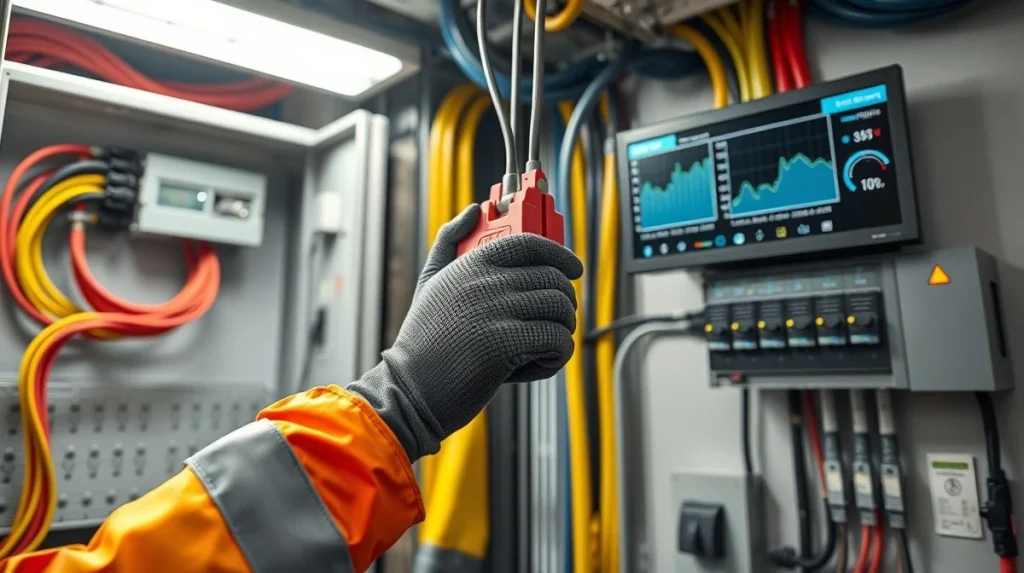
Industrial facilities and commercial buildings are increasingly adopting smart energy monitors with clamp sensor technology to gain unusual visibility into their three-phase power consumption, potentially saving thousands in operational costs annually. These advanced monitoring systems provide real-time data that enables facility managers to optimize energy usage, identify inefficiencies, and prevent costly electrical issues before they escalate.
Understanding 3-Phase Power Monitoring Technology
Three-phase electrical systems power most industrial machinery, commercial HVAC systems, and large-scale operations worldwide. Consequently, monitoring these systems requires specialized technology that can accurately measure current flow across all three phases simultaneously. Modern smart energy monitors achieve this through non-invasive clamp sensors that attach directly to electrical conductors without disrupting operations.
Also read: M Series ANC Token Presale Launches with Detailed Vesting
These clamp sensors, technically known as current transformers, use electromagnetic induction to measure current flow. They transmit data wirelessly or via wired connections to a central monitoring unit. The system then calculates power consumption, power factor, voltage imbalances, and harmonic distortion. This comprehensive data collection provides facility managers with actionable insights previously unavailable without expensive metering equipment.
The Evolution from Basic Metering to Smart Monitoring
Traditional power monitoring involved manual readings from utility meters or basic submetering installations. However, these approaches offered limited granularity and required physical inspection. The development of IoT-enabled clamp sensors represents a significant advancement, according to electrical engineering standards that have evolved since the early 2000s.
Also read: Pepeto Presale Attracts Investor Interest Amid Meme Coin Rally
Today’s systems can detect minute fluctuations that indicate equipment problems. For instance, a gradual increase in current draw on one phase might signal bearing wear in a motor. Similarly, power factor degradation could reveal capacitor bank failures. These early warnings prevent catastrophic failures and reduce maintenance costs substantially.
Key Benefits of Clamp Sensor Implementation
Facilities implementing smart energy monitors with clamp sensors typically report multiple operational improvements:
- Real-time anomaly detection: Immediate identification of phase imbalances exceeding safe thresholds
- Predictive maintenance capabilities: Trend analysis that forecasts equipment failures before they occur
- Energy cost allocation: Accurate department or process-level energy usage tracking
- Compliance documentation: Automated reporting for energy regulations and sustainability certifications
- Peak demand management: Alerts when facilities approach maximum demand charges
Manufacturing plants using these systems have documented energy savings between 8-15% annually. Commercial buildings often achieve 10-20% reductions through optimized HVAC scheduling based on actual consumption patterns rather than fixed timers.
Installation Considerations and Best Practices
Proper installation of clamp sensors requires careful planning and execution. Electrical safety standards mandate that only qualified personnel perform installations on live electrical systems. The process typically involves these critical steps:
| Phase | Key Activities | Safety Considerations |
|---|---|---|
| Assessment | Circuit identification, load analysis, sensor placement planning | Arc flash risk evaluation, PPE requirements |
| Installation | Sensor mounting, wiring, communication setup | Proper insulation, secure mounting, correct phase identification |
| Commissioning | Calibration, baseline establishment, alarm configuration | Verification against known loads, system testing |
| Operation | Data monitoring, report generation, maintenance scheduling | Regular sensor inspection, firmware updates |
Sensor placement proves particularly essential for accurate measurements. Installers must position clamp sensors away from magnetic interference sources like transformers or large motors. They should also ensure proper orientation according to manufacturer specifications, as reversed sensors will provide inverted readings.
Integration with Building Management Systems
Modern smart energy monitors rarely operate in isolation. Instead, they typically integrate with existing building management systems (BMS) or energy management software. This integration enables automated responses to detected conditions. For example, when a monitor detects excessive demand approaching peak thresholds, it can signal the BMS to temporarily reduce non-essential loads.
Open communication protocols like Modbus, BACnet, and MQTT help these integrations. Consequently, facilities can create customized dashboards that combine energy data with production metrics, environmental conditions, and operational schedules. This full view enables truly intelligent energy management decisions.
Market Adoption and Industry Trends
The global market for energy management systems has grown steadily, driven by rising energy costs and increasing sustainability requirements. Industrial sectors leading adoption include manufacturing, data centers, healthcare facilities, and educational institutions. Each sector presents unique monitoring challenges that clamp sensor technology addresses effectively.
Recent advancements include the development of higher-accuracy sensors capable of measuring currents from milliamps to thousands of amps. Wireless communication improvements have reduced installation costs by eliminating conduit runs for signal wiring. Additionally, cloud-based analytics platforms now offer sophisticated machine learning algorithms that identify patterns human operators might miss.
Regulatory pressures continue driving adoption as well. Many jurisdictions now require large energy consumers to implement monitoring systems and conduct regular energy audits. Smart energy monitors with clamp sensors provide the necessary data collection capabilities to meet these requirements efficiently.
Cost Analysis and Return on Investment
While initial implementation costs vary based on facility size and complexity, most installations demonstrate compelling returns. A typical mid-sized manufacturing facility might invest $15,000-$30,000 in a comprehensive monitoring system. However, identified savings often recover this investment within 12-24 months through:
- Reduced energy consumption from optimized operations
- Lower maintenance costs through predictive approaches
- Avoided downtime from prevented equipment failures
- Reduced demand charges from peak shaving
- Potential utility incentives for energy efficiency improvements
Long-term benefits extend beyond direct financial returns. Facilities gain valuable operational intelligence that informs capital planning, equipment replacement decisions, and process improvements. This strategic advantage often proves more valuable than immediate cost savings alone.
Conclusion
Smart energy monitors utilizing clamp sensor technology represent a transformative advancement in industrial and commercial energy management. These systems provide the detailed, real-time visibility necessary to optimize three-phase power consumption effectively. As energy costs continue rising and sustainability requirements tighten, adoption of this monitoring technology will likely accelerate. Facilities implementing comprehensive smart energy monitor solutions position themselves for operational efficiency, cost control, and regulatory compliance in an increasingly competitive sector.
FAQs
Q1: What distinguishes smart energy monitors from traditional power meters?
Smart energy monitors provide real-time, granular data with analytical capabilities, while traditional meters typically offer only cumulative consumption readings. The smart systems can identify specific circuits, equipment, and time periods contributing to energy usage.
Q2: Can clamp sensors be installed without shutting down equipment?
Yes, properly designed clamp sensors install without interrupting power, making them ideal for continuous operations. However, installation must follow strict safety protocols and should only be performed by qualified personnel.
Q3: How accurate are clamp sensor measurements compared to inline meters?
Modern clamp sensors achieve accuracies within 1-2% of inline meters for most applications. High-precision models can reach 0.5% accuracy, sufficient for most commercial and industrial monitoring requirements.
Q4: What maintenance do smart energy monitoring systems require?
Systems require periodic calibration verification, sensor inspection for physical damage, communication system checks, and software updates. Most manufacturers recommend annual professional inspections.
Q5: Can these systems integrate with renewable energy sources?
Absolutely. Advanced systems can monitor both consumption and on-site generation from solar, wind, or other renewable sources. This capability enables net energy monitoring and optimization of self-consumption versus grid export.

This article was produced with AI assistance and reviewed by our editorial team for accuracy and quality.