Sleeper App Integrates Kalshi Prediction Market: A Revolutionary Shift in Fan Engagement
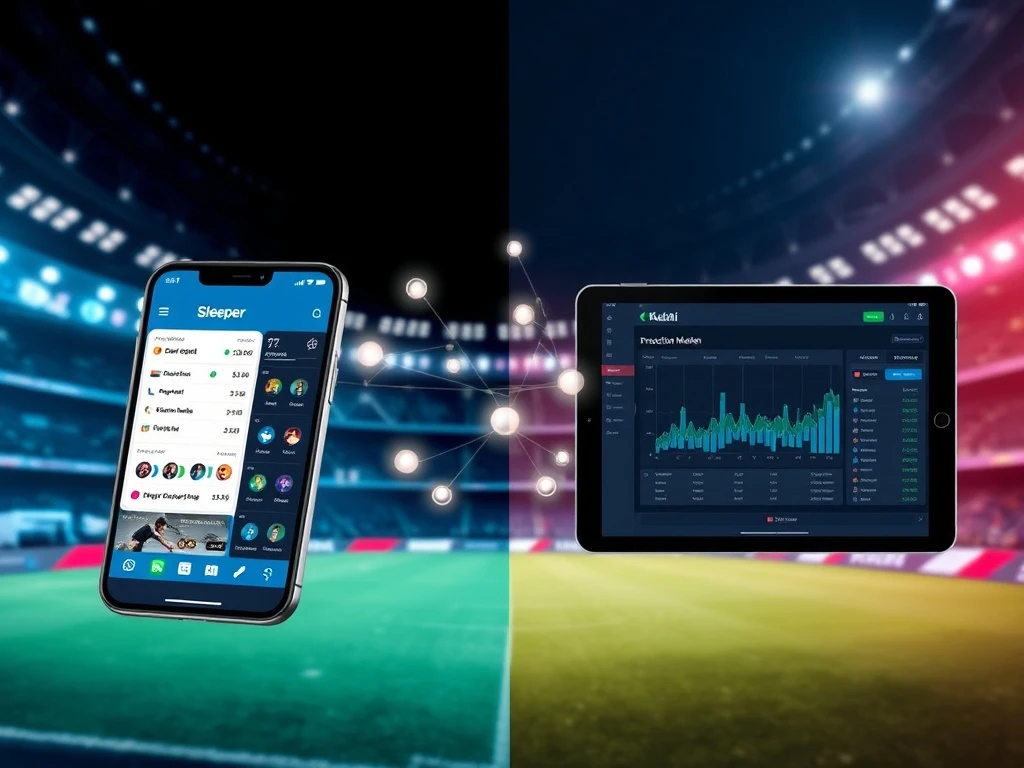
In a landmark move announced on January 15, 2025, the popular fantasy sports platform Sleeper has confirmed a strategic partnership with Kalshi, the first federally regulated exchange for event contracts. This integration fundamentally transforms how millions of users interact with sports, merging the communal thrill of fantasy leagues with the tangible stakes of prediction markets. Consequently, this collaboration represents one of the most significant convergences of gaming and finance in the digital sports era.
Sleeper App Integrates Kalshi for a New Fan Experience
Kalshi announced this key partnership via its official X account, detailing plans to embed its prediction market infrastructure directly within the Sleeper application. Sleeper, renowned for its sleek interface and deep community engagement in fantasy football, basketball, and baseball, will now offer users access to Kalshi’s event contracts. These contracts allow participants to trade on the outcome of real-world events, from game scores to player performances, with real money. Therefore, this move bridges a critical gap between social gaming and financial markets.
Also read: Operation Atlantic: Global Law Enforcement Shatters $45M Crypto Fraud Ring
This integration follows a clear industry trend toward more immersive and financially interactive fan experiences. Notably, Sleeper’s user base, which skews younger and highly digitally native, has consistently demanded more dynamic ways to engage with live sports. Meanwhile, Kalshi, operating under the regulatory oversight of the Commodity Futures Trading Commission (CFTC), provides a legally compliant framework for this activity. The partnership’s architecture ensures that prediction market functions will exist as a distinct, age-gated section within the Sleeper ecosystem, maintaining compliance with state and federal regulations.
The Mechanics of Prediction Markets in a Sports App
Understanding this integration requires a clear explanation of prediction markets. Unlike traditional sports betting, which involves wagers against a bookmaker, a prediction market is an exchange where users buy and sell contracts based on event outcomes. For instance, a contract might read, “Will Team X score over 24.5 points in this game?” The contract price fluctuates between $0 and $1 based on collective sentiment, acting as a probability indicator. If you buy a “Yes” contract for $0.70 and the event occurs, you receive $1.00, netting a $0.30 profit.
Also read: Spartans.com Shatters Norms with $7 Million Leaderboard Launch, Rewriting Online Gambling Rules
The Sleeper-Kalshi integration will likely feature markets on a wide array of sports-related questions. These could range from binary outcomes (win/loss) to more nuanced propositions like player stat milestones or in-game events. This structure offers several distinct advantages:
- Price Discovery: The market price reflects the wisdom of the crowd, providing a real-time consensus probability.
- Regulatory Clarity: As a CFTC-regulated exchange, Kalshi operates with explicit federal oversight, differentiating it from unregulated betting platforms.
- Social Layer: Integrating this into Sleeper’s existing chat and league features adds a powerful social dimension to trading.
This model represents a significant evolution from Sleeper’s core fantasy product, where users draft teams and compete based on statistical accumulation over a season. Now, users can engage with micro-events within individual games, creating continuous engagement loops.
Expert Analysis on Market Convergence
Financial technology analysts view this partnership as a strategic masterstroke. “This is a logical progression in the monetization and engagement strategy for social sports platforms,” notes Dr. Anya Sharma, a professor of behavioral finance at Stanford University. “Sleeper captures attention and community, while Kalshi provides a regulated mechanism to capture economic value from that attention. The key challenge will be user education—bridging the gap between fantasy sports intuition and the mechanics of a financial exchange.”
Furthermore, the regulatory market provides a key backdrop. Kalshi’s status as a designated contract market (DCM) allows it to offer event contracts on a national scale, subject to CFTC rules against gambling on sports contests. However, Kalshi meticulously structures its markets to comply by focusing on economic indicators and event derivatives, addressing a complex legal distinction. Sleeper’s integration must, and reportedly will, rigorously uphold these compliance protocols, including sturdy age and identity verification systems.
Impact on the Fantasy Sports and Gaming Field
The immediate impact of this integration will be a reshuffling of competitive dynamics in the digital sports arena. Major players like DraftKings and FanDuel have long dominated the daily fantasy sports (DFS) and online sports betting (OSB) sectors. Sleeper’s move, however, carves out a unique hybrid niche. It leverages its strength in season-long fantasy community building and introduces a sophisticated, exchange-based financial product. This could pressure incumbents to explore similar partnerships or develop their own exchange-like features.
For the end user, the experience promises greater depth. Imagine a Sleeper user in a fantasy football league. During a Monday night game, they can not only track their fantasy players but also trade contracts on whether their quarterback will throw an interception in the next drive or if the total points will go over a certain threshold. This creates a multi-layered, real-time engagement that far surpasses passive viewing or weekly lineup management.
The table below contrasts the traditional model with the new integrated experience:
| Feature | Traditional Sleeper Fantasy | Sleeper with Kalshi Integration |
|---|---|---|
| Engagement Timeline | Weekly (lineup setting) | Continuous (in-game trading) |
| Monetary Stake | League buy-ins (prize pools) | Direct trading on event contracts |
| Primary Focus | Season-long player accumulation | Specific event outcomes |
| Regulatory Framework | Fantasy sports exemption (UIGEA) | CFTC exchange regulations |
| Social Component | League chats & trash talk | Shared market analysis & trading |
This evolution also raises important questions about responsible gaming. Both companies have stated a commitment to integrating advanced tools for deposit limits, cooling-off periods, and access to educational resources. The inherently financial nature of prediction markets may attract a different, potentially more risk-aware user than traditional sports betting, but solid safeguards remain paramount.
Conclusion
The integration of Kalshi’s prediction market into the Sleeper app marks a revolutionary shift in digital sports engagement. This partnership successfully merges the communal, strategic world of fantasy sports with the real-time, financial mechanics of a regulated exchange. It offers users exceptional ways to interact with live games while operating within a clear federal regulatory framework. As this model rolls out through 2025, it will undoubtedly influence how competitors build their platforms and how regulators view the intersection of fandom and finance. Ultimately, the Sleeper app’s integration of Kalshi is not just a new feature; it’s a bold redefinition of the sports fan’s role in the digital age.
FAQs
Q1: What exactly is a prediction market?
A prediction market is a financial exchange where participants trade contracts based on the outcome of future events. The price of a contract represents the market’s collective probability of that event occurring.
Q2: Is this integration considered online sports betting?
No, not in the traditional sense. Kalshi operates as a CFTC-regulated exchange for event contracts, a distinct legal category. It focuses on economic and event-based derivatives, which differentiates it from state-licensed sportsbooks.
Q3: Will I need a separate account for Kalshi within Sleeper?
While official implementation details are pending, industry standards suggest a easy, integrated experience will likely require users to complete a separate verification and onboarding process for the Kalshi-powered trading features to ensure regulatory compliance.
Q4: What kinds of events can I trade on?
Markets will likely include a wide range of sports-related propositions, such as final scores, player statistics, in-game occurrences, and broader league outcomes, all structured as binary yes/no contracts.
Q5: How does this differ from the fantasy sports I already play on Sleeper?
Traditional fantasy sports involve managing a roster of players over a season or week. This prediction market integration allows for trading on specific, short-term outcomes within games, creating a continuous, real-time engagement layer separate from your fantasy league.

This article was produced with AI assistance and reviewed by our editorial team for accuracy and quality.