She, Before Me: Inspiring New Release Honors Women’s History Through Children’s Literature
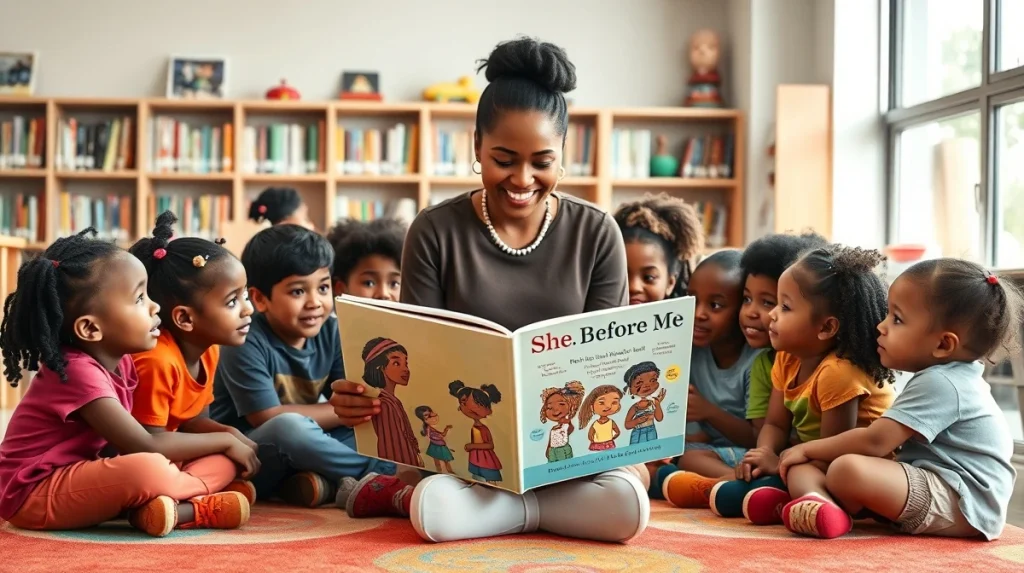
ST. PAUL, Minn. — March 19, 2026 — As Women’s History Month reaches its midpoint, the educational nonprofit Planting People Growing Justice Leadership Institute has launched a powerful new literary resource titled “She, Before Me.” This release represents a significant contribution to children’s literature that directly addresses historical representation gaps. The organization, founded by Dr. Artika Tyner, specifically designed this publication to provide educators and families with tools for discussing women’s historical contributions with young readers.
She, Before Me Fills Critical Representation Gaps
Educational research consistently shows that diverse representation in children’s literature profoundly impacts young learners’ self-perception and aspirations. According to data from the Cooperative Children’s Book Center at the University of Wisconsin-Madison, only about 30% of children’s books featured female protagonists in recent years, with even lower percentages for women of color in historical narratives. “She, Before Me” directly responds to this disparity by highlighting women from various backgrounds who shaped history. The book employs age-appropriate language and vibrant illustrations to make complex historical concepts accessible. Furthermore, it connects past achievements to present possibilities, showing children how historical women overcame barriers similar to those some face today.
Also read: M Series ANC Token Presale Launches with Detailed Vesting
Planting People Growing Justice’s Educational Mission
The Planting People Growing Justice Leadership Institute operates with a clear dual mission: to plant seeds of knowledge and grow justice through education and advocacy. Since its establishment, the Minnesota-based organization has focused on literacy, leadership development, and social justice education. Their programming often targets communities where educational resources may be limited. Dr. Artika Tyner, the founder, frequently emphasizes that “literacy is the foundation for liberation” in public statements about the institute’s work. The organization’s previous publications and projects have consistently centered on themes of equity, diversity, and historical truth-telling. This new release aligns perfectly with their strategic goal of creating culturally responsive educational materials that schools and families can trust.
The Importance of Women’s History Month Programming
Women’s History Month, observed every March in the United States since 1987, provides a dedicated time for examining women’s roles in history. However, educators often report a shortage of high-quality, engaging materials suitable for elementary and middle school audiences. The release of “She, Before Me” during this commemorative month is therefore strategic. It allows schools and libraries to immediately integrate the book into their March programming. The timing also capitalizes on increased public interest in women’s history during this period, potentially leading to broader distribution and impact. Historical observance months, when supported by substantive resources, can move beyond symbolic celebration to create lasting educational change.
Also read: Pepeto Presale Attracts Investor Interest Amid Meme Coin Rally
Broader Context of Representation in Children’s Media
The launch occurs within a larger, ongoing national conversation about inclusion in educational materials. School districts across the country continue to evaluate and diversify their curricula and library collections. Parents and advocacy groups increasingly demand books where children can see themselves reflected and learn accurate, multifaceted history. “She, Before Me” enters a market that is gradually expanding but still lacks sufficient titles, particularly those that intersect historical narrative with social justice themes. The book’s approach avoids simplistic hero-worship, instead presenting historical figures as complex individuals who navigated specific social contexts. This nuanced presentation helps develop critical thinking alongside historical knowledge.
Key features of the “She, Before Me” approach include:
- Profiles of women from diverse ethnic, cultural, and professional backgrounds
- Connections between historical struggles and contemporary social justice issues
- Discussion questions and activity prompts for educators and parents
- A focus on agency and strategy, not just hardship
Measurable Impact on Young Readers
While long-term studies on this specific title are pending, research on similar representative literature demonstrates clear benefits. Children exposed to stories about diverse historical figures show increased interest in history, improved cultural competence, and broader career aspirations. For example, a 2024 study published in the Journal of Literacy Research found that students who read biographies of scientists from underrepresented groups were 40% more likely to express interest in STEM fields themselves. Books like “She, Before Me” serve as both mirrors for children to see their potential and windows for understanding others’ experiences. This dual function is essential for building an informed, empathetic future citizenry.
Conclusion
The release of “She, Before Me” by Planting People Growing Justice provides a timely, substantive resource for Women’s History Month 2026 and beyond. By centering the stories of women from varied backgrounds in an accessible children’s format, the book addresses a persistent gap in educational materials. This work supports educators and families in developing historical literacy and social awareness from a young age. Ultimately, the publication reinforces the critical idea that understanding the past, in all its complexity, is fundamental to creating a more just and equitable future.
FAQs
Q1: What age group is the “She, Before Me” book designed for?
The primary audience is children in grades 2 through 5, typically ages 7 to 11. The language and concepts are tailored to be accessible for elementary readers while providing enough depth for meaningful classroom or family discussion.
Q2: Who is Dr. Artika Tyner?
Dr. Artika Tyner is a civil rights attorney, educator, and the founder of the Planting People Growing Justice Leadership Institute. She is a recognized author and advocate for literacy, diversity, and justice education.
Q3: How can educators use this book during Women’s History Month?
Educators can use it as a read-aloud text, a basis for biography projects, or a springboard for discussions about history, perseverance, and social change. The book includes built-in discussion questions to guide learning.
Q4: Why is representation in children’s historical literature important?
Research shows it impacts children’s academic engagement, self-esteem, and future aspirations. Seeing people like themselves in historical narratives helps children understand their own potential and place in the world.
Q5: Where can someone find the “She, Before Me” book?
The book is distributed through the Planting People Growing Justice website, major online booksellers, and is being made available to school and library distributors. The organization often works directly with schools to provide copies.

This article was produced with AI assistance and reviewed by our editorial team for accuracy and quality.