Breaking: Senate Crypto Showdown Intensifies as Dems Review Bill, a16z Pushes CLARITY Act
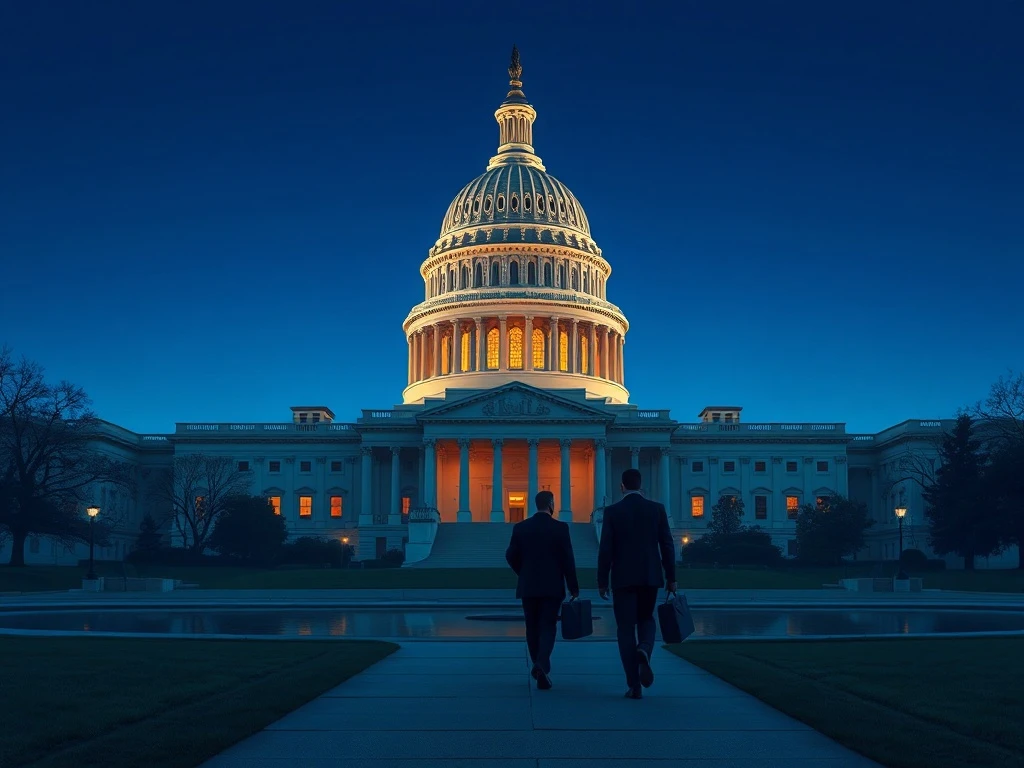
WASHINGTON, D.C. — February 15, 2026: Senate Democrats convened an urgent closed-door meeting today to review comprehensive cryptocurrency legislation as venture capital giant Andreessen Horowitz intensifies its push for the proposed CLARITY Act. This critical legislative showdown unfolds against a March 1 deadline set by the White House for regulatory clarity, creating what multiple sources describe as the most significant cryptocurrency policy moment since the industry’s inception. Meanwhile, prediction market Polymarket shows traders assigning 69% odds that major crypto legislation will pass Congress by year’s end, reflecting heightened expectations amid growing political pressure.
Senate Democrats Face Mounting Pressure on Crypto Legislation
Democratic senators spent three hours behind closed doors today reviewing the 312-page draft legislation that would establish the first comprehensive federal framework for digital assets. According to three staffers who spoke on condition of anonymity, the meeting focused on balancing consumer protection provisions with innovation incentives. “We’re at a crossroads,” said Senator Mark Warner’s communications director in a brief statement. “The White House deadline creates urgency, but we must get this right for both investors and technological leadership.” The legislation incorporates elements from five previous bills, including provisions from the Lummis-Gillibrand Responsible Financial Innovation Act that failed in the previous Congress.
Also read: BlockchainFX Presale Nears $15M Softcap as BFX Token Draws Heavy Investor Interest
Multiple Senate offices confirmed they received detailed technical briefings from the Treasury Department and Securities and Exchange Commission throughout last week. These briefings reportedly addressed jurisdictional questions between the SEC and Commodity Futures Trading Commission, a longstanding point of contention. The current draft, obtained by this publication, creates a new category of “digital asset securities” with tailored disclosure requirements distinct from traditional securities. Meanwhile, the March 1 deadline represents the administration’s third attempt to establish regulatory clarity, following two previous deadlines that passed without congressional action.
Andreessen Horowitz’s Aggressive CLARITY Act Push
Andreessen Horowitz (a16z) has deployed what industry observers call the most sophisticated cryptocurrency lobbying campaign in Washington history. The firm’s policy team, led by former CFTC chairman Brian Quintenz, has held 47 meetings with congressional offices since January alone. Their central message: the CLARITY Act provides necessary legal certainty while maintaining U.S. technological competitiveness. “The current regulatory ambiguity pushes innovation offshore,” Quintenz stated in written testimony submitted to the Senate Banking Committee last month. “We’ve seen at least twelve major crypto projects relocate development teams to Singapore and Dubai in the past eighteen months due to regulatory uncertainty.”
Also read: Sei Network TVL Plummets 93%: The Stark Reality Behind Steady User Numbers
a16z’s campaign includes a seven-figure digital advertising buy targeting constituents in twelve key congressional districts. The ads highlight job creation potential, with the firm claiming the legislation could generate 87,000 new technology jobs within three years. Additionally, a16z has organized three “educational briefings” for congressional staff featuring computer science professors from Stanford and MIT explaining blockchain technology fundamentals. This approach represents a significant evolution from earlier industry lobbying efforts that focused primarily on campaign contributions. The firm’s comprehensive strategy now serves as a model for other technology companies seeking to influence complex legislation.
Expert Analysis: The Stakes for Digital Asset Markets
Dr. Sarah Chen, former SEC senior counsel and current Georgetown University law professor, provided critical context about the legislation’s potential impact. “This represents the most significant financial market structure legislation since Dodd-Frank,” Chen explained in a telephone interview. “The jurisdictional clarity between SEC and CFTC could unlock approximately $18 billion in institutional capital currently sitting on the sidelines due to regulatory uncertainty.” Chen emphasized that the legislation’s treatment of decentralized autonomous organizations (DAOs) could prove particularly consequential, potentially creating new legal structures for internet-native organizations.
Meanwhile, the U.S. Chamber of Commerce issued a statement supporting the legislation’s approach to innovation zones. “The sandbox provisions allow for controlled experimentation while maintaining consumer protections,” said Thomas Donohue, the Chamber’s president. This institutional support contrasts with opposition from some state securities regulators. “We’re concerned about federal preemption of stronger state-level investor protections,” warned Massachusetts Securities Director William Galvin in a letter to Senate leadership last week. These competing perspectives highlight the complex balancing act facing legislators as they attempt to reconcile diverse stakeholder interests.
Prediction Markets and Political Calculus
The Polymarket prediction platform shows fascinating dynamics in trader sentiment regarding the legislation’s prospects. Current contracts show 69% probability of passage by December 31, 2026, up from 42% just three months ago. This surge coincides with increased bipartisan cooperation signals and the White House deadline. “Prediction markets often incorporate information more efficiently than traditional polls,” noted Dr. David Rothschild, an economist at Microsoft Research who studies information markets. “The rising probability suggests market participants see genuine momentum, not just political theater.”
However, significant hurdles remain. The legislation must work through five different committees with overlapping jurisdictions. Senate Banking Committee Chairman Sherrod Brown has expressed skepticism about certain provisions, particularly those limiting the SEC’s enforcement authority. Meanwhile, House Financial Services Committee Chair Patrick McHenry has advocated for a more innovation-friendly approach, creating potential conference committee challenges. The table below illustrates key differences between the Senate draft and House companion legislation:
| Provision | Senate Draft | House Companion |
|---|---|---|
| SEC/CFTC Jurisdiction | Clear division based on asset characteristics | CFTC primary for most tokens |
| Consumer Protection | Enhanced disclosures + cooling-off periods | Basic disclosures only |
| DAO Treatment | New legal category with limited liability | Contract-based approach |
| Innovation Sandboxes | 3-year limited exemptions | 5-year broader exemptions |
The Path Forward: Timeline and Critical Junctures
Legislative staff indicate the Senate Banking Committee could mark up the legislation as early as March 7, assuming consensus emerges from this week’s discussions. The White House has signaled it would support a bill that achieves three objectives: strong consumer protections, clear regulatory jurisdiction, and maintained U.S. technological competitiveness. “We’re encouraged by the progress,” said National Economic Council Director Lael Brainard in a statement yesterday. “The March 1 deadline reflects the administration’s commitment to providing the clarity this market needs.”
Industry representatives are preparing for multiple scenarios. The Crypto Council for Innovation has developed model language for potential amendments addressing concerns about decentralized finance protocols. Meanwhile, consumer advocacy groups led by the Americans for Financial Reform coalition are mobilizing supporters to push for stronger investor protections. This sets the stage for intense negotiations throughout March, with the potential for floor consideration before the August recess if committee progress accelerates. The coming weeks will determine whether this Congress finally delivers the comprehensive crypto framework that has eluded lawmakers for nearly a decade.
Market Reactions and Industry Positioning
Digital asset markets showed muted response to today’s developments, with Bitcoin trading in a narrow 2.3% range throughout the Senate meeting. “The market has priced in gradual regulatory progress,” explained Gemini exchange analyst Marshall Beard. “We’d likely see more volatility around specific provisions rather than the overall legislative momentum.” However, certain cryptocurrency sectors stand to benefit disproportionately. Projects focusing on institutional infrastructure, particularly those offering regulatory compliance solutions, have seen increased venture funding in anticipation of clearer rules.
Publicly traded crypto companies are adopting careful positioning. Coinbase CEO Brian Armstrong stated the company supports “sensible regulation that protects consumers while allowing innovation to flourish.” Meanwhile, smaller DeFi protocols express concern about compliance costs. “The legislation could inadvertently favor large, centralized entities,” warned Uniswap Labs CEO Hayden Adams in a blog post yesterday. These divergent perspectives within the industry itself complicate the political calculus, as lawmakers attempt to distinguish between different types of cryptocurrency businesses with varying risk profiles and operational models.
Conclusion
The Senate cryptocurrency legislation debate represents a watershed moment for digital asset regulation in the United States. With the White House deadline approaching, Senate Democrats face intense pressure to craft legislation that balances innovation with protection. Andreessen Horowitz’s sophisticated lobbying campaign for the CLARITY Act demonstrates how seriously the technology sector takes this regulatory moment. The 69% passage probability on Polymarket reflects genuine optimism about legislative progress, though significant hurdles remain in reconciling House and Senate approaches. As negotiations intensify throughout March, the outcome will shape cryptocurrency markets, technological development, and America’s position in the global digital economy for years to come. Market participants, technology companies, and policymakers alike should monitor committee markups closely, as the specific provisions emerging from these discussions will determine the practical impact of this long-awaited regulatory framework.
Frequently Asked Questions
Q1: What is the CLARITY Act and why does it matter?
The CLARITY Act represents comprehensive cryptocurrency legislation that would establish the first complete federal regulatory framework for digital assets. It matters because current regulatory ambiguity has created legal uncertainty for businesses and investors, potentially pushing innovation offshore while leaving consumers without clear protections.
Q2: How does the March 1 White House deadline affect the legislative process?
The deadline creates political urgency for congressional action. While not a statutory requirement, it signals administration priority and coordinates executive branch resources to support legislative development. Previous deadlines passed without action, but current momentum appears stronger.
Q3: What are the main disagreements between Senate and House approaches?
Key differences include the balance between SEC and CFTC jurisdiction, the strength of consumer protection provisions, legal treatment of decentralized organizations, and the duration of innovation sandboxes. These will require reconciliation if both chambers pass legislation.
Q4: How are prediction markets like Polymarket useful for understanding legislative prospects?
Prediction markets aggregate dispersed information by allowing traders to bet on outcomes. The current 69% passage probability suggests informed participants see genuine momentum, though probabilities can change rapidly with new developments.
Q5: What broader implications does this legislation have for U.S. technological competitiveness?
Proponents argue clear rules will attract investment and talent to U.S. blockchain development. Opponents worry excessive regulation could stifle innovation. The outcome will influence whether the U.S. leads or follows in web3 technologies.
Q6: How might this legislation affect ordinary cryptocurrency investors?
Potential impacts include clearer disclosure requirements for token offerings, defined regulatory protections against fraud, and potentially new tax reporting frameworks. The legislation aims to reduce scams while providing legal certainty for legitimate projects.

This article was produced with AI assistance and reviewed by our editorial team for accuracy and quality.