Crypto Market Structure Bill: SEC Chair Confident Trump Will Sign Historic Legislation This Year
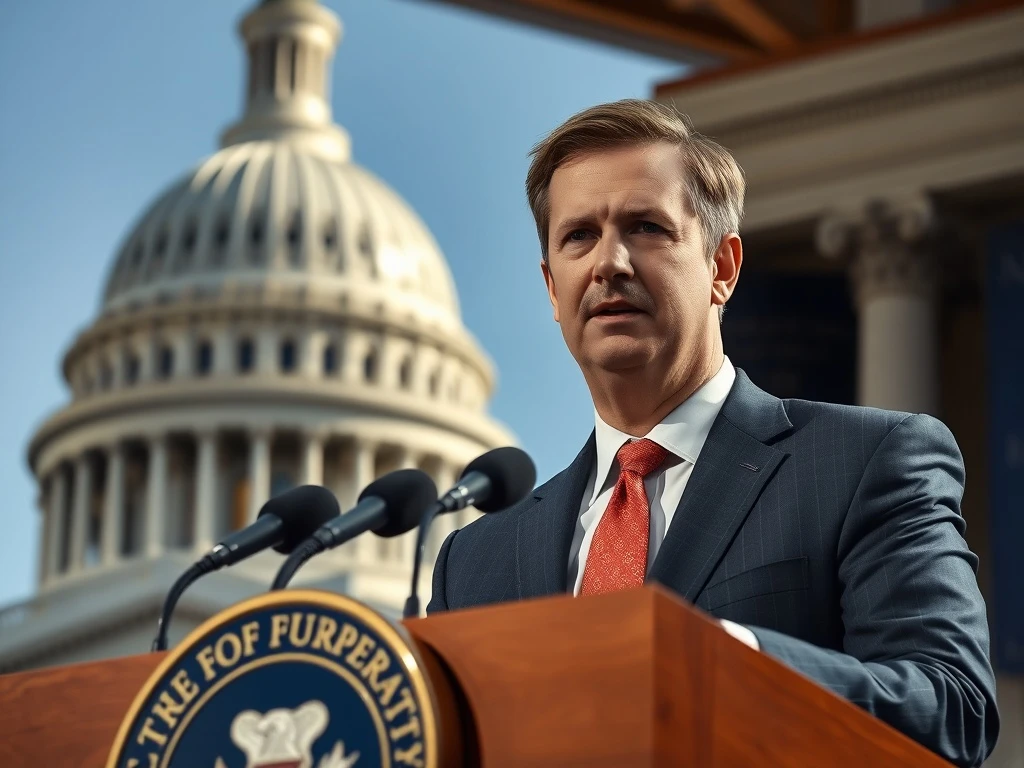
In a significant development for the United States digital asset industry, Securities and Exchange Commission (SEC) Chair Paul Atkins has voiced strong confidence that a landmark bipartisan crypto market structure bill will reach President Donald Trump’s desk for signature before the end of 2025. This statement, made during a Fox Business interview on Monday, January 27, 2025, signals a potential turning point in the nation’s approach to cryptocurrency regulation, aiming to move markets from a regulatory gray zone into a defined legal framework.
Crypto Market Structure Bill Gains Essential Momentum
Chairman Atkins’s bullish outlook follows the recent passage of the GENIUS Act, which provided initial regulatory clarity. Consequently, the market structure bill represents the next critical legislative step. Atkins emphasized the bill’s alignment with President Trump’s stated goal of making America the global capital for cryptocurrency. “This fits in with the president’s focus,” Atkins stated, adding, “if you have clear legislation and clear rules, then you have certainty in the marketplace.” This certainty, he argued, is fundamental for promoting innovation and protecting investors within the domestic crypto sector. The SEC’s public support provides substantial weight to the bill’s prospects, marking a notable shift from years of regulatory ambiguity.
Also read: Onchain Perp DEX Volumes Plummet: Fifth Straight Month of Decline Since 2025 Peak
The Legislative Pathway and Potential Hurdles
Despite the optimism, the legislative process involves careful navigation. The Senate Agriculture Committee, which oversees the Commodity Futures Trading Commission (CFTC), recently postponed its final markup of the bill to late January. Committee officials cited the need for additional time to finalize details and build broader support. Importantly, the Senate Banking Committee, which oversees the SEC, will proceed with its scheduled markup this Thursday as planned. This dual-committee approach underscores the bill’s complexity, as it seeks to delineate oversight between the SEC and the CFTC. Furthermore, a potential government shutdown looms if the House fails to pass necessary spending bills by January 30, a factor that could delay all legislative activity, including this key crypto bill.
Defining Regulatory Roles: SEC and CFTC Oversight
The core objective of the crypto market structure bill is to establish clear jurisdictional boundaries for federal regulators. For years, the classification of digital assets—whether as securities, commodities, or something else—has created a confusing overlap between the SEC and CFTC. This bill aims to resolve that conflict by explicitly defining which assets fall under the purview of each agency. Primary oversight responsibilities would be formally assigned, providing the legal clarity that exchanges, developers, and investors have long requested. This structure is designed to “future-proof” the regulatory environment against inconsistent enforcement, a point Atkins stressed in a post on X, formerly known as Twitter.
Also read: Bitcoin Stalls Below $70K as Ethereum Consolidates: Why LILPEPE Captures Market Attention
- SEC Jurisdiction: Would likely cover digital assets deemed to be investment contracts or securities.
- CFTC Jurisdiction: Would oversee digital assets classified as commodities, including spot markets for cryptocurrencies like Bitcoin and Ethereum.
- Dual Registration: Some platforms may need to register with both agencies, depending on their product offerings.
The Broader Context of 2025 Crypto Regulation
This legislative push occurs within a transformative year for U.S. crypto policy. The passage of the GENIUS Act set an important precedent for bipartisan cooperation on digital asset issues. Moreover, the market structure bill is not operating in a vacuum. Simultaneously, other legislative proposals, such as one aiming to protect software developers from certain liabilities, are also circulating in Congress. This flurry of activity indicates a maturing political recognition of cryptocurrency’s economic and technological significance. The collective goal is to create a coherent national strategy that balances consumer protection with the promotion of financial innovation, ensuring the U.S. remains competitive in the global digital economy.
Expert Analysis on Market Impact
Financial policy analysts note that successful passage would be a watershed moment. Regulatory clarity reduces compliance costs and legal risks for businesses, which can attract capital and talent to the U.S. market. Conversely, continued delay or failure could perpetuate the “regulatory gray zone” that Atkins warned about, potentially driving innovation and investment to jurisdictions with more defined rules. The timing is also critical, as other major economies are advancing their own regulatory frameworks. The bill’s progression through committee markups in the coming weeks will be a key indicator of its viability and the potential for a new era of American crypto leadership.
Conclusion
SEC Chair Paul Atkins’s confident prediction that President Trump will sign the crypto market structure bill in 2025 highlights a key moment for U.S. financial regulation. The bipartisan effort to assign clear roles to the SEC and CFTC promises to bring much-needed certainty to the cryptocurrency marketplace. While legislative hurdles like committee markups and budget negotiations remain, the high-level support from the nation’s top securities regulator provides substantial momentum. Ultimately, the successful enactment of this bill would represent a historic step toward achieving the administration’s goal of establishing the United States as the definitive global leader in the digital asset ecosystem.
FAQs
Q1: What is the crypto market structure bill?
The crypto market structure bill is a proposed U.S. law designed to clarify which federal agencies—the SEC or the CFTC—have primary regulatory authority over different types of digital assets and cryptocurrency markets, moving them out of a legal gray area.
Q2: Why is SEC Chair Paul Atkins confident President Trump will sign it?
Atkins has stated the bill aligns directly with President Trump’s public goal of making America the “crypto capital of the world.” The SEC’s support and the bill’s bipartisan nature increase its chances of reaching the President’s desk for approval.
Q3: What are the main hurdles facing the bill’s passage?
The main hurdles include finalizing legislative details in Senate committees, garnering sufficient bipartisan support, and avoiding delays from other congressional issues, such as a potential government shutdown at the end of January 2025.
Q4: How would this bill affect cryptocurrency exchanges and investors?
The bill would provide clearer compliance guidelines for exchanges, potentially requiring registration with the SEC, CFTC, or both. For investors, it aims to create a more stable and secure market environment with defined consumer protections.
Q5: How does this bill relate to the GENIUS Act passed in 2025?
The GENIUS Act provided an initial layer of regulatory clarity. The market structure bill builds upon that foundation by specifically addressing the division of oversight between the two main financial regulators, the SEC and CFTC, creating a more comprehensive framework.

This article was produced with AI assistance and reviewed by our editorial team for accuracy and quality.