Russia Crypto News Ban: The Alarming Crackdown on Digital Asset Information
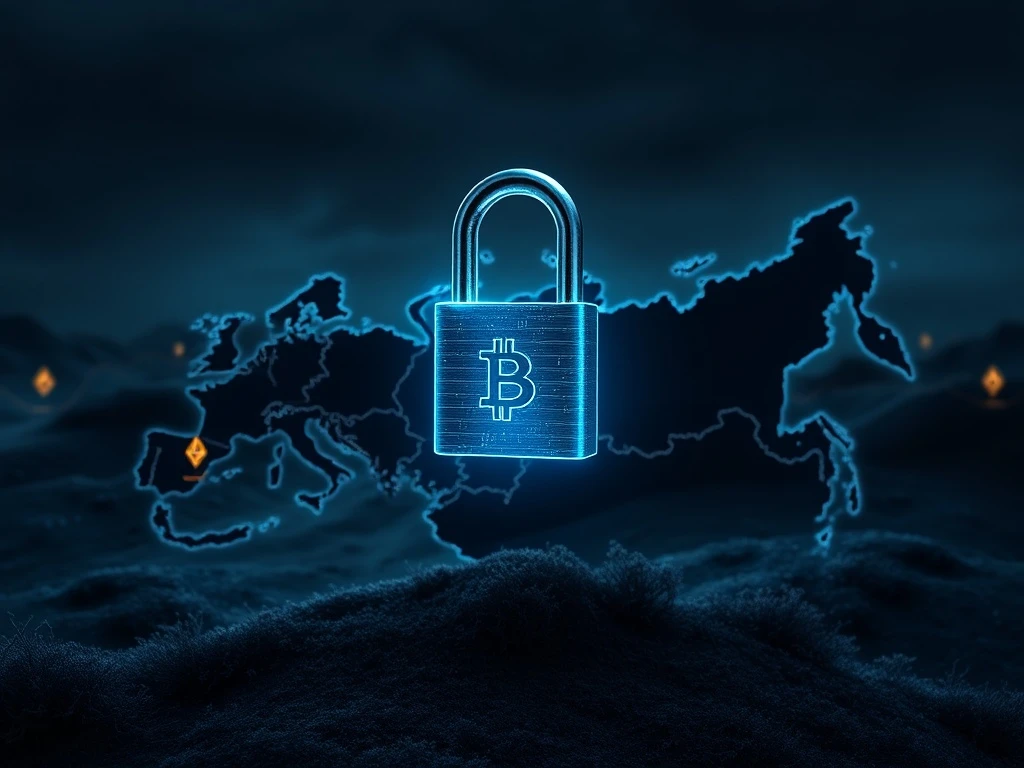
MOSCOW, RUSSIA – In a significant escalation of digital control, Russia’s telecommunications regulator Roskomnadzor has blocked residential internet access to a sweeping list of international cryptocurrency news websites, a move first reported by BeInCrypto that signals a deepening crackdown on financial information within the country. This Russia crypto news ban directly impacts platforms like Crypto News Insights, Benzinga, and CoinGeek, effectively creating an information firewall around the volatile digital asset sector for Russian citizens. Consequently, this action raises immediate questions about market transparency and follows a broader pattern of increasing state oversight over online economic discourse.
Russia Crypto News Ban: The Scope and Immediate Impact
Roskomnadzor, the federal executive body responsible for monitoring and controlling Russian mass media, appears to have intensified its regulatory focus. According to the initial report, the blocked sites include a diverse range of publishers: Crypto News Insights, Benzinga, FastBull, FXEmpire, CoinGeek, Criptonoticias, CoinEdition, The Coin Republic, and Nada News. This list targets outlets providing market analysis, price updates, and regulatory news from both Western and non-Western perspectives. The block affects standard residential internet connections, though reports suggest some sites may remain accessible via virtual private networks (VPNs).
Also read: Bitcoin Spot ETFs Shatter Positive Streak With $296 Million Outflow
This development is not an isolated event. Instead, it represents a clear continuation of Russia’s established framework for internet sovereignty, often referred to as the ‘sovereign internet’ law. Furthermore, the timing coincides with global regulatory uncertainty and Russia’s own complex legislative dance with cryptocurrency. The immediate impact is a reduction in the plurality of financial news sources available to Russian retail investors and enthusiasts. They now face a more curated information environment, potentially limited to state-sanctioned or domestically registered platforms.
Contextualizing the Crackdown: A Timeline of Control
To understand this Russia crypto news ban, one must examine the recent regulatory timeline. The Russian government has long maintained an ambivalent stance toward cryptocurrencies, oscillating between proposed bans and discussions of regulation for cross-border settlements.
Also read: Bitcoin Strategy Divide: GameStop's 4,710 BTC Hold Contrasts With Nation's Massive Sell-Off
- 2020: Russia formalizes cryptocurrencies as property, but prohibits their use for payments.
- 2022: The Bank of Russia advocates for a complete ban on crypto trading and mining, while other ministries push for regulation.
- 2023: Discussions intensify around using cryptocurrencies for international trade to circumvent sanctions.
- 2024: The government advances legislation to regulate crypto mining and establish experimental legal frameworks for digital asset use in foreign trade.
Against this backdrop, controlling the narrative becomes critical. The block on external crypto news sites can be seen as a move to manage domestic perception and prevent capital flight narratives or investment advice that contradicts state policy. It also aligns with broader efforts to insulate the Russian information space from foreign influence, a policy applied to general news and now explicitly extended to specialized financial media.
Expert Analysis on the Media and Regulatory Implications
Industry observers note that targeting media is often a precursor to, or companion of, stricter direct regulation. By restricting access to independent reporting on market crashes, scam alerts, or regulatory developments in other countries, authorities can shape a more controlled economic narrative. This control is particularly significant for a speculative asset class like cryptocurrency, where news directly and instantly impacts market prices and investor behavior.
Legal experts point to Roskomnadzor’s existing mandate to block websites that contain prohibited information, which can include calls for unauthorized financial activity or content deemed a threat to financial stability. The regulator has previously blocked websites related to forex trading and binary options under similar justifications. The extension of this practice to mainstream crypto news outlets marks a notable expansion of its scope. The practical effect is a chilling one: domestic crypto news platforms may now practice increased self-censorship to avoid landing on the blocklist themselves.
Comparative Global Perspectives on Information Flow
Russia’s approach stands in contrast to regulatory models in other major economies. For instance, while the United States Securities and Exchange Commission (SEC) aggressively pursues enforcement actions, it does not block public access to news websites reporting on those actions. Similarly, the European Union’s Markets in Crypto-Assets (MiCA) framework focuses on regulating entities, not censoring media. This distinction highlights a fundamental difference between regulating an industry’s practices and controlling the information about that industry. The Russian model, as demonstrated by this crypto news ban, increasingly blends the two.
| Jurisdiction | Primary Regulatory Focus | Approach to Media/Information |
|---|---|---|
| Russia | Control & Sovereignty | Active blocking of foreign news sites |
| United States | Enforcement & Classification | No blocking; emphasis on issuer disclosures |
| European Union | Harmonization & Consumer Protection | No blocking; focus on content rules for crypto ads |
| Singapore | Innovation Hub with Guardrails | No blocking; strict licensing of service providers |
The Ripple Effects on Investors and the Domestic Crypto Ecosystem
The immediate consequence for Russian investors is a tangible increase in information asymmetry. Without access to a broad range of analyses, they may become more reliant on social media, Telegram channels, or domestic sources of varying quality. This situation could increase susceptibility to misinformation or pump-and-dump schemes that thrive in opaque environments. For the domestic crypto ecosystem, the block could inadvertently bolster Russian-language platforms that remain accessible, potentially consolidating market influence among a smaller group of approved or tolerated entities.
Moreover, this move could impact technical development and professional engagement. Many developers, traders, and entrepreneurs rely on global crypto news for the latest technological updates, protocol changes, and security vulnerabilities. Hindering this flow of information may slow innovation and increase systemic risk if critical security news is delayed or filtered. The long-term effect may be a more isolated Russian crypto sector, operating with a significant delay relative to the global conversation and technological frontier.
Conclusion
The Russia crypto news ban enacted by Roskomnadzor represents a strategic escalation in the state’s management of financial information. By blocking access to a wide array of international cryptocurrency news websites, authorities are extending principles of informational sovereignty directly into the digital asset space. This action limits source diversity for investors, aligns with broader regulatory ambiguity, and reflects a governance model that prioritizes control. As the global cryptocurrency market evolves, the Russian approach highlights a divergent path where regulating the narrative is as critical as regulating the asset itself. The long-term implications for market transparency, investor protection, and technological development within Russia’s borders remain a critical issue for observers worldwide.
FAQs
Q1: Which Russian agency is responsible for blocking the crypto news websites?
A1: The federal executive agency Roskomnadzor, Russia’s telecommunications and mass media regulator, is responsible for implementing the internet blocks and maintaining the national register of prohibited websites.
Q2: Can users in Russia still access blocked cryptocurrency news sites?
A2: While access via standard residential internet connections is blocked, tech-savvy users may circumvent the restriction using virtual private networks (VPNs) or other proxy services, though the use of unauthorized VPNs itself carries legal risk in Russia.
Q3: What is the legal justification Roskomnadzor uses for such blocks?
A3: Roskomnadzor typically cites laws concerning the protection of financial stability, the prevention of unauthorized financial service promotion, or general statutes on restricting information that threatens national interests. Specific official statements regarding this latest batch of blocks are still emerging.
Q4: How does this affect ordinary Russian cryptocurrency investors?
A4: Ordinary investors face reduced access to independent market analysis, global regulatory news, and diverse investment perspectives. This may lead to greater reliance on potentially biased or limited domestic sources, increasing information asymmetry and investment risk.
Q5: Has Russia blocked other types of financial news websites before?
A5: Yes, Roskomnadzor has a history of blocking websites related to forex trading, binary options, and online casinos. This action against mainstream cryptocurrency news outlets represents an expansion of that practice into a new and widely followed asset class.

This article was produced with AI assistance and reviewed by our editorial team for accuracy and quality.