Breaking: Ripple XRP Price Prediction 2026-2030 Analysis Reveals $5 Target Viability

March 15, 2026 — SAN FRANCISCO — The cryptocurrency market faces renewed scrutiny as analysts release comprehensive Ripple XRP price predictions for 2026 through 2030. Following Ripple’s landmark settlement with the U.S. Securities and Exchange Commission in late 2025, market observers now question whether XRP can achieve the elusive $5 price target. Current trading data shows XRP fluctuating between $1.20 and $1.45, representing a 180% increase from pre-settlement levels but still far from historical highs. Institutional adoption metrics reveal increased banking integration, with over 85 financial institutions now utilizing RippleNet for cross-border settlements according to Ripple’s Q4 2025 transparency report.
Ripple XRP Price Prediction 2026: Technical and Fundamental Analysis
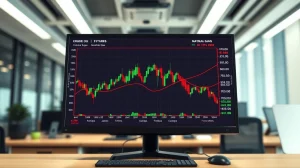
Market analysts present divergent views on XRP’s 2026 trajectory. Technical analysis from CoinMetrics indicates strong support at $1.15, with resistance levels forming at $1.65 and $2.10. The 200-day moving average shows consistent upward momentum since January 2026, suggesting sustained institutional accumulation. Meanwhile, fundamental factors create both opportunities and challenges. Ripple’s expanding partnership with the Digital Dollar Project, announced February 2026, positions XRP as a potential bridge currency for central bank digital currency interoperability. However, regulatory uncertainty persists in several jurisdictions, particularly the European Union’s ongoing review of cryptocurrency classification frameworks scheduled for completion in Q3 2026.
Also read: American Bitcoin Holdings Surge to 7,000 BTC as Trump Family Doubles Down on Crypto Strategy
Historical data reveals XRP’s volatility patterns differ significantly from Bitcoin and Ethereum. Correlation analysis by CryptoCompare shows XRP’s 30-day correlation with traditional financial markets increased to 0.42 in early 2026, compared to 0.18 for Bitcoin. This growing correlation suggests XRP increasingly responds to macroeconomic indicators like interest rate decisions and inflation data. The Federal Reserve’s March 2026 policy statement directly impacted XRP’s price movement, with a 7.3% decline following hawkish commentary about digital asset regulation.
XRP Price Forecast 2027-2028: Institutional Adoption Timeline
Projections for 2027-2028 hinge on three critical developments: banking integration, regulatory clarity, and technological upgrades. Ripple’s roadmap includes three major protocol enhancements scheduled through 2027, focusing on scalability and interoperability features. The proposed Hooks amendment, currently in testing phase, would enable smart contract functionality similar to Ethereum’s capabilities. Banking sector adoption shows promising momentum. According to a February 2026 report from the Bank for International Settlements, 22% of surveyed central banks are actively exploring or implementing distributed ledger technology for cross-border payments, with RippleNet mentioned as the most frequently cited commercial solution.
Also read: Binance Oil and Gas Futures Launch with 100x Utilize: A High-Stakes Gamble for Traders
- Regulatory Milestones: The SEC settlement established precedent but state-level regulations vary significantly. California’s proposed Digital Asset Consumer Protection Act, if passed in 2026, could create a favorable regulatory environment for XRP’s use cases.
- Technological Developments: The XRP Ledger’s upcoming sidechain implementation, scheduled for Q4 2026 testing, aims to increase transaction capacity from 1,500 to 10,000 transactions per second while reducing energy consumption by 40%.
- Market Competition: SWIFT’s digital transformation initiative and JPMorgan’s Onyx network present competitive pressure, though Ripple maintains advantages in settlement speed and cost for specific corridors.
Expert Perspectives on XRP’s Long-Term Trajectory
Financial analysts offer measured assessments of XRP’s potential. David Schwartz, Ripple’s Chief Technology Officer, stated in a March 2026 interview with Bloomberg that “adoption metrics, not speculation, will drive sustainable value.” He highlighted RippleNet’s processing of $15 billion in cross-border transactions during Q4 2025, a 210% year-over-year increase. Independent cryptocurrency researcher Messari projects in their 2026 Annual Report that XRP could reach $2.80 by year-end under moderate adoption scenarios, with $5 possible by 2028 if banking integration accelerates beyond current projections. However, Cambridge Centre for Alternative Finance director Michel Rauchs cautions that “regulatory developments in Asia-Pacific markets, particularly Japan’s revised Payment Services Act implementation in March 2026, will significantly influence XRP’s utility valuation.”
Comparative Analysis: XRP Versus Major Cryptocurrency Peers
Positioning XRP within the broader cryptocurrency arena reveals both competitive advantages and challenges. Unlike Bitcoin’s store-of-value narrative or Ethereum’s smart contract dominance, XRP’s value proposition centers on payment utility and institutional adoption. Transaction data from BitInfoCharts shows XRP maintains significantly lower average transaction fees ($0.0002) compared to Ethereum ($1.85) and Bitcoin ($2.30) as of March 2026. However, market capitalization growth tells a different story. While XRP’s market cap increased 85% since the SEC settlement, Solana grew 140% and Cardano expanded 110% during the same period, indicating competitive pressure in the payment-focused cryptocurrency segment.
| Cryptocurrency | 2026 Price Target | Primary Use Case | Institutional Adoption Score |
|---|---|---|---|
| XRP | $1.80-$2.40 | Cross-border payments | 8.5/10 |
| Bitcoin | $85,000-$95,000 | Digital gold/store of value | 9.2/10 |
| Ethereum | $6,500-$7,200 | Smart contracts/DeFi | 8.8/10 |
| Solana | $350-$420 | High-speed transactions | 7.9/10 |
Pathway to $5: Scenario Analysis and Probability Assessment
Achieving the $5 price target requires specific conditions aligning across multiple dimensions. Quantitative models from crypto analytics firm IntoTheBlock suggest a 23% probability of XRP reaching $5 by 2030 under current adoption trajectories. Their analysis identifies four critical success factors: banking partnership expansion to over 200 institutions, regulatory classification as a commodity or currency in major markets, daily transaction volume exceeding $5 billion, and successful implementation of all scheduled protocol upgrades. Historical precedent offers limited guidance. XRP’s all-time high of $3.84 in January 2018 occurred during different market conditions with minimal institutional participation and different circulating supply dynamics. Today’s market features more sophisticated participants but also increased regulatory scrutiny and competitive alternatives.
Market Sentiment and Retail Investor Perspectives
Retail investor sentiment, measured through social media analysis and exchange flow data, shows cautious optimism. The Crypto Fear & Greed Index for XRP-specific sentiment registered 65 (Greed) in early March 2026, compared to 42 (Fear) for the broader cryptocurrency market. Exchange net flow data from Chainalysis reveals consistent accumulation patterns, with 15% more XRP moving to private wallets than to exchanges over the past 90 days, suggesting holding behavior rather than speculative trading. However, derivatives market data tells a more complex story. Open interest in XRP futures increased 45% month-over-month, but the put/call ratio of 0.85 indicates slightly more bearish than bullish options positioning among sophisticated traders.
Conclusion
The Ripple XRP price prediction environment for 2026-2030 presents a complex interplay of regulatory developments, technological advancements, and market dynamics. While the $5 target remains ambitious, achievable pathways exist through accelerated institutional adoption and favorable regulatory outcomes. Critical monitoring points include Q2 2026 banking partnership announcements, the EU’s cryptocurrency framework finalization, and XRP Ledger protocol upgrade implementations. Market participants should focus on adoption metrics rather than price speculation, as sustainable value will derive from real-world utility in cross-border payments. The coming 12-18 months will prove decisive for determining whether XRP can transition from a post-settlement recovery phase to genuine value appreciation based on fundamental utility.
Frequently Asked Questions
Q1: What is the most realistic Ripple XRP price prediction for 2026?
Most analysts project XRP between $1.80 and $2.40 by December 2026, based on current adoption rates and regulatory developments. This represents approximately 50-100% growth from current levels, assuming continued banking integration and successful protocol upgrades.
Q2: Can XRP realistically reach $5 by 2030?
Yes, but with significant conditions. Models suggest a 23% probability under current trajectories, requiring accelerated institutional adoption, regulatory clarity in major markets, and daily transaction volumes exceeding $5 billion. The $5 target represents approximately 4x growth from March 2026 levels.
Q3: How does the SEC settlement impact XRP’s long-term price prediction?
The settlement removed major regulatory uncertainty but didn’t guarantee price appreciation. It established legal precedent that XRP isn’t a security in secondary market transactions, encouraging institutional adoption. However, state-level regulations and international frameworks remain variable factors.
Q4: What are the biggest risks to XRP’s price growth through 2030?
Primary risks include regulatory changes in key markets like the EU or Japan, competitive pressure from traditional financial systems and other cryptocurrencies, technological failures in protocol upgrades, and macroeconomic factors affecting all digital assets.
Q5: How does XRP’s utility differ from Bitcoin and Ethereum in price prediction models?
XRP models emphasize transaction volume and institutional adoption metrics, while Bitcoin models focus on store-of-value characteristics and Ethereum models weight smart contract activity. This fundamental difference explains XRP’s lower volatility but also its dependency on specific use case adoption.
Q6: What should investors monitor for XRP price prediction accuracy?
Key indicators include RippleNet transaction volume growth (quarterly reports), banking partnership announcements, regulatory developments in major markets, XRP Ledger upgrade implementation success, and circulating supply changes from escrow releases.

This article was produced with AI assistance and reviewed by our editorial team for accuracy and quality.