Ripple XRP Lawsuit: Landmark Court Dismissal Delivers Key Legal Clarity for Crypto
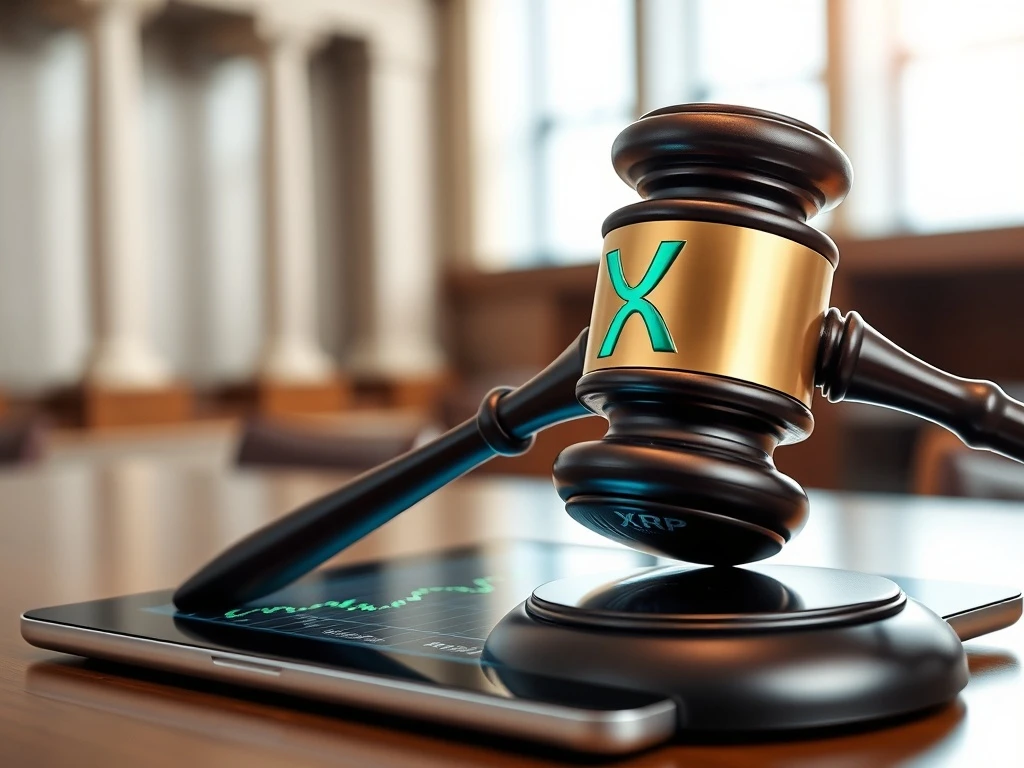
In a significant development for cryptocurrency regulation, a United States federal appeals court has definitively dismissed a long-running class action lawsuit against Ripple Labs Inc., the company behind the XRP digital asset. This decisive ruling, delivered by the Ninth Circuit Court of Appeals on January 27, 2026, marks another critical legal milestone for Ripple, effectively closing a major litigation front that began in 2018 and further clarifying the regulatory perimeter surrounding one of the world’s largest cryptocurrencies.
Ripple XRP Lawsuit Reaches a Decisive Conclusion
The court’s decision centered on a procedural technicality with substantial implications. The class action, originally filed by investor Bradley Sostack, alleged that Ripple conducted an unregistered securities offering by selling XRP. However, the Ninth Circuit panel ruled the claim was time-barred under the statute of limitations prescribed by the Securities Act. Specifically, the plaintiff filed his complaint more than three years after purchasing XRP, which invalidated the core legal argument. Consequently, the court dismissed the case without examining the underlying question of whether XRP constitutes a security. This procedural dismissal, while not a ruling on the merits of XRP’s status, nonetheless removes a persistent legal overhang that has shadowed the asset for years.
Also read: AI Trading Agents: The Revolutionary Path to Mastering Your Crypto Portfolio in 2025
Anatomy of the Court’s Dismissal Ruling
The judicial order provides a clear, technical rationale that strengthens Ripple’s legal posture. The court’s analysis hinged on Section 12(a)(1) of the Securities Act, which enforces a strict three-year statute of limitations for claims regarding unregistered securities. By determining the filing fell outside this window, the judges rendered the entire class action inadmissible. This outcome highlights several key legal principles. First, it underscores the importance of procedural deadlines in securities litigation. Second, it demonstrates how technical defenses can resolve complex crypto cases. Finally, the dismissal invalidates all proposed remedies within the class action, preventing plaintiffs from seeking financial damages or injunctive relief based on these specific claims. Legal experts view this as a clean, decisive win for Ripple’s defense team.
The Strategic Context: A Series of Legal Victories
This latest victory does not exist in a vacuum. It follows a series of favorable legal outcomes for Ripple in its protracted battle with U.S. regulators. Most notably, in July 2023, U.S. District Judge Analisa Torres delivered a partial summary judgment in the Securities and Exchange Commission’s (SEC) case against Ripple. Judge Torres ruled that programmatic sales of XRP on digital asset exchanges did not constitute offers of investment contracts. This landmark decision created a essential legal distinction between direct institutional sales and secondary market transactions. Subsequently, in the summer of 2025, Ripple and the SEC reached a settlement, concluding that major dispute with a fine but no admission of wrongdoing regarding historical sales. The dismissal of the Sostack class action now forms the third pillar in this sequence of legal clarifications, collectively building a more stable foundation for XRP’s operational and market future.
Also read: RunBot AI Trading Bot: Revolutionizing Automated Cryptocurrency Strategies with Machine Learning
Immediate Market Reaction and Institutional Sentiment
Financial markets responded positively to the news, interpreting the dismissal as a reduction of systemic legal risk. While the ruling was based on procedure, investors perceived it as another step toward regulatory normalization for XRP. Market analysts noted that the removal of a multi-year class action threat reduces potential liability and operational distraction for Ripple Labs. Furthermore, institutional players, including payment providers and investment funds, often cite ongoing litigation as a barrier to deeper engagement with specific crypto assets. The closure of this case directly addresses one of those concerns. Consequently, the decision may accelerate institutional adoption of XRP for cross-border settlement and other use cases, as legal uncertainty continues to diminish.
The Broader Impact on Cryptocurrency Regulation
This ruling contributes to the evolving patchwork of U.S. cryptocurrency regulation through case law. Although it avoided a substantive ruling on XRP’s status, its procedural finality adds to a growing body of judicial decisions that define how existing financial laws apply to digital assets. The cumulative effect of the Torres ruling, the SEC settlement, and now this dismissal creates a de facto legal framework for XRP that other projects may reference. It suggests that for certain types of claims, statutes of limitations may provide a resilient defense for older crypto transactions. This development occurs amidst ongoing legislative efforts in Congress to create clearer digital asset laws, highlighting the critical role courts play in shaping the regulatory sector in the absence of comprehensive legislation.
Comparative Legal Analysis: XRP vs. Other Major Assets
The legal journey of XRP offers a contrasting narrative to other major cryptocurrencies. Unlike Bitcoin and Ethereum, which have largely avoided direct securities classification lawsuits targeting their core developers, XRP has been at the epicenter of this legal debate due to Ripple Labs’ central role in its development and distribution. The recent dismissals and rulings, however, are gradually carving out a unique legal niche for XRP. They distinguish between the asset’s initial distribution and its current function as a medium for value transfer. This nuanced legal standing, born from successive court decisions, could serve as a template for other digital assets with active founding entities, demonstrating a path to resolving securities law questions through litigation and settlement.
Future Trajectory for Ripple and the XRP Ecosystem
With this class action concluded, Ripple can allocate more resources toward technology development and commercial partnerships. The company’s leadership has consistently argued that legal clarity is the primary catalyst for broader adoption of XRP in global finance. This ruling supports that thesis. Looking ahead, the focus will likely shift toward how Ripple leverages this improved legal standing to expand its On-Demand Liquidity (ODL) product and other enterprise solutions. Furthermore, the XRP Ledger, as a decentralized public blockchain, continues to operate independently, with metrics such as daily transactions showing consistent growth. The dismissal of investor lawsuits removes a narrative of consumer harm, potentially improving the public perception of the XRP ecosystem and attracting more developers and validators to the network.
Conclusion
The Ninth Circuit’s dismissal of the 2018 class action lawsuit against Ripple Labs represents a key procedural victory that adds to the growing legal clarity for XRP. By closing this long-standing case, the U.S. judiciary has removed a significant element of uncertainty, allowing markets and institutions to assess the asset with greater confidence. While the ruling did not address the fundamental question of XRP’s legal status, it forms part of a cumulative legal trend that is defining the boundaries of cryptocurrency regulation. For Ripple, this outcome provides strategic relief and reinforces its position as it continues to address the complex intersection of blockchain innovation and financial law. The resolution of this Ripple XRP lawsuit underscores the ongoing maturation of the digital asset sector as it moves from regulatory ambiguity toward more established legal frameworks.
FAQs
Q1: What was the core reason the court dismissed the Ripple class action lawsuit?
The United States Court of Appeals for the Ninth Circuit dismissed the lawsuit because it was filed after the three-year statute of limitations had expired. The plaintiff purchased XRP in 2017 but did not file the class action until 2018, which exceeded the legal deadline for such claims under the Securities Act.
Q2: Does this court ruling mean XRP is officially not a security?
No, this specific ruling did not make a determination on whether XRP is a security. The dismissal was based solely on procedural grounds (the statute of limitations). The question of XRP’s legal status was addressed in other proceedings, notably the 2023 summary judgment by Judge Torres which found that programmatic sales of XRP were not securities transactions.
Q3: How does this decision affect the average XRP holder or investor?
For investors, the dismissal reduces a major source of legal and regulatory risk associated with XRP. It eliminates the threat of a successful class action lawsuit based on these specific claims, which could have resulted in financial penalties affecting Ripple Labs. This contributes to a more stable legal environment for the asset.
Q4: What is the difference between this class action lawsuit and the SEC’s case against Ripple?
The class action lawsuit was a private civil case filed by individual investors seeking damages. The SEC’s case was an enforcement action by a government regulator seeking penalties and injunctions for alleged violations of securities laws. The two cases were separate legal proceedings, though they involved similar allegations about XRP sales.
Q5: Could new lawsuits regarding XRP be filed in the future?
While this particular class action is concluded, the possibility of future litigation always exists in the financial markets. However, any new claims regarding XRP sales from the 2017-2018 period would likely face the same statute of limitations hurdle. Future lawsuits would need to be based on new actions or allegations within the legal time limits.

This article was produced with AI assistance and reviewed by our editorial team for accuracy and quality.