Ripple’s Onchain Treasury Launch Transforms CFO Dashboards with Unified Asset Management
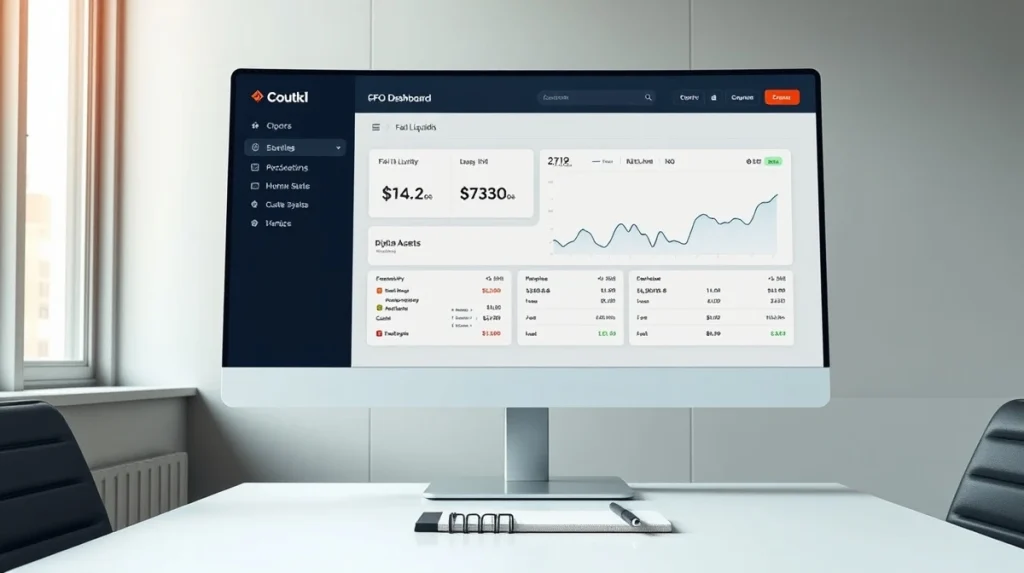
In a significant move for corporate finance, Ripple has launched native onchain treasury tools designed specifically for CFO dashboards. The company announced the release of Digital Asset Accounts and Unified Treasury features within its Ripple Treasury platform on April 1, 2026. This development aims to consolidate the management of fiat currency and digital assets onto a single platform, potentially ending the need for separate, disjointed tools. The launch directly supports XRP and Ripple’s stablecoin, RLUSD, providing live fiat valuations and automated transaction logging.
Ripple Treasury Integrates Digital and Fiat Assets
The core of the new offering is the Unified Treasury dashboard. According to Ripple, this platform gives corporate treasury teams a consolidated view of their entire liquidity position. CFOs and their teams can now monitor traditional bank balances alongside holdings in XRP and RLUSD from one interface. Data from the platform shows live conversion rates, pulling from multiple sources to give real-time fiat values for digital holdings. This integration addresses a persistent operational headache. For years, companies dabbling in digital assets have been forced to use a patchwork of spreadsheets, crypto exchange accounts, and traditional banking portals. The Ripple system seeks to replace that complexity. Industry watchers note that this reflects a maturation in the crypto sector, shifting from speculative trading to practical enterprise utility.
Also read: Drift Protocol Exploit: Platform Halts After Suspected $200M Security Breach
How Digital Asset Accounts Function
The new Digital Asset Accounts are not mere display windows. They are designed as functional, onchain wallets integrated directly into the treasury management workflow. Key features include automated transaction recording. Every movement of XRP or RLUSD is logged with timestamp, amount, and counterparty data, feeding directly into audit trails. The accounts also provide real-time balance sheets that reflect the current market value of crypto holdings in the company’s chosen fiat currency. This is a critical accounting requirement. “The automation of record-keeping is a major value proposition,” said a financial technology analyst who reviewed the platform. “Manual reconciliation between blockchain explorers and general ledgers is error-prone and costly. Automating this saves time and reduces compliance risk.” The system currently supports XRP and RLUSD, with Ripple indicating that support for other major digital assets may follow based on client demand.
The Push for Mainstream Corporate Adoption
This launch is not happening in a vacuum. It arrives amid growing, though cautious, corporate interest in digital assets for treasury management. MicroStrategy’s well-publicized bitcoin acquisitions and Tesla’s brief foray are high-profile examples. However, the tools for managing these assets at a corporate level have lagged. Ripple’s move targets this gap directly. The implication is clear: Ripple is positioning its technology as the bridge between the innovative potential of blockchain and the rigorous, regulated world of corporate finance. By focusing on the CFO—a role defined by risk management and liquidity oversight—Ripple is aiming for the core of business decision-making. What this means for investors is a potential acceleration in institutional use of Ripple’s associated digital assets, XRP and RLUSD, if the platform gains traction.
Also read: Zcash Analysis: Grayscale's Bold Claim on Private Money's Future and ZEC's Value
RLUSD’s Role in the Treasury Ecosystem
The inclusion of RLUSD, Ripple’s U.S. dollar-pegged stablecoin, is a strategic pillar of the new treasury suite. For corporate treasurers, stablecoins offer the programmability and speed of crypto without the extreme volatility of assets like bitcoin or ether. RLUSD can be used for instant settlements, intra-company transfers, or as a digital cash equivalent. Within the Unified Treasury dashboard, RLUSD holdings are displayed at a 1:1 value with the U.S. dollar, simplifying accounting. This integration encourages companies within Ripple’s network to adopt RLUSD for liquidity management. Analysts suggest this could boost RLUSD’s adoption and trading volume, anchoring it more firmly in the competitive stablecoin market dominated by Tether and USD Coin.
Challenges and Competitive Sector
Despite the innovation, Ripple faces hurdles. Regulatory uncertainty, particularly in the United States, remains a cloud over the broader crypto industry. Some corporate treasurers may be hesitant to commit significant liquidity to a platform whose foundational technology is still engaged in legal battles. Furthermore, the competitive field is evolving. Traditional treasury management software giants like Kyriba and SAP have begun exploring digital asset modules. Meanwhile, other blockchain-native companies are developing similar tools. Ripple’s first-mover advantage in creating a unified, native onchain dashboard is significant, but not guaranteed. Success will depend on security audits, smooth integration with existing enterprise resource planning systems, and demonstrable cost savings for early adopters.
Conclusion
Ripple’s launch of native onchain treasury tools marks a major step in blending traditional corporate finance with digital asset management. By offering CFOs a unified dashboard for fiat, XRP, and RLUSD, Ripple is addressing a clear operational need. The platform’s focus on automation, real-time valuation, and consolidated reporting could reduce complexity and cost for companies exploring digital assets. While regulatory and competitive challenges persist, this move signals a concrete use case for blockchain in enterprise finance beyond speculation. The evolution of the CFO dashboard is now officially onchain.
FAQs
Q1: What exactly did Ripple launch?
Ripple launched two new features within its Ripple Treasury platform: “Digital Asset Accounts” and “Unified Treasury.” These are native onchain tools that let corporate finance teams manage traditional fiat money and digital assets like XRP and RLUSD in one dashboard.
Q2: How does this help a CFO?
It consolidates visibility and control. Instead of juggling bank portals, crypto exchanges, and manual spreadsheets, a CFO can see all company liquidity—both cash and crypto—in one place with live values and automated record-keeping for audits.
Q3: Which digital assets are supported?
Initially, the platform supports Ripple’s native cryptocurrency XRP and its U.S. dollar-pegged stablecoin, RLUSD. Ripple has suggested it may add other major digital assets in the future based on client needs.
Q4: Is this platform live now?
Yes. Ripple announced the launch on April 1, 2026. The tools are available within the existing Ripple Treasury platform for enterprise clients.
Q5: What are the main benefits for a company?
The primary benefits are operational efficiency and reduced risk. Automated transaction logging cuts down on manual accounting errors. Real-time fiat valuation of crypto holdings aids in accurate financial reporting. Having a unified view also improves liquidity management and decision-making.

This article was produced with AI assistance and reviewed by our editorial team for accuracy and quality.