Ripple CEO’s Bold Prediction: Why a New Crypto All-Time High is Inevitable in 2025
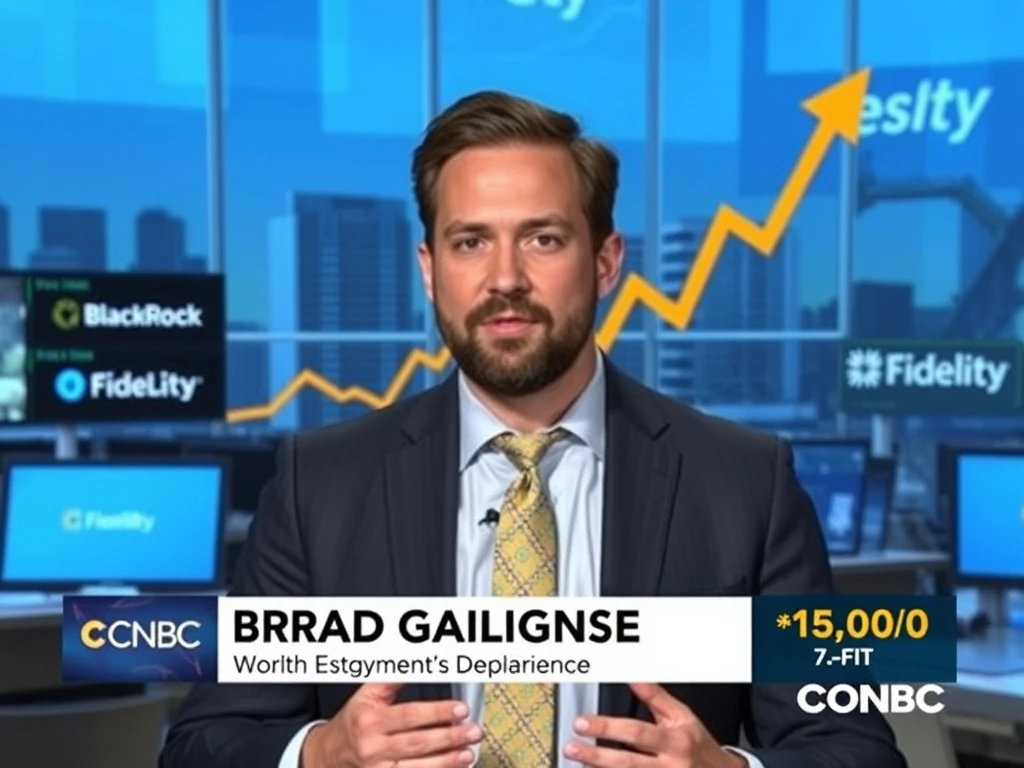
In a significant declaration that has captured the attention of global financial markets, Ripple CEO Brad Garlinghouse has publicly forecast a new all-time high for the cryptocurrency sector. Speaking from New York on January 26, 2025, during a CNBC interview, Garlinghouse positioned himself as “very bullish” and willing to stake his professional credibility on this market outlook. This prediction arrives as digital asset markets demonstrate resilience following a substantial correction in late 2024, suggesting a potential model shift in market structure and participant behavior.
Garlinghouse’s Credible Bullish Stance on Crypto Markets
Brad Garlinghouse’s market prediction carries substantial weight due to his unique position within the industry. Unlike anonymous social media commentators, the Ripple CEO operates under constant scrutiny from regulators, institutional investors, and traditional financial institutions. Consequently, his statements undergo meticulous analysis before public delivery. Garlinghouse emphasizes a fundamental transition within cryptocurrency markets, describing it as a “massive sea change” primarily driven by institutional participation rather than retail speculation.
Also read: AI Trading Agents: The Revolutionary Path to Mastering Your Crypto Portfolio in 2025
This institutional pivot represents a critical evolution from previous market cycles. During the 2021 bull run, retail euphoria and meme coin mania dominated price action. However, the current arena reveals a different composition. Major financial entities like BlackRock, Fidelity, and VanEck have established substantial cryptocurrency divisions and product offerings. Their involvement introduces longer-term investment horizons and sophisticated risk management frameworks that can stabilize market volatility over time.
The Institutional Engine Driving Crypto Valuation
Garlinghouse identifies institutional capital as the primary catalyst for reaching new market highs. This transition manifests through several measurable channels. First, regulated cryptocurrency exchange-traded funds (ETFs) have attracted billions in assets under management since their approval. Second, corporate treasury allocations to Bitcoin and other digital assets have become increasingly common among publicly traded companies. Third, traditional hedge funds and asset managers now routinely include cryptocurrency exposure in diversified portfolios.
Also read: RunBot AI Trading Bot: Revolutionizing Automated Cryptocurrency Strategies with Machine Learning
The nature of institutional demand differs fundamentally from retail patterns. Institutional investors typically employ dollar-cost averaging strategies rather than attempting to time market peaks and troughs. They prioritize custody solutions, regulatory compliance, and market infrastructure robustness. This methodical approach creates consistent buying pressure that can sustain market advances even during periods of negative sentiment among retail participants.
Market Mechanics: Priced-In Versus Realized Value
A particularly insightful aspect of Garlinghouse’s analysis concerns market pricing mechanisms. He suggests that current valuations may not fully reflect the structural changes underway. While market participants recognize the institutional narrative, price discovery mechanisms might lag in incorporating the long-term implications of this shift. This discrepancy between recognition and valuation creates potential for significant price appreciation as institutional flows materialize and become measurable in quarterly reports and custody data.
Historical precedent supports this analysis. During previous technological adoption cycles, such as the internet revolution of the late 1990s, market valuations frequently underestimated the transformative impact on commerce and communication. Similarly, cryptocurrency infrastructure development around payments, decentralized finance, and tokenized assets continues advancing independently of short-term price fluctuations.
Regulatory Clarity as a Market Catalyst
The regulatory environment represents a significant variable in Garlinghouse’s optimistic forecast. He specifically references the CLARITY Act progressing through the United States legislative process. This proposed legislation aims to establish clear jurisdictional boundaries between regulatory agencies like the SEC and CFTC regarding digital asset oversight. Regulatory uncertainty has historically constrained institutional participation, as compliance departments require definitive guidelines before approving substantial allocations.
Clear regulatory frameworks serve multiple functions for market development. First, they provide legal certainty for institutional custodians and service providers. Second, they establish investor protection standards that increase mainstream confidence. Third, they create predictable compliance pathways for blockchain projects seeking to operate within regulated financial systems. However, regulation presents a dual-edged dynamic—while clarity can accelerate adoption, specific regulatory requirements may increase operational costs and eliminate marginal projects from the ecosystem.
The XRP Narrative: From Speculative Asset to Utility Infrastructure
Within his broader market outlook, Garlinghouse articulates a specific vision for XRP and the Ripple network. He positions these technologies as foundational infrastructure for cross-border payments and liquidity solutions rather than purely speculative instruments. This utility-focused narrative aligns with institutional preferences for assets with identifiable cash flows and practical applications. The XRP Ledger’s performance metrics support this thesis, with network data showing an average of 1.8 million daily transactions during the second half of 2025.
This emphasis on utility represents a strategic evolution in cryptocurrency storytelling. Early market cycles celebrated price appreciation divorced from fundamental use cases. Current institutional discourse prioritizes technological efficiency, cost reduction, and settlement finality. Projects demonstrating tangible adoption in traditional finance corridors, particularly in emerging markets with inefficient payment systems, may receive disproportionate valuation benefits during the next market phase.
Macroeconomic Factors Supporting Crypto Appreciation
Several macroeconomic conditions create favorable tailwinds for Garlinghouse’s prediction. Global monetary policy remains generally accommodative despite efforts to control inflation, maintaining liquidity conditions that support risk asset appreciation. Additionally, increasing geopolitical tensions and currency volatility in traditional markets enhance the appeal of decentralized, borderless assets as potential hedges against systemic financial risks.
The technological maturation of blockchain networks provides another fundamental support. Ethereum’s successful transition to proof-of-stake consensus, Bitcoin’s growing hash rate security, and layer-2 scaling solutions across multiple networks have addressed earlier concerns about transaction throughput, energy consumption, and network congestion. These improvements expand potential use cases beyond store-of-value applications to include complex financial instruments and decentralized applications.
Risk Factors and Market Challenges
A balanced analysis requires acknowledging potential obstacles to new all-time highs. Regulatory developments could unfold more slowly or restrictively than anticipated. Macroeconomic deterioration might prompt institutional risk committees to reduce cryptocurrency exposure. Technological vulnerabilities or security incidents in major protocols could undermine confidence. Furthermore, the market must absorb substantial token unlocks from venture-backed projects throughout 2025, creating potential selling pressure.
The cryptocurrency market’s historical volatility patterns suggest that any ascent to new highs will likely include significant corrections and consolidation periods. Institutional participation may moderate these swings but cannot eliminate them entirely. Market participants should anticipate a “bumpy track rather than a highway,” as Garlinghouse metaphorically describes the potential path forward.
Comparative Market Analysis: 2025 Versus Previous Cycles
Market Characteristic Comparison
| Market Aspect | 2021 Cycle | 2025 Outlook |
|---|---|---|
| Primary Drivers | Retail speculation, meme coins, NFT mania | Institutional adoption, regulatory clarity, payment infrastructure |
| Investment Horizon | Short-term trading, utilize | Long-term allocation, portfolio diversification |
| Regulatory Environment | Hostile/uncertain | Developing frameworks, legislative progress |
| Market Infrastructure | Nascent exchanges, limited custody | Established custodians, regulated products |
| Use Case Focus | Speculative gains | Payment efficiency, decentralized finance |
This comparative analysis reveals why many industry observers share Garlinghouse’s constructive outlook. The market foundation in 2025 exhibits greater robustness across multiple dimensions. Institutional-grade custody solutions protect against exchange failures that previously triggered market collapses. Regulatory progress reduces existential uncertainty about cryptocurrency legality in major jurisdictions. Technological scalability enables practical applications beyond speculative trading.
Conclusion
Brad Garlinghouse’s prediction of a new cryptocurrency all-time high rests on observable shifts in market structure rather than speculative optimism. The increasing institutional participation, progressing regulatory clarity, and expanding technological utility create a fundamentally stronger foundation than previous market cycles. While volatility and regulatory developments will inevitably create temporary setbacks, the underlying trajectory suggests continued maturation and valuation growth. The Ripple CEO’s willingness to publicly stake his reputation on this outlook reflects both confidence in these structural changes and recognition that cryptocurrency markets have evolved beyond their speculative origins toward becoming integrated components of global financial infrastructure.
FAQs
Q1: What specifically did Ripple CEO Brad Garlinghouse predict?
Brad Garlinghouse predicted that the cryptocurrency market will reach a new all-time high, citing institutional adoption and regulatory developments as primary drivers during his January 2025 CNBC appearance.
Q2: How does institutional participation differ from retail trading in crypto markets?
Institutional investors typically employ longer time horizons, dollar-cost averaging strategies, rigorous due diligence, and substantial compliance frameworks, creating more consistent demand compared to the sentiment-driven trading often seen in retail markets.
Q3: What is the CLARITY Act and why does it matter for crypto?
The CLARITY Act is proposed U.S. legislation that would establish clear regulatory jurisdiction over digital assets between the SEC and CFTC, reducing uncertainty that has historically constrained institutional participation in cryptocurrency markets.
Q4: How has the XRP narrative changed according to Garlinghouse?
Garlinghouse emphasizes XRP’s utility for cross-border payments and financial infrastructure rather than its speculative potential, aligning with institutional preferences for assets with identifiable use cases and practical applications.
Q5: What are the main risks that could prevent a new crypto all-time high?
Potential obstacles include restrictive regulatory developments, macroeconomic deterioration reducing risk appetite, technological vulnerabilities in major protocols, and substantial token unlocks creating selling pressure throughout 2025.

This article was produced with AI assistance and reviewed by our editorial team for accuracy and quality.