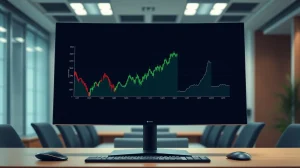
Render Token Analysis Amid GPU Computing Demand
March 15, 2026 – The Render (RNDR) token, which facilitates a decentralized network for GPU-based rendering, has shown notable market activity in recent weeks. Its performance is increasingly tied to demand for distributed computing power in creative industries.
Network Fundamentals and Recent Performance
Render’s underlying network connects users needing rendering power with providers who contribute idle GPU capacity. Blockchain data shows consistent transaction volume on the network through the first quarter of 2026. This activity correlates with usage in animation, visual effects, and architectural visualization projects.
Also read: SIREN Price Skyrockets 100%—Charts Flash Ominous Bull Trap Warning
Market data from CoinGecko indicates the token’s price has experienced volatility, mirroring broader cryptocurrency market trends. However, its utility as a medium of exchange for a specific computational service provides a distinct value proposition compared to purely speculative assets.
Drivers of Current Demand
Several factors are influencing Render’s ecosystem. The rising computational requirements for high-resolution and 3D content creation have pushed more studios to explore decentralized solutions. Industry analysts note that cost efficiency compared to traditional cloud rendering services remains a key selling point for the network.
Also read: Crypto Rally Watch: EDGE, VVV, and ALGO Show Early Bullish Signals in April 2026
Furthermore, the expansion of the metaverse and real-time 3D applications has created a sustained need for GPU resources. Render’s model allows creators to access this power without significant upfront hardware investment. Network metrics reported by the Render Network Foundation show a growing number of active node operators and creators on the platform.
Technical and Market Context
The token operates on the Ethereum blockchain, inheriting its security model. Its integration with major creative software via plugins has been a focus of development efforts. Recent protocol updates have aimed at improving transaction efficiency and provider discovery.
Like other utility tokens, RNDR’s market valuation faces headwinds from general crypto market sentiment and regulatory developments. Its price action often reflects shifts in risk appetite across digital asset markets. Trading volume data from major exchanges shows it maintains liquidity among mid-cap cryptocurrency assets.
Comparative Landscape
Render operates in a niche within the broader decentralized physical infrastructure (DePIN) sector. It competes with both centralized cloud rendering farms and other emerging decentralized computing projects. The network’s established partnerships within the media and entertainment industry provide a competitive moat.
The project’s roadmap, as outlined in its official communications, has emphasized scaling node capacity and enhancing the user experience for artists. The long-term viability of the token hinges on the network’s ability to consistently deliver reliable, cost-effective rendering services at scale.
Moving forward, the token’s trajectory will likely depend on the adoption of its core service. Key metrics to watch include the volume of rendering jobs processed, the expansion of its node operator base, and its retention of users within the creative professional community. The network’s performance in these areas provides a more concrete measure of value than speculative price forecasts.

This article was produced with AI assistance and reviewed by our editorial team for accuracy and quality.