Real-World Assets Dominate: Chainlink’s Sergey Nazarov Reveals Why This Crypto Cycle Is Fundamentally Different
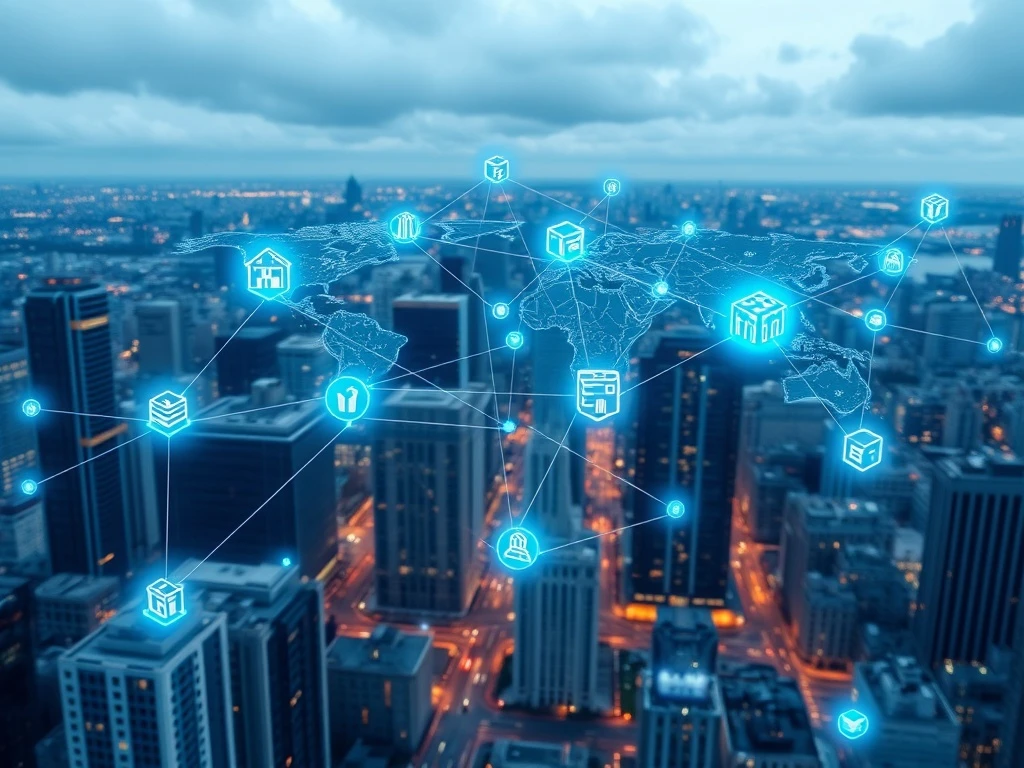
In a significant shift for the digital asset space, the current cryptocurrency market cycle is demonstrating unprecedented resilience, fundamentally challenging the industry’s traditional obsession with price speculation. According to Sergey Nazarov, co-founder of the leading oracle network Chainlink, this period reveals a more profound maturity: the accelerating tokenization of real-world assets (RWAs) is progressing independently of Bitcoin’s price swings, proving its unique and lasting value. This evolution, emerging clearly in 2025, suggests a future where the value of on-chain RWAs could surpass the total market capitalization of native cryptocurrencies, reshaping the industry’s core focus from speculative trading to tangible utility.
Real-World Assets Signal a New Era of Crypto Maturity
The cryptocurrency market has weathered several significant price corrections since late 2023 without triggering the catastrophic, systemic collapses witnessed during events like the FTX failure. This stability points directly to improved institutional risk management and more robust financial infrastructure. Consequently, the narrative is pivoting. While price action still captures headlines, the underlying story is one of functional growth. Real-world asset tokenization—the process of representing physical or traditional financial assets like bonds, real estate, and commodities on a blockchain—is accelerating at a remarkable pace. This trend operates on a separate trajectory from the volatile cycles of Bitcoin and Ethereum, indicating a deeper, more sustainable form of value creation.
Decoupling Value from Volatility: The RWA Acceleration
Market data from 2024 into 2025 shows a clear divergence. While native crypto assets experienced periods of high volatility, the total value locked (TVL) in RWA-focused protocols continued a steady, upward climb. This decoupling is critical. It demonstrates that financial institutions, corporations, and governments are deploying blockchain technology for efficiency and access, not merely speculation. Key drivers include:
- Institutional Adoption: Major banks and asset managers are launching tokenized treasury funds and debt instruments.
- Regulatory Clarity: Evolving frameworks in jurisdictions like the EU, UK, and Singapore provide a safer environment for tokenization.
- Technological Readiness: Robust oracle networks, like Chainlink, reliably connect smart contracts to external data and systems, enabling complex RWA use cases.
This table illustrates the contrasting trajectories:
| Metric | Native Crypto (e.g., BTC, ETH) | Tokenized RWAs |
|---|---|---|
| Primary Driver | Speculative demand, macroeconomic sentiment | Institutional efficiency, yield generation, fractional ownership |
| Price Correlation | High correlation to each other | Low correlation to crypto markets; higher correlation to traditional asset performance |
| Growth Trend (2024-2025) | Cyclical with periods of high volatility | Consistent, compounding growth independent of crypto cycles |
The Oracle Infrastructure Enabling the Shift
Sergey Nazarov’s perspective is grounded in the critical infrastructure his project provides. Chainlink’s decentralized oracle networks act as secure middleware, allowing blockchains to interact with real-world data, payment systems, and traditional banking infrastructure. This capability is non-negotiable for RWAs. For a smart contract to manage a tokenized bond, it must know interest rates and payment dates. To settle a tokenized commodity trade, it needs verified delivery data. Nazarov argues that the growing demand for these oracle services, especially from traditional finance (TradFi) entities, is a leading indicator of the RWA trend’s substance and longevity. The infrastructure is now proven at scale, reducing technical risk and building trust.
Beyond Speculation: The Lasting Impact of Asset Tokenization
The potential endpoint of this trend is transformative. Analysts from firms like Bank of America and Citigroup have published research suggesting the tokenized asset market could reach into the tens of trillions of dollars within a decade. If this projection holds, the total value of on-chain RWAs would dwarf the current combined market cap of all cryptocurrencies. Such a scenario would fundamentally reshape the industry. The core focus would shift from building better speculative instruments to building better financial systems—emphasizing settlement finality, transparent ownership records, and programmable automation for age-old financial processes. The “crypto industry” would increasingly become the “digital asset industry,” with a broad base in real economic activity.
Conclusion
Sergey Nazarov’s analysis highlights a pivotal moment for cryptocurrency and blockchain technology. The current market cycle proves that real-world asset tokenization matters more than short-term price movements for the industry’s long-term trajectory. This trend underscores a maturation towards better risk management, tangible utility, and integration with the global financial system. As RWA protocols continue their steady growth, decoupled from the volatility of native crypto assets, they are laying the foundation for a more stable, accessible, and efficient financial future. The focus is decisively shifting from price to purpose.
FAQs
Q1: What are real-world assets (RWAs) in crypto?
Real-world assets (RWAs) are tangible or traditional financial assets that are represented digitally on a blockchain through tokenization. Examples include U.S. Treasury bonds, real estate properties, commodities like gold, and even invoices or intellectual property.
Q2: Why does Sergey Nazarov believe this crypto cycle is different?
Nazarov points to the market’s ability to withstand major price drops without systemic collapses (like FTX) and, more importantly, the concurrent, independent growth of real-world asset tokenization. This shows the industry is maturing beyond pure speculation to building functional utility.
Q3: How do oracles like Chainlink enable real-world asset tokenization?
Oracles provide a secure bridge between blockchains and external systems. They feed smart contracts with critical real-world data (e.g., interest payments, asset prices, delivery confirmations) and can trigger settlements in traditional payment rails, which is essential for managing RWAs reliably.
Q4: Can tokenized RWAs really become bigger than the entire crypto market?
Many financial institutions believe so. The total addressable market for assets like global bonds, real estate, and private equity is measured in quadrillions of dollars. Even capturing a small fraction of this on-chain could eclipse the current crypto market capitalization.
Q5: What are the main benefits of tokenizing real-world assets?
Key benefits include 24/7 market access, fractional ownership (making expensive assets accessible), faster and cheaper settlement, reduced counterparty risk through transparent ledgers, and programmability (automating compliance and payments).