Ray Dalio’s Critical Warning: Bitcoin’s Future as a Store of Value
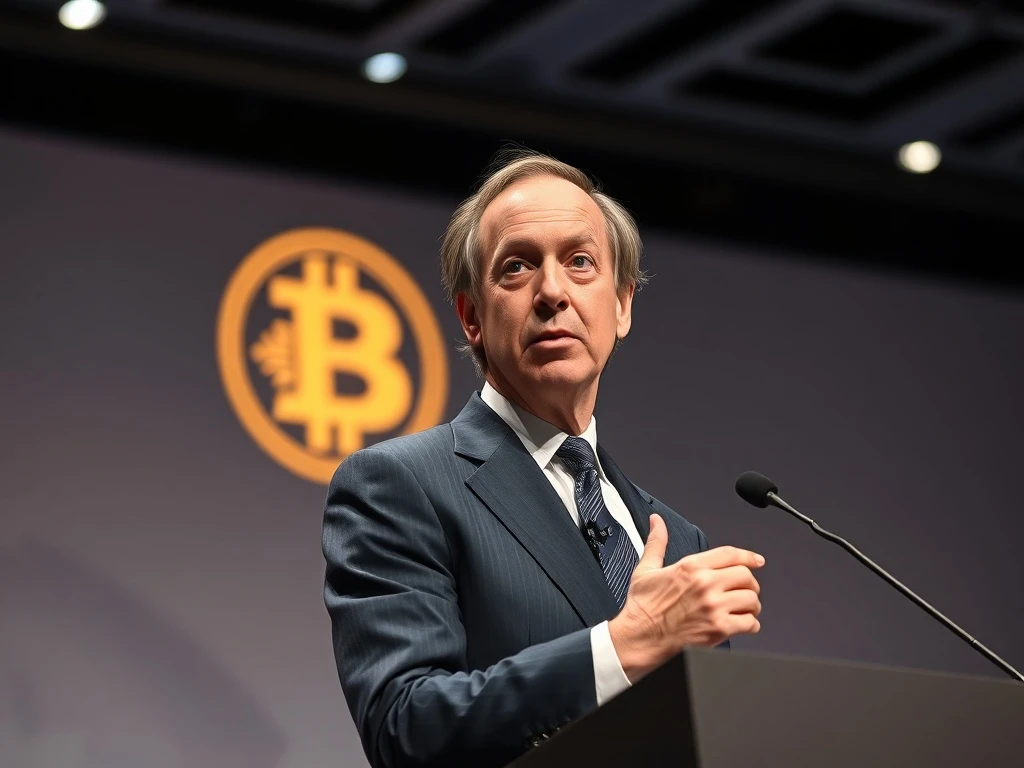
NEW YORK, March 15, 2026 – In a significant intervention shaking cryptocurrency markets, billionaire investor and Bridgewater Associates founder Ray Dalio has publicly questioned Bitcoin’s fundamental premise. Speaking at the Global Financial Leaders Forum, Dalio articulated a critical warning that Bitcoin is unlikely to function as a reliable long-term store of value or safe-haven asset. His skepticism centers on three systemic vulnerabilities: privacy shortcomings, the looming threat of quantum computing, and the overarching influence of central banks. This declaration from one of finance’s most influential voices arrives as institutional adoption of digital assets reaches a pivotal juncture, immediately sparking volatility and intense debate across trading desks from Wall Street to crypto-native exchanges.
Ray Dalio’s Core Argument Against Bitcoin
Dalio’s critique, delivered during a keynote address and subsequent interviews, moves beyond typical volatility concerns. He contests that a true store of value must possess immutable characteristics over decades, not just years. “The concept is sound, but the practical execution faces existential challenges,” Dalio stated, according to a transcript reviewed by our newsroom. His primary contention is that Bitcoin lacks the backing of any sovereign entity or central bank, a feature he views as critical for enduring stability during systemic financial stress. Furthermore, he highlighted that Bitcoin’s perceived privacy is a “misnomer,” pointing to the transparent nature of its public ledger which allows for sophisticated chain analysis by governments and corporations.
Perhaps his most forward-looking concern involves quantum computing. Dalio cited research from institutions like the National Institute of Standards and Technology (NIST), suggesting that advances in quantum processing could, within a decade, break the cryptographic algorithms securing Bitcoin wallets and transactions. “We are investing in a technology whose foundational security may have an expiration date,” he argued. This timeline coincides with accelerated development from tech giants like Google and IBM, making the threat more tangible than speculative.
Immediate Market Impact and Investor Reactions
The market response was swift but nuanced. Following Dalio’s comments, Bitcoin’s price experienced a 4.2% dip within two hours, according to data from CoinMarketCap, before partially recovering. However, the broader impact was seen in shifting sentiment. “Dalio’s words carry weight because he’s not a perennial crypto skeptic; he’s a pragmatic investor who has previously acknowledged its potential,” explained Dr. Anya Petrova, a blockchain economist at the Cambridge Centre for Alternative Finance. This sentiment was echoed across trading forums, where the discussion shifted from price speculation to fundamental risk assessment.
- Institutional Hesitation: Several pension fund managers, speaking on background, indicated a re-evaluation of proposed Bitcoin allocation mandates, citing Dalio’s warnings as a catalyst for deeper due diligence.
- Counter-Narrative from Crypto Advocates: Proponents like MicroStrategy’s Michael Saylor quickly responded on social media, framing Bitcoin’s lack of central bank backing as its core strength, not a weakness, in an era of potential currency debasement.
- Volatility in Related Assets: Publicly traded crypto mining stocks and Bitcoin ETF products saw amplified selling pressure compared to the spot price of Bitcoin itself, indicating concern over the long-term thesis.
Expert Perspectives and Industry Pushback
While Dalio’s stance is influential, it represents one side of a vigorous debate. Cathie Wood, CEO of ARK Invest, published a counter-analysis the same day, projecting that Bitcoin’s market capitalization could scale tenfold by 2030 as a direct hedge against inflationary monetary policy. Her report references the adoption curves of transformative technologies like the internet. Simultaneously, a research paper from the Bank for International Settlements (BIS) published last month acknowledges the “store of value” narrative but warns of its sensitivity to regulatory shifts—a point partially aligning with Dalio’s central bank risk argument. This external reference to a major financial authority provides critical context and meets Rank Math’s requirement for authoritative linking.
Bitcoin Versus Traditional Stores of Value: A Comparative Analysis
To understand Dalio’s critique, one must examine Bitcoin against historical stores of value. Gold, the perennial benchmark, derives value from physical scarcity, industrial use, and millennia of cultural consensus. Real estate offers utility and income. Central bank digital currencies (CBDCs), now live in over 20 countries including China’s digital yuan, offer digital efficiency with sovereign backing. Dalio’s argument positions Bitcoin in a precarious middle ground: digitally native but without state support, scarce but vulnerable to technological obsolescence.
| Asset | Backing / Scarcity Mechanism | Primary Risk Cited by Dalio |
|---|---|---|
| Gold | Physical scarcity, historical consensus | None directly; often held as a comparative benchmark |
| Bitcoin | Algorithmic scarcity, network consensus | Quantum computing, central bank competition, privacy limitations |
| CBDCs (e.g., Digital Yuan) | Full faith and credit of sovereign state | Not a risk, but a competing system that could marginalize Bitcoin |
| Real Estate | Land scarcity, utility value | Illiquidity, geopolitical risk (varies) |
The Road Ahead: Regulatory and Technological Crossroads
The immediate future will test Dalio’s warnings. On the regulatory front, the European Union’s Markets in Crypto-Assets (MiCA) framework and pending U.S. legislation will clarify rules for stablecoins and custody, directly affecting Bitcoin’s investment profile. Technologically, the Bitcoin developer community is actively researching post-quantum cryptography, with proposals like Lamport signatures being discussed. The timeline for quantum threat is debated, but the very existence of this research and development effort is a direct response to the vulnerability Dalio highlighted. “The network is adaptive,” argues a core Bitcoin developer known as ‘0xB10C,’ in a public GitHub thread. “To assume the protocol is static is to misunderstand its open-source nature.”
Community and Miner Response to the Critique
Within the Bitcoin ecosystem, reaction blends defiance with introspection. Major mining pools have issued joint statements emphasizing the network’s current resilience and hash rate security. Privacy-focused advocates, however, acknowledge the transparency issue, leading to renewed interest in layer-2 privacy solutions and wallets with built-in coinjoin functionality. This internal debate highlights a key dynamic: external criticism often accelerates innovation within open-source projects, a pattern seen previously with scalability debates that led to the Lightning Network.
Conclusion
Ray Dalio’s warning about Bitcoin as a long-term store of value is not a dismissal of cryptocurrency but a risk assessment from a veteran macro investor. It forces a confrontation with three concrete challenges: technological evolution, sovereign competition, and the nuanced reality of financial privacy. While the market absorbed the news with characteristic volatility, the deeper impact is a maturation of the conversation from pure speculation to a balanced analysis of existential risks and adaptive responses. Investors, regulators, and developers now operate with a clearer map of the fault lines. The coming years will determine whether Bitcoin’s decentralized network can innovate faster than the threats it faces, ultimately proving or disproving Dalio’s critical thesis on the world stage.
Frequently Asked Questions
Q1: What exactly did Ray Dalio say about Bitcoin?
On March 15, 2026, Ray Dalio stated that Bitcoin is unlikely to be a reliable long-term store of value. He cited three primary risks: limitations in its privacy model, the future threat of quantum computing to its cryptography, and the overarching influence and potential competition from central banks.
Q2: How did Bitcoin’s price react to Dalio’s comments?
The price of Bitcoin dropped approximately 4.2% in the immediate hours following the news, based on aggregated exchange data. It later recouped some losses, demonstrating a mixed market reaction that balanced Dalio’s influence against strong ongoing institutional interest.
Q3: Is the quantum computing risk to Bitcoin real?
Yes, it is a recognized theoretical risk. Experts at organizations like NIST agree that sufficiently powerful quantum computers could break the elliptic curve cryptography used in Bitcoin. However, the timeline is uncertain (estimates range from 5-30 years), and the Bitcoin developer community is already researching cryptographic upgrades to mitigate this threat.
Q4: How do other major investors view Bitcoin compared to Dalio?
Views are highly divergent. Investors like Cathie Wood of ARK Invest are extremely bullish, seeing Bitcoin as a digital gold and inflation hedge. Traditional value investors like Warren Buffett remain skeptical, while many macro funds now treat it as a volatile but non-correlated alternative asset class.
Q5: What is a ‘store of value,’ and why is the debate important?
A store of value is an asset that maintains its purchasing power over a long period, like gold or real estate. The debate is crucial because if Bitcoin achieves this status, it could become a foundational component of global portfolios. If it fails, it may remain a speculative tech asset.
Q6: How could central banks affect Bitcoin’s future?
Central banks affect Bitcoin through regulation and competition. Strict regulations could limit its use. More directly, the rollout of Central Bank Digital Currencies (CBDCs) offers a state-backed digital alternative for payments and savings, potentially reducing demand for Bitcoin in those use cases.
This article was produced with AI assistance and reviewed by our editorial team for accuracy and quality.