Pump.fun Overhaul: Critical Creator Fee Revamp Aims to Fix Skewed Memecoin Incentives
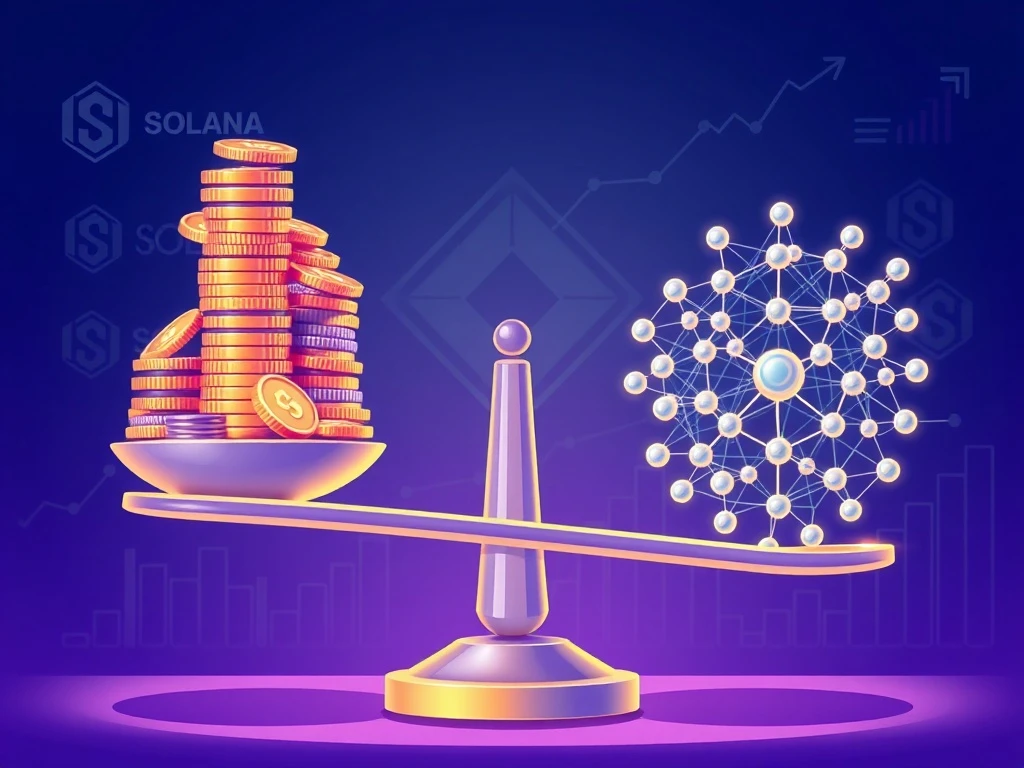
In a significant move for the Solana ecosystem, the dominant memecoin launchpad Pump.fun has declared its creator fee system requires a critical overhaul, acknowledging the model has dangerously skewed platform incentives toward low-risk token creation and away from the high-risk trading that provides essential liquidity. The announcement, made by co-founder Alon Cohen on January 17, 2025, signals a central shift for a platform controlling an estimated 75-80% of Solana’s memecoin launches, aiming to encourage more sustainable market behavior after a period of explosive but fleeting growth.
Pump.fun Creator Fee System Faces Structural Reckoning
Pump.fun’s rise to prominence was built on a simple, frictionless premise: enabling anyone to launch a Solana-based memecoin with a clear path to liquidity. However, the platform’s internal analysis of its “Dynamic Fees V1” system, introduced several months prior, revealed fundamental flaws. While the fee structure successfully drove a surge in new token creation and user activity, it ultimately failed to cultivate the strong, liquid markets necessary for long-term viability. Consequently, the mechanism created a misalignment where the financial reward for creators became disconnected from the health of the secondary market for their tokens.
Also read: Tokenization: The IMF's Ambitious 2026 Blueprint for Reshaping Global Finance
Alon Cohen’s candid assessment on social media platform X highlighted the core issue: the fees encouraged what he termed “low-risk” behavior—primarily minting new tokens—while doing little to incentivize the “high-risk” trading that generates volume and depth on the bonding curve. This imbalance proved structurally dangerous. Traders, not creators, are the primary source of platform liquidity. A system that disincentivizes their participation threatens the entire economic model. The initial data seemed promising, with bonding curve volumes more than doubling and strong on-chain activity in early 2025, but this surge was not sustainable without addressing the underlying incentive skew.
The Liquidity Versus Minting Dilemma
The problem manifested clearly in user behavior. For serious projects with active teams, creator fees provided a useful revenue stream. For the average memecoin deployer, however, the fee became a blunt instrument, making token launch the primary goal rather than building a liquid, tradeable asset. This led to a proliferation of tokens with minimal follow-through, often leaving communities to manage complex processes like Community Takeovers (CTO). Cohen admitted the platform failed to provide a good user experience in this area, often forcing users to trust others to fulfill promises. The fee structure, therefore, was amplifying the speculative, short-term aspects of memecoin culture at the expense of market stability and trader confidence.
Also read: Drift Protocol Exploit Sparks Crisis Across 20 Solana Projects
Phase One: Introducing Creator Fee Sharing and Enhanced Controls
In response, Pump.fun has outlined the first phase of its corrective plan, centered on introducing a flexible creator fee-sharing system. This new framework allows creators and CTO administrators to programmatically split fees across up to ten different wallets after a token’s launch. Significantly, the update also grants teams the ability to transfer full coin ownership and revoke update authority, providing much-needed tools for project management and succession planning.
Cohen emphasized that no one from the Pump.fun team will accept these fees under any circumstances, positioning the feature squarely “for trenchers”—the community builders and promoters. The fees remain claimable at any time by recipients and will not be forfeited if left unclaimed, reducing pressure on teams. This shift aims to transform the fee from a simple minting reward into a tool for collaborative project development, allowing revenue to be shared with developers, marketers, and community managers who contribute to a token’s ecosystem beyond its creation.
- Multi-Wallet Fee Splitting: Distribute fees to up to 10 designated wallets.
- Ownership Transfer: Teams can formally transfer coin ownership.
- Authority Revocation: Ability to revoke update authority for security.
- Team-First Focus: Features designed for collaborative project teams.
The Competitive Field of Solana Memecoin Launchpads
Pump.fun’s decision comes amidst a fiercely competitive environment. The platform’s dominance was briefly challenged in July 2024 by rival launchpad LetsBonk, which temporarily overtook it in both volume and revenue. Pump.fun regained its lead through strategic initiatives like aggressive buybacks of its native PUMP token and the Project Ascend creator payout program. By late summer 2024, trackers consistently showed Pump.fun commanding three-quarters of the Solana memecoin launch market. This market position makes the platform’s internal policy decisions highly influential, effectively setting standards for the entire sector. A misaligned incentive model at this scale doesn’t just affect Pump.fun; it can distort behavior across the broader Solana memecoin economy.
The platform’s model—combining a bonding curve with a straightforward launch process—lowered barriers to entry dramatically. However, ease of creation is a double-edged sword. It fuels innovation and participation but also saturation and volatility. The fee revamp represents an attempt to add a layer of economic sophistication, guiding that creative energy toward outcomes that benefit all participants: creators, traders, and the platform itself. The goal is to evolve from being merely a launchpad to becoming a sustainable ecosystem for token-based communities.
Broader Implications for Crypto Incentive Design
Pump.fun’s public reckoning with its fee model offers a real-world case study in cryptoeconomic design. It underscores a common challenge in decentralized systems: how to structure financial rewards to promote desired, sustainable behaviors rather than short-term exploitation. The initial “Dynamic Fees V1” can be seen as a well-intentioned experiment that produced valuable, albeit costly, data. Its failure to balance minting and trading incentives is a lesson for other platforms in DeFi and beyond. Sustainable growth requires aligning protocol rewards with long-term network health, a principle that extends far beyond memecoins.
Conclusion
Pump.fun’s planned overhaul of its creator fee system marks a critical maturation step for the leading Solana memecoin launchpad. By openly acknowledging that its previous model skewed incentives toward excessive token minting and away from liquidity-building trading, the platform is taking responsibility for shaping healthier market dynamics. The introduction of fee sharing, ownership controls, and a team-centric approach aims to rebalance the economic equation, supporting projects that build beyond the initial launch. As the memecoin sector continues to evolve within the broader cryptocurrency sector, Pump.fun’s adjustments will be closely watched as a bellwether for sustainable incentive design in a highly speculative and fast-moving market.
FAQs
Q1: What is the main problem Pump.fun identified with its old creator fee system?
The main problem was incentive skew. The fee structure overly rewarded the low-risk act of minting new tokens while failing to adequately encourage the high-risk trading that provides essential liquidity and volume, creating unsustainable market conditions.
Q2: What are the key features of the new creator fee sharing system?
The new system allows creators and CTO admins to split fees across up to 10 different wallets after launch. It also includes the ability to transfer full coin ownership and revoke update authority, providing better tools for team-based project management.
Q3: How did the faulty fee model affect traders on Pump.fun?
The model disincentivized high-risk trading by not aligning fees with liquidity provision. Since traders are the core source of platform liquidity, this created a dangerous imbalance where token supply increased without corresponding growth in market depth, leading to poorer trading conditions and volatility.
Q4: Why is this change important for the broader Solana memecoin ecosystem?
As the dominant launchpad controlling 75-80% of Solana memecoin launches, Pump.fun’s incentive structures set a de facto standard for the sector. Correcting a skew toward pure minting helps promote more sustainable project development and healthier markets across the entire ecosystem.
Q5: Will creators still be able to claim their fees under the new system?
Yes. Fees remain fully claimable at any time by the designated recipients. The platform has explicitly stated that fees will not be forfeited if left unclaimed, removing time pressure on teams to claim them immediately.

This article was produced with AI assistance and reviewed by our editorial team for accuracy and quality.