Federal Reserve Policy Stance Remains Appropriate, Powell Confirms with Cautious Optimism
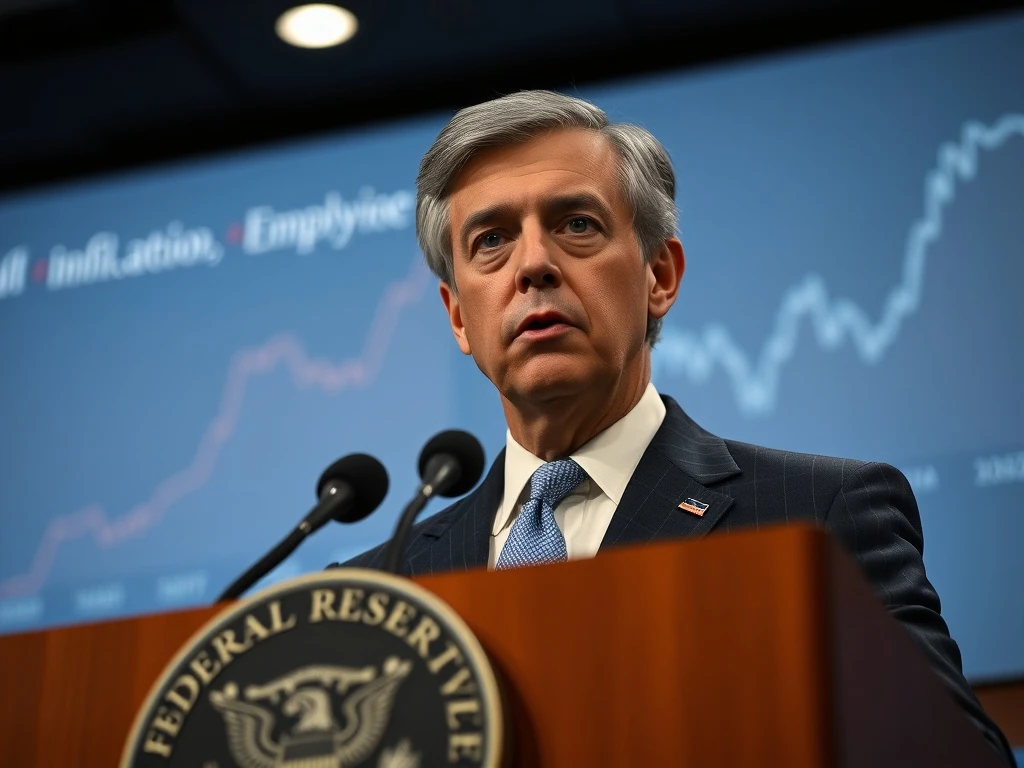
WASHINGTON, D.C. – Federal Reserve Chair Jerome Powell delivered a significant assessment of U.S. monetary policy this week, stating clearly that the current policy stance remains appropriate for addressing the complex 2025 economic space. This declaration carries substantial weight for financial markets, businesses, and households, as it signals the central bank’s commitment to its dual mandate objectives. Consequently, investors and economists are analyzing the implications for interest rates, inflation, and employment trends in the coming months.
Federal Reserve Policy Stance: A Deliberate Balance
Chair Powell’s statement underscores a period of deliberate policy calibration. The Federal Open Market Committee (FOMC) has maintained its benchmark federal funds rate within a defined range following an extended cycle of adjustments. This current stance reflects a data-dependent approach, balancing the goals of returning inflation to the 2% target while sustaining a strong labor market. Moreover, the Fed continues to manage its balance sheet through a predictable runoff of asset holdings.
Also read: Bitcoin Spot ETFs Shatter Positive Streak With $296 Million Outflow
Historical context illuminates this position. The Fed aggressively raised interest rates from near-zero levels to combat multi-decade high inflation. Subsequently, it paused and then cautiously adjusted policy as economic data evolved. Currently, the committee judges that policy is “restrictive” and working to moderate economic activity sufficiently. Therefore, maintaining the stance allows previous rate hikes to fully permeate the economy.
Analyzing the Dual Mandate Objectives
Powell explicitly noted the policy stance serves two primary goals, enshrined in the Federal Reserve Act: maximum employment and price stability. These dual mandates guide every FOMC decision. On the employment front, the labor market has shown remarkable resilience. The unemployment rate has remained near historic lows, and job creation continues, albeit at a moderating pace. Wage growth has also eased from peak levels, reducing inflationary pressures from the labor sector.
Also read: Bitcoin Strategy Divide: GameStop's 4,710 BTC Hold Contrasts With Nation's Massive Sell-Off
Regarding price stability, the inflation picture has improved markedly. The Personal Consumption Expenditures (PCE) index, the Fed’s preferred gauge, has fallen significantly from its peak. However, services inflation and housing costs have proven stickier. The current policy stance aims to ensure this disinflationary process continues sustainably toward the 2% goal without unnecessarily jeopardizing employment gains. Recent data suggests progress is ongoing but incomplete.
Expert Perspectives on Policy Appropriateness
Economists and former Fed officials largely concur with Powell’s assessment. “The Fed is in a holding pattern, which is prudent,” noted Dr. Sarah Jensen, a former Fed economist now with the Brookings Institution. “They have moved policy into restrictive territory. The key question now is how long to maintain this stance to ensure inflation is durably defeated.” She emphasized that premature easing could reignite price pressures, while excessive delay could trigger an unnecessary recession.
Market participants have adjusted their expectations accordingly. Futures pricing now indicates a high probability of rates remaining steady for the next several FOMC meetings. This contrasts sharply with earlier market predictions of rapid rate cuts. The shift reflects growing confidence that the Fed can engineer a “soft landing”—reducing inflation without causing a severe economic downturn. Powell’s communication has been instrumental in aligning market expectations with the committee’s outlook.
Economic Impacts and Forward Guidance
The implications of an “appropriate” policy stance are far-reaching. For consumers, it means mortgage rates, auto loans, and credit card APRs are likely to remain elevated in the near term, continuing to pressure household budgets. For businesses, capital investment decisions are being weighed against higher financing costs. However, the stability and predictability of the stance provide a clearer planning environment than one of frequent policy shifts.
The Fed’s forward guidance remains vital. Powell reiterated that future policy moves will depend entirely on incoming data. The committee will assess reports on inflation, labor market conditions, and economic growth. Key indicators to watch include:
- Core PCE Inflation: The primary gauge for underlying price trends.
- Nonfarm Payrolls & Wage Growth: Signals of labor market tightness.
- Consumer Spending: A measure of economic resilience.
- Global Economic Developments: Factors like geopolitical tensions or supply chain disruptions.
This data-dependent framework means the Fed retains maximum flexibility. Officials have consistently stated they need “greater confidence” that inflation is moving sustainably toward 2% before considering rate cuts. Recent meeting minutes reveal committee members see no urgency to reduce rates until that confidence is achieved.
Comparison with Previous Policy Cycles
Understanding the current stance requires historical comparison. The post-2008 financial crisis era featured a prolonged period of near-zero rates and quantitative easing. The post-pandemic response involved rapid tightening, one of the most aggressive cycles in Fed history. The current “hold” phase is a typical part of the monetary policy sequence—tightening, holding, and eventually easing. However, the unique post-pandemic economic distortions make the duration of this “hold” phase particularly uncertain.
The table below contrasts key features of recent policy phases:
| Policy Phase | Time Period | Primary Goal | Key Action |
|---|---|---|---|
| Accommodative | 2020-2021 | Support Pandemic Recovery | Zero Rates, QE |
| Tightening | 2022-2023 | Combat High Inflation | Rapid Rate Hikes |
| Restrictive Hold | 2024-2025* | Durable Disinflation | Rate Stability |
*Current phase as of 2025. This comparative view highlights the Fed’s reactive posture to shifting economic conditions. Each phase directly responded to the dominant economic challenge of its time.
Conclusion
Federal Reserve Chair Jerome Powell’s affirmation that the current monetary policy stance is appropriate signals a critical juncture. The central bank believes its restrictive settings are effectively balancing the dual mandate. While inflation shows encouraging signs of moderation, the journey back to 2% requires patience and vigilance. The Fed’s data-dependent approach ensures policy will evolve as the economic outlook clarifies. For now, stability in the Federal Reserve policy stance provides a foundation for the economy to adjust, offering a measured path toward sustained price stability and maximum employment.
FAQs
Q1: What did Jerome Powell mean by “current policy stance is appropriate”?
He indicated that the Federal Reserve believes its present level of interest rates and balance sheet policy is suitably calibrated to continue reducing inflation toward the 2% target while supporting continued labor market strength, requiring no immediate changes.
Q2: What are the two goals of Federal Reserve policy Powell referenced?
The two statutory goals are maximum employment and stable prices (often interpreted as 2% inflation over the longer run). This is known as the Fed’s dual mandate from Congress.
Q3: Does an “appropriate” stance mean interest rates will not change soon?
It suggests the Fed sees no urgent need to raise or lower rates in the immediate future. However, all future decisions remain contingent on incoming economic data, particularly on inflation and employment.
Q4: How does the current policy stance affect everyday Americans?
It means borrowing costs for mortgages, auto loans, and credit cards are likely to remain at current elevated levels for the foreseeable future, impacting household budgets and major purchase decisions.
Q5: What would cause the Fed to change its view that policy is appropriate?
A significant reacceleration of inflation would likely prompt consideration of rate hikes. Conversely, clear evidence of inflation sustainably at 2% alongside a weakening labor market would make rate cuts a topic for discussion.

This article was produced with AI assistance and reviewed by our editorial team for accuracy and quality.