Jerome Powell’s Defiant Stand: Fed Chair Links Explosive DOJ Probe to Trump Interest Rate Clash
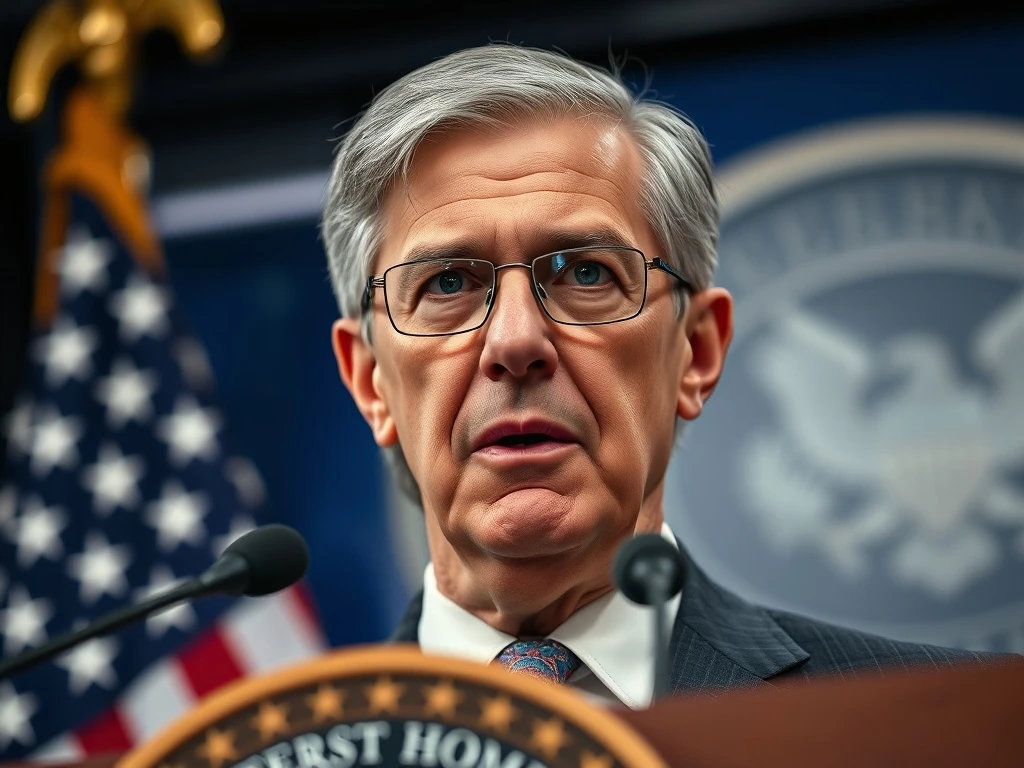
WASHINGTON, D.C. — January 13, 2026. Federal Reserve Chair Jerome Powell has made a stunning public declaration, directly linking a new criminal investigation by the U.S. Department of Justice to his historic defiance of former President Donald Trump’s demands to slash interest rates. This explosive accusation marks a critical escalation in a long-running battle over the sacred independence of the world’s most powerful central bank, with profound implications for the U.S. economy and global financial markets.
Jerome Powell Accuses Trump Administration of Political Retaliation
In a remarkable Sunday statement, Federal Reserve Chair Jerome Powell framed the Justice Department’s probe as a clear act of political retaliation. Consequently, he argued the investigation targets him personally because he refused to manipulate monetary policy for political gain. “This is a consequence of the Federal Reserve setting interest rates based on our best assessment of what will serve the public,” Powell stated unequivocally. He further emphasized that the central bank did not follow “the preferences of the President.” This direct charge elevates a bureaucratic dispute into a fundamental constitutional crisis concerning the separation of powers.
Also read: Binance ETH Supply Plummets to Critical Low as Stablecoin Reserves Explode
The specific investigation, opened by the U.S. attorney for Washington, D.C., centers on renovations to the Federal Reserve’s headquarters building. Authorities are examining whether Powell misled Congress about the project’s scale and costs. However, Powell and his allies immediately contextualized this narrow inquiry within a broader, years-long campaign of pressure. Former President Trump has publicly criticized Powell’s interest rate decisions since his first term, often labeling the Fed chair an “enemy” for not providing easier money.
The High-Stakes Battle Over Federal Reserve Independence
The core principle at stake is central bank independence. Historically, the Federal Reserve operates free from direct political control to make technically sound decisions on interest rates. This autonomy aims to prevent politicians from forcing artificially low rates to boost short-term economic growth before elections, a move that often triggers damaging long-term inflation. Powell, whose term as chair concludes in March 2026, framed the DOJ probe as an existential threat to this system. He warned the investigation asks whether the Fed will set policy “based on evidence and economic conditions” or succumb to “political pressure or intimidation.”
Also read: Coinbase x402 Protocol Surrendered to Linux Foundation as Tech Giants Unite for AI Payment Standard
This conflict has tangible precedents. The Trump administration previously attempted to remove Fed Governor Lisa Cook over allegations of mortgage fraud. Significantly, the Supreme Court later blocked that dismissal, establishing a legal precedent that protects Fed officials from political removal without cause. The current DOJ investigation into Powell, therefore, represents a new tactical approach. Instead of a direct dismissal, it employs a criminal inquiry that could force a resignation or tarnish the institution’s reputation.
Economic and Market Implications of the Institutional Clash
Financial analysts are closely monitoring the situation for potential market volatility. The Federal Reserve’s credibility is a cornerstone of global financial stability. Any perception that its decisions are politically coerced could undermine the U.S. dollar’s value and spike long-term bond yields. Moreover, the uncertainty surrounding Powell’s potential successors adds another layer of risk. President Trump has reportedly lined up several loyalists who have expressed openness to cutting rates more aggressively. This prospect creates anxiety among investors who prize policy predictability.
Kevin Hassett, a former Trump economic adviser and speculated frontrunner to replace Powell, has sent mixed signals. He publicly stated that a President’s views on rates would hold “no weight” on Fed decisions, attempting to reassure markets. Nevertheless, his close association with the former president leads many observers to question the durability of that independence under sustained political pressure. The situation creates a precarious environment for asset prices, including cryptocurrencies like Bitcoin, which often react sharply to shifts in traditional monetary policy and institutional trust.
A Timeline of Escalating Tensions Over Monetary Policy
Understanding the current crisis requires examining its origins. The friction began during Trump’s first term when the Fed raised rates to normalize policy after the 2008 financial crisis. Public criticism from the White House was exceptional for a sitting president. Tensions subsided during the pandemic with coordinated stimulus but reignited as inflation surged in the early 2020s. Powell’s Fed then embarked on a historic series of rate hikes to combat rising prices, actions that sometimes conflicted with political desires for continued cheap credit.
The renovation of the Fed’s Martin Building, a historic structure, became a focal point for criticism. Critics, including some members of Congress, questioned the multi-billion dollar cost. While Powell testified that the project was essential for security and operational integrity, opponents framed it as wasteful. The DOJ probe now scrutinizes whether congressional testimony on the cost estimates was accurate. This legal avenue provides a mechanism to challenge Powell that is distinct from direct policy disagreements.
Expert Analysis on Legal and Institutional Precedent
Legal scholars note the investigation walks a fine line. Investigating potential false statements to Congress is a legitimate function of the Justice Department. However, the timing and context raise questions about motive, especially given the plaintiff’s public threats. “The key test will be whether the DOJ applies a consistent standard,” notes a former federal prosecutor specializing in government ethics. “If similar allegations against other agency heads were not pursued with the same vigor, it will bolster claims of selective prosecution.”
Furthermore, the episode tests the resilience of U.S. institutions. The Federal Reserve was designed to be insulated from electoral politics. This design protects the economy from the boom-bust cycles that often follow politically motivated rate cuts. A successful campaign to remove a chair over policy disagreements would set a dangerous precedent. It could lead future presidents to demand loyalty over economic judgment from central bankers, potentially sacrificing long-term stability for short-term political advantage.
Conclusion
Federal Reserve Chair Jerome Powell has drawn a line in the sand, connecting a criminal DOJ probe directly to his defense of interest rate independence from President Trump. This confrontation transcends a personal or bureaucratic dispute. It represents a fundamental stress test for the institutional safeguards of U.S. monetary policy. The outcome will determine whether the Federal Reserve can continue to make data-driven decisions for the nation’s economic health or if its critical levers will become tools of political power. The stability of the dollar and the trust of global markets hang in the balance as this unusual chapter in American financial governance unfolds.
FAQs
Q1: What is the DOJ investigating Jerome Powell for?
The U.S. Department of Justice has opened a criminal investigation into whether Federal Reserve Chair Jerome Powell made false statements to Congress regarding the cost and scale of renovations to the Federal Reserve’s headquarters building in Washington, D.C.
Q2: Why does Powell link this probe to interest rates?
Powell asserts the investigation is political retaliation for the Federal Reserve’s repeated refusal to lower interest rates at the demand of former President Donald Trump. He frames it as an attempt to intimidate the central bank and compromise its policy independence.
Q3: What is central bank independence and why is it important?
Central bank independence is the principle that a country’s monetary authority should be free from direct political control. This allows it to set interest rates based on economic data (like inflation and employment) rather than short-term political cycles, which is critical for long-term price stability and economic health.
Q4: Has a sitting Fed chair ever faced a criminal investigation before?
No. While Fed chairs have faced political pressure and congressional scrutiny, a criminal investigation by the Department of Justice into a sitting chair is a historically rare event, marking a significant escalation in executive-central bank relations.
Q5: What happens if Powell is charged or resigns?
If Powell resigns or is unable to serve, the President would nominate a successor subject to Senate confirmation. The uncertainty surrounding a new chair’s commitment to independence could trigger market volatility and raise questions about the future path of U.S. interest rate policy.

This article was produced with AI assistance and reviewed by our editorial team for accuracy and quality.