Pi Network Price Analysis: How Critical Supply Zones Crush PI’s Recovery Hopes
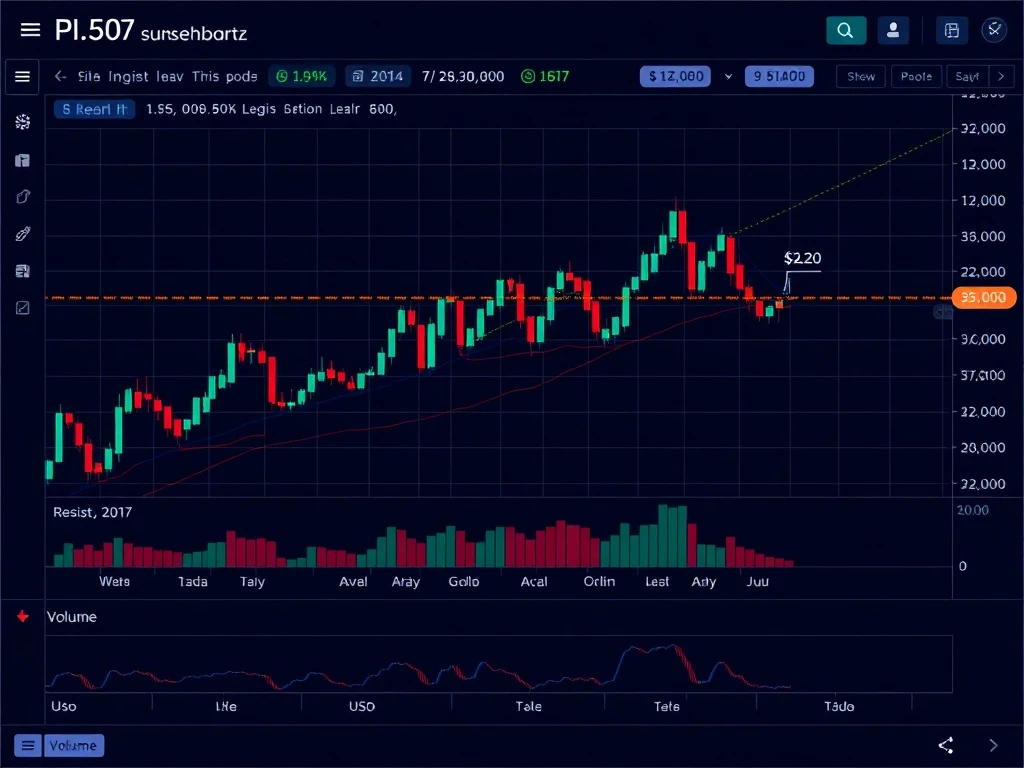
The Pi Network token faces persistent resistance at essential supply zones, with technical analysis revealing why the $0.17 and $0.20 price levels continue to suppress bullish momentum despite recent platform developments. Market data from February 2026 shows PI struggling to maintain recovery attempts as selling pressure dominates higher timeframes, creating significant challenges for traders seeking sustained upward movement.
Pi Network’s Technical Battle at Supply Zones
Pi Network’s recent price action demonstrates a clear pattern of rejection at established supply zones. The cryptocurrency experienced a 2.03% rally within 24 hours, accompanied by increased trading volume. However, this upward movement encountered immediate resistance at the $0.173 supply zone during three consecutive H4 trading sessions. This resistance level has become a critical battleground for PI bulls attempting to establish sustainable recovery momentum.
Also read: Bitcoin Plunges Below $67K as Trump's Iran Moves Rattle Markets—What CryptoNewsInsights Sees Next
Technical indicators reveal the depth of selling pressure facing the token. The Chaikin Money Flow (CMF) indicator remains at -0.06, failing to climb above +0.05 since early December 2025. This persistent negative reading indicates continuous capital outflow from the PI market. Furthermore, the Moving Average Convergence Divergence (MACD) formed a bearish crossover nearly two weeks ago, signaling another bearish impulse move that continues to influence current market dynamics.
Platform Developments Versus Market Reality
Despite significant platform advancements, Pi Network’s market performance remains disconnected from technical progress. The development team recently released a key technical update enabling millions of Pioneers to complete their mainnet migration. Additionally, Pi Network began testing palm print authentication as a beta feature while continuing Validator Rewards distribution according to the December 2025 timeline.
Also read: Aave Price Prediction: Can AAVE Realistically Hit $500 by 2030?
These fundamental improvements contrast sharply with market sentiment. A Crypto News Insights report from November 2025 highlighted persistent bearish pressure that continues to influence current trading patterns. The disconnect between platform development and market performance raises important questions about investor perception and the timing of price discovery relative to technical milestones.
Fibonacci Analysis Reveals Potential Bounce Levels
Technical analysts have identified specific price levels that could influence future PI movements. Using the January decline from $0.216 to $0.150, Fibonacci retracement levels indicate potential bounce zones at $0.19-$0.20. These levels correspond to the 61.8% and 78.6% Fibonacci retracement points, representing traditional areas where traders watch for potential reversals or continuations.
The MACD indicator shows some short-term bullish movement toward the zero line, suggesting possible near-term price appreciation. However, historical resistance at these levels creates uncertainty about whether PI can successfully challenge and overcome these technical barriers. The $0.20 level particularly represents a critical psychological and technical threshold that could determine medium-term price direction.
Trading Implications and Risk Assessment
Current market conditions present specific challenges and opportunities for PI traders. The evidence suggests caution for those considering long positions, except for experienced scalp traders who can address short-term volatility. A retest of the $0.20 retracement level would offer improved risk-reward ratios for shorting opportunities compared to current market prices near $0.17.
Several key factors influence trading decisions:
- Higher timeframe bias: Remains firmly bearish despite short-term fluctuations
- Supply zone resistance: $0.17 and $0.20 levels continue to cap upward movements
- Volume patterns: Increased trading volume accompanies price rallies but fails to sustain breakthroughs
- Indicator alignment: Multiple technical indicators confirm bearish momentum
Traders require a rally beyond $0.216 to shift swing trading bias from bearish to bullish. This level represents the previous local high and would indicate a significant break from current resistance patterns. Until such a breakthrough occurs, the prevailing market structure favors selling into strength rather than buying dips.
Market Context and Comparative Analysis
Pi Network’s performance occurs within broader cryptocurrency market conditions. While some altcoins demonstrate rotation patterns, PI faces unique challenges related to its supply dynamics and migration timeline. The token’s behavior contrasts with established cryptocurrencies that have clearer price discovery mechanisms and more liquid trading environments.
Historical data reveals important patterns. The $0.17 supply zone has repeatedly rejected bullish attempts since December 2025, creating a well-defined resistance level. Each rejection strengthens this zone’s technical significance, making subsequent breakthroughs increasingly difficult without substantial buying pressure or fundamental catalysts.
Expert Perspectives on Supply Zone Dynamics
Technical analysts emphasize the importance of supply zones in cryptocurrency markets. These areas represent price levels where previous buyers become sellers, creating concentrated selling pressure that can halt or reverse upward movements. For Pi Network, the $0.17 and $0.20 zones have accumulated significant historical trading volume, making them particularly resistant to bullish advances.
Market structure analysis suggests that until these supply zones are either absorbed through sustained buying or broken with conviction, PI will likely continue facing headwinds. The concentration of sell orders at these levels creates natural barriers that require either fundamental catalysts or significant market sentiment shifts to overcome.
Future Scenarios and Price Projections
Several potential scenarios could unfold for Pi Network in coming weeks. A successful break above $0.17 could trigger movement toward the $0.19-$0.20 Fibonacci retracement zone. However, given current market structure, any bounce toward $0.20 would likely encounter renewed selling pressure from both technical traders and those looking to exit positions at improved prices.
Alternative scenarios include continued consolidation between current levels and supply zones, or breakdown below recent support levels. Each scenario carries specific implications for different trader types, from short-term scalpers to longer-term position traders awaiting fundamental developments.
Conclusion
Pi Network’s price action demonstrates the powerful influence of established supply zones at $0.17 and $0.20. Despite platform developments and technical improvements, these resistance levels continue to suppress bullish momentum and maintain bearish higher timeframe bias. Technical indicators consistently show selling pressure dominance, with capital outflow patterns persisting since December 2025. Traders must address these supply zones carefully, recognizing that sustained breakthroughs require either fundamental catalysts or significant shifts in market structure. The Pi Network price analysis reveals a market caught between technical resistance and developmental progress, creating unique challenges for participants across all timeframes.
FAQs
Q1: What are supply zones in cryptocurrency trading?
Supply zones represent price levels where significant selling pressure accumulates, often from previous buyers looking to exit positions. These zones create resistance that can halt or reverse upward price movements, acting as technical barriers that require substantial buying pressure to overcome.
Q2: Why is the $0.17 level important for Pi Network?
The $0.17 level has repeatedly rejected PI’s recovery attempts since December 2025, creating a well-established resistance zone. This level represents concentrated selling pressure that has become increasingly significant with each failed breakthrough attempt, making it a critical technical level for traders to monitor.
Q3: How do Fibonacci retracement levels apply to PI’s price action?
Fibonacci retracement levels, drawn from the January decline between $0.216 and $0.150, identify potential reversal zones at $0.19-$0.20. These traditional technical levels (61.8% and 78.6% retracement) help traders identify areas where price might encounter resistance or support during recovery attempts.
Q4: What technical indicators show bearish pressure on PI?
Multiple indicators confirm bearish momentum, including the Chaikin Money Flow remaining negative since early December, the MACD maintaining a bearish crossover, and higher timeframe charts showing consistent selling pressure. These indicators align to create a bearish technical picture despite short-term fluctuations.
Q5: What would signal a shift to bullish bias for Pi Network?
A sustained break above $0.216 would signal a significant shift in market structure, potentially changing swing trader bias to bullish. This level represents the previous local high and would indicate a breakthrough of established resistance patterns, requiring confirmation through volume and follow-through buying.

This article was produced with AI assistance and reviewed by our editorial team for accuracy and quality.