Federal Reserve interest rates face cautious optimism as Philadelphia Fed President hints at 2026 cut possibility
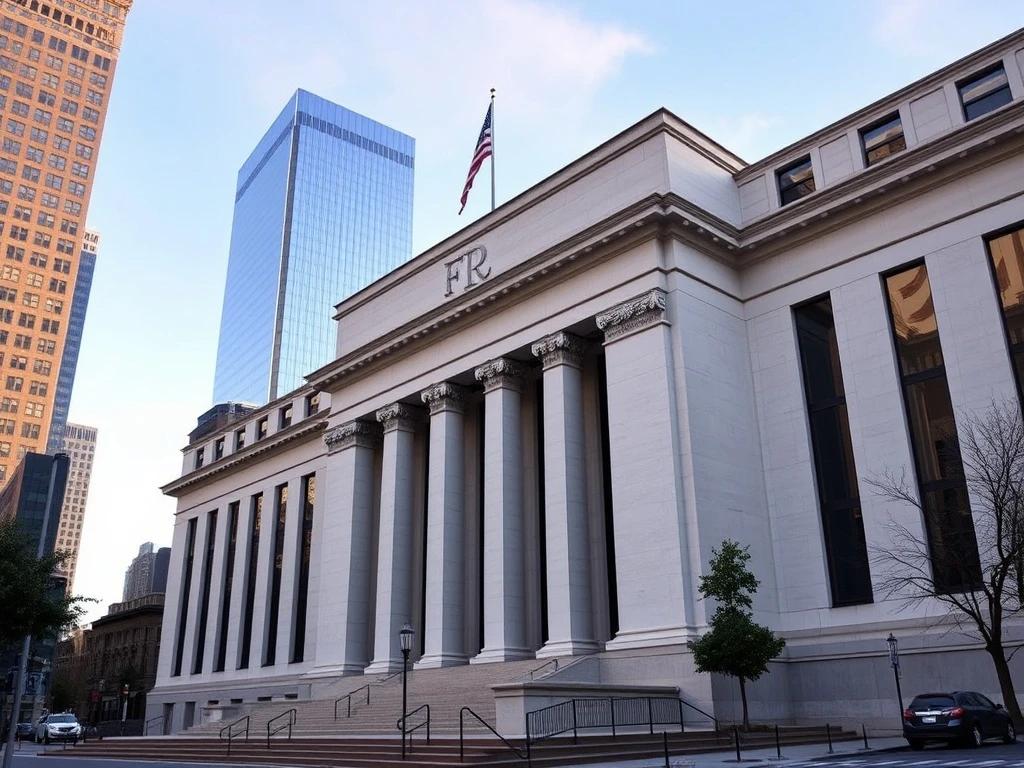
PHILADELPHIA, March 2025 – Federal Reserve interest rates could see another adjustment in late 2026 according to Philadelphia Federal Reserve Bank President Anna Paulson, who suggested a modest additional cut might become appropriate if economic conditions align with current projections. This forward-looking statement provides key insight into the Federal Open Market Committee’s extended monetary policy timeline during a period of continued economic recalibration.
Federal Reserve interest rates and the extended policy horizon
Philadelphia Fed President Anna Paulson delivered her remarks during a moderated discussion on monetary policy transmission. She emphasized that any potential rate adjustment would depend heavily on economic performance matching current forecasts. The Federal Reserve has maintained a data-dependent approach since its last policy shift in 2024, carefully balancing inflation control with employment objectives.
Also read: Bitcoin Capital Rotation Triggers Critical Signal, Points to $41,400 Price Floor
Market analysts immediately noted the significance of Paulson’s 2026 timeframe. This projection extends beyond typical Fed forward guidance windows, suggesting committee members are developing longer-term policy frameworks. The statement comes amid evolving global economic conditions, including shifting trade patterns and technological productivity gains.
Historical context reveals important patterns. The Federal Reserve implemented a series of rate increases between 2022 and 2024 to combat post-pandemic inflation. Subsequently, policymakers began a cautious normalization process as price pressures moderated. Paulson’s comments indicate this normalization may continue through 2026, assuming economic indicators remain favorable.
Economic projections and monetary policy conditions
Several specific conditions must materialize for a late 2026 rate cut to become appropriate. First, inflation must sustain progress toward the Fed’s 2% target. Second, labor market conditions should maintain current strength without generating wage-price spiral risks. Third, financial stability must remain intact despite global uncertainties.
The table below outlines key economic indicators the Fed monitors:
| Indicator | Current Level | 2026 Target Range |
|---|---|---|
| Core PCE Inflation | 2.3% | 2.0-2.2% |
| Unemployment Rate | 4.1% | 3.9-4.3% |
| GDP Growth | 2.1% | 1.8-2.4% |
| Federal Funds Rate | 3.75-4.00% | 3.25-3.75% |
Paulson specifically mentioned “modest additional” cuts rather than aggressive easing. This terminology suggests the Fed anticipates completing its normalization cycle rather than initiating new stimulus measures. Market participants interpret this language as confirmation that policymakers view current rates as moderately restrictive.
Regional economic perspectives and national implications
As a regional Fed president, Paulson brings valuable insights from the Third District’s diverse economy. Manufacturing, healthcare, and education sectors provide real-time economic signals. These observations inform her policy perspectives and contribute to FOMC deliberations. Her assessment reflects both regional conditions and national trends.
The Philadelphia Fed’s economic research department produces influential indicators, including the Business Outlook Survey. This monthly manufacturing survey often predicts national economic shifts. Recent survey data shows improving conditions, supporting Paulson’s cautiously optimistic outlook. However, she emphasized that monetary policy remains contingent on actual data rather than forecasts alone.
Monetary policy transmission and financial market effects
Forward guidance about potential 2026 actions affects current financial conditions through several channels. First, it influences yield curve expectations, particularly for longer-dated Treasury securities. Second, it provides businesses with greater certainty for investment planning. Third, it helps anchor inflation expectations among consumers and market participants.
Financial markets responded moderately to Paulson’s comments. Treasury yields at the long end of the curve declined slightly, while equity markets showed limited reaction. This muted response suggests investors already anticipated a gradual normalization path. However, the specific 2026 timeframe provides additional clarity for institutional portfolio positioning.
Key transmission mechanisms include:
- Interest rate channel: Affects borrowing costs for consumers and businesses
- Exchange rate channel: Influences international capital flows and trade competitiveness
- Asset price channel: Impacts valuation of stocks, bonds, and real estate
- Expectations channel: Shapes economic behavior through forward guidance
Paulson emphasized that monetary policy operates with “long and variable lags.” This recognition explains why policymakers consider effects years into the future. Current decisions influence economic conditions 18-24 months ahead, necessitating forward-looking assessments.
Historical context and policy evolution
The Federal Reserve’s approach has evolved significantly since the 2008 financial crisis. Unconventional tools like quantitative easing and enhanced forward guidance became standard during the low-rate era. Current policy represents a return to more conventional frameworks, albeit with greater transparency about future intentions.
Comparing current projections to previous cycles reveals important differences. The 2015-2018 tightening cycle proceeded more rapidly than anticipated. By contrast, current normalization appears more gradual and data-dependent. This approach reflects lessons learned about economic uncertainty and the risks of premature policy shifts.
Paulson’s career provides relevant expertise. Before becoming Philadelphia Fed president in 2023, she served as research director at the Federal Reserve Board. Her academic background includes monetary economics and international finance. This experience informs her careful, evidence-based policy approach.
Global economic considerations and coordination
International factors increasingly influence domestic monetary policy. The Federal Reserve coordinates with major central banks including the European Central Bank and Bank of Japan. While each institution sets policy based on domestic mandates, spillover effects require careful consideration.
Current global conditions present both challenges and opportunities. Slower growth in some regions contrasts with resilience in others. Divergent inflation trajectories complicate synchronized policy actions. Paulson acknowledged these complexities while emphasizing the Fed’s domestic mandate remains paramount.
Emerging market economies particularly monitor Fed policy shifts. Capital flows often respond to U.S. interest rate changes. The Philadelphia Fed president’s comments provide emerging market policymakers with additional information for their own planning. This transparency supports global financial stability.
Conclusion
Philadelphia Fed President Anna Paulson’s suggestion of a potential late 2026 Federal Reserve interest rate adjustment provides valuable insight into monetary policy planning. Her conditional outlook emphasizes data dependence and gradual normalization. Market participants should monitor economic indicators closely, particularly inflation metrics and employment data. The extended policy horizon reflects both economic uncertainty and lessons from previous cycles. Ultimately, Federal Reserve interest rates will evolve based on actual economic performance rather than forecasts alone.
FAQs
Q1: What specific conditions would trigger a 2026 rate cut according to Paulson?
The Philadelphia Fed president mentioned inflation sustaining progress toward 2%, labor market stability, and overall economic performance matching projections. She emphasized these are necessary but not sufficient conditions for policy adjustment.
Q2: How does this forward guidance affect current borrowing costs?
Forward guidance influences longer-term interest rates through expectations. Mortgage rates and corporate bond yields incorporate anticipated future Fed actions, though current policy settings remain the primary determinant.
Q3: What distinguishes Paulson’s comments from other Fed officials’ statements?
Paulson provided a specific timeframe (late 2026) rather than general guidance. Her regional perspective also informs the assessment, though she emphasized speaking about national policy considerations.
Q4: How reliable are Fed projections two years into the future?
Federal Reserve projections represent probabilistic assessments rather than commitments. Economic shocks, geopolitical events, or unexpected data can alter the policy path significantly before 2026.
Q5: What should investors monitor between now and 2026 regarding rate policy?
Key indicators include monthly CPI and PCE inflation reports, employment data, GDP growth revisions, and financial stability metrics. Fed communications after each FOMC meeting will provide updated assessments.

This article was produced with AI assistance and reviewed by our editorial team for accuracy and quality.