PEPE ETF Filing Stuns Market: Canary Capital’s Audacious Bid for Memecoin Legitimacy
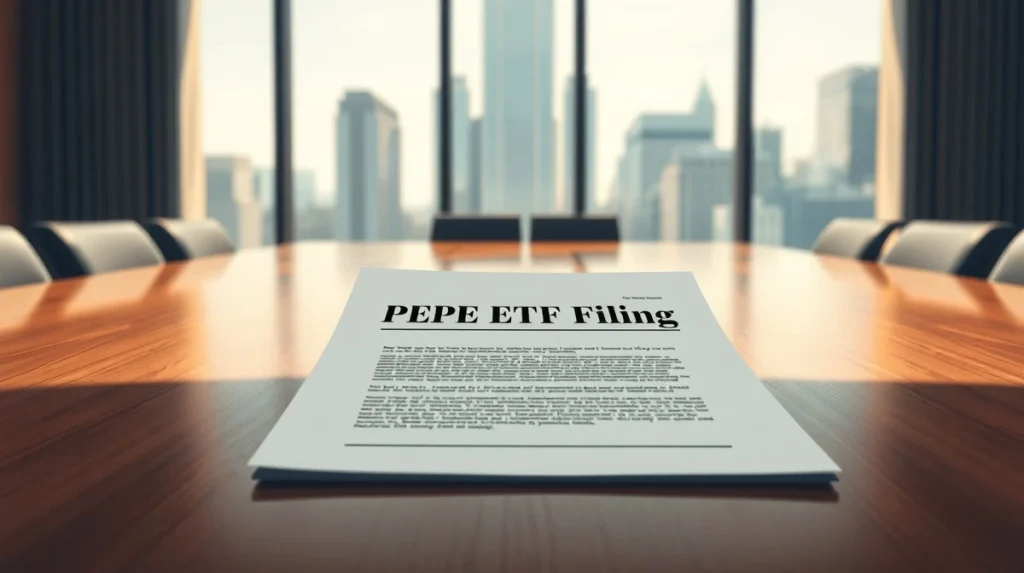
NEW YORK – In a move that stunned cryptocurrency observers, investment firm Canary Capital has filed paperwork with the U.S. Securities and Exchange Commission (SEC) for a spot exchange-traded fund (ETF) tracking the memecoin PEPE. The filing, submitted on April 7, 2026, represents one of the most audacious attempts yet to bridge the speculative world of internet memecoins with the regulated halls of Wall Street. This proposal arrives just over a year after the SEC’s landmark approval of spot Bitcoin ETFs, but it ventures into far more contentious territory. The core question is whether a digital asset born from an internet frog cartoon can meet the SEC’s stringent standards for market integrity and investor protection.
Canary Capital’s PEPE ETF Proposal Details
According to the publicly available filing document, the proposed fund would be listed on a major U.S. exchange, likely the Cboe BZX Exchange. The ETF’s shares would aim to reflect the performance of PEPE’s price, minus the fund’s expenses. Canary Capital would act as the sponsor. A vital part of the structure involves a regulated custodian holding the underlying PEPE tokens. This “spot” model mirrors the approved Bitcoin ETFs, where the fund holds the actual asset rather than derivatives like futures contracts. Data from CoinMarketCap shows PEPE has a market capitalization of approximately $3.2 billion as of early April 2026, making it one of the largest memecoins. However, its price history is notoriously volatile, often driven by social media sentiment rather than fundamental utility.
The Steep Regulatory Hurdles Ahead
The path to approval is fraught with obstacles. SEC Chair Gary Gensler has consistently expressed deep skepticism about the broader cryptocurrency market, particularly assets lacking clear use cases. In congressional testimony last year, Gensler emphasized that most crypto tokens are likely investment contracts and thus securities. The SEC’s approval of spot Bitcoin ETFs was preceded by a decisive court loss, forcing its hand. No such legal pressure exists for PEPE. Industry watchers note that the SEC’s evaluation will center on several key issues:
- Market Manipulation: The SEC must be convinced the underlying market for PEPE is resistant to manipulation. Memecoins are famously prone to “pump-and-dump” schemes.
- Custody: The regulator will scrutinize the security of the custodian arrangements for holding the tokens.
- Surveillance-Sharing Agreements: The listing exchange must have a pact with a regulated market of significant size to monitor for fraud. Finding a suitable partner for PEPE is a major challenge.
“This filing is a massive long shot,” said a veteran financial regulatory attorney who requested anonymity due to client relationships. “The SEC’s stance on Bitcoin was grudging and legally compelled. For PEPE, they have every reason to just say no. The applicant bears the burden of proof, and proving a memecoin market is clean is a herculean task.”
Also read: Little Pepe ($LILPEPE) Surges Past $28M Presale Milestone as Final Stage Nears Sellout
Comparing Asset Classes: Bitcoin vs. Memecoins
The contrast with Bitcoin is stark. Proponents argued Bitcoin was a novel digital commodity with a decentralized network and store-of-value narrative. PEPE’s value proposition is almost purely cultural and speculative. The table below highlights key differences the SEC will consider:
| Factor | Bitcoin (Approved for ETFs) | PEPE (Proposed for ETF) |
|---|---|---|
| Primary Use Case | Digital gold, decentralized payment network | Cultural meme, speculative trading asset |
| Market Maturity | 15+ years, institutional involvement | ~3 years, largely retail-driven |
| Price Drivers | Macro factors, adoption cycles, halving events | Social media trends, influencer mentions |
| Regulatory Clarity | Classified as a commodity by CFTC | Unclear; potential SEC target as a security |
Potential Market Impact and Investor Risks
If approved, a PEPE ETF would fundamentally alter access to the asset. Retail investors could buy and sell shares through traditional brokerage accounts without managing private crypto wallets. This could inject significant new capital into the PEPE ecosystem. However, analysts warn this also amplifies risks. Memecoins can lose value with breathtaking speed. An ETF would give mainstream investors direct exposure to this volatility. “The concern is packaging a highly speculative, joke-based asset into a wrapper that implies a level of safety and regulation,” said a market strategist at a major investment bank. “Investors might see ‘ETF’ and think ‘stable,’ which couldn’t be further from the truth for PEPE.” The filing itself includes standard risk warnings about extreme volatility and potential loss of principal.
Broader Implications for the Crypto Industry
Canary Capital’s move is a strategic test of regulatory boundaries. The filing pressures the SEC to articulate clearer lines between different types of crypto assets. A rejection would reinforce the view that only the largest, most established cryptocurrencies like Bitcoin and possibly Ethereum are suitable for regulated products. An approval, however unlikely, would open the floodgates for similar proposals for other memecoins like Dogecoin or Shiba Inu. This could signal a new phase of crypto assimilation into traditional finance, but one fraught with reputational danger for the ETF industry. The implication is a possible bifurcation in the market: “serious” crypto ETFs and “speculative” ones.
What’s Next in the SEC Review Process
The SEC now enters a formal review period. The commission can approve, deny, or extend its decision timeline. The standard review for a rule change like this is up to 240 days. The regulator will likely request additional information from Canary Capital and publish the proposal for public comment. Given the novel and controversial nature of the asset, the comment period could attract significant attention from both crypto advocates and traditional finance skeptics. A final decision is not expected before late 2026 at the earliest. Throughout this process, the price of PEPE will likely experience heightened volatility based on rumors and perceived chances of success.
Conclusion
Canary Capital’s PEPE ETF filing is a bold gambit that highlights the evolving, and often conflicting, pressures in digital asset markets. It pushes the question of what belongs in a regulated investment vehicle to its extreme. While the odds of SEC approval before April 2027 appear slim, the filing itself is significant. It forces a conversation about the limits of crypto adoption and tests whether the infrastructure built for Bitcoin can be stretched to accommodate assets from the internet’s cultural fringe. The outcome will send a powerful signal about the future trajectory of memecoins and the regulatory tolerance for their integration into mainstream finance.
FAQs
Q1: What exactly did Canary Capital file for?
Canary Capital filed an application with the SEC to launch a spot exchange-traded fund (ETF) that would hold the memecoin PEPE. Its shares would trade on a stock exchange, tracking PEPE’s market price.
Q2: Has the SEC approved any memecoin ETFs before?
No. The SEC has only approved spot ETFs for Bitcoin. It has not approved any ETF for Ethereum or any other cryptocurrency, let alone a memecoin like PEPE.
Q3: What are the main reasons the SEC might reject the PEPE ETF?
The SEC is likely to cite concerns about market manipulation in the underlying PEPE market, the lack of a resilient surveillance-sharing agreement, and questions about whether PEPE constitutes an unregistered security.
Q4: How would a PEPE ETF be different from buying PEPE on a crypto exchange?
An ETF would allow investors to buy shares through a traditional stock brokerage without needing a crypto wallet. It would also be held in a tax-advantaged account like an IRA. However, investors would pay management fees and would not directly own or control the PEPE tokens.
Q5: What happens to the filing now?
The SEC will review the application, a process that can take up to 240 days. They will likely ask Canary Capital for more details and open the proposal to public comment before making a final decision to approve or deny.

This article was produced with AI assistance and reviewed by our editorial team for accuracy and quality.