Passenger Information System Market Poised for Transformative Growth Through 2031
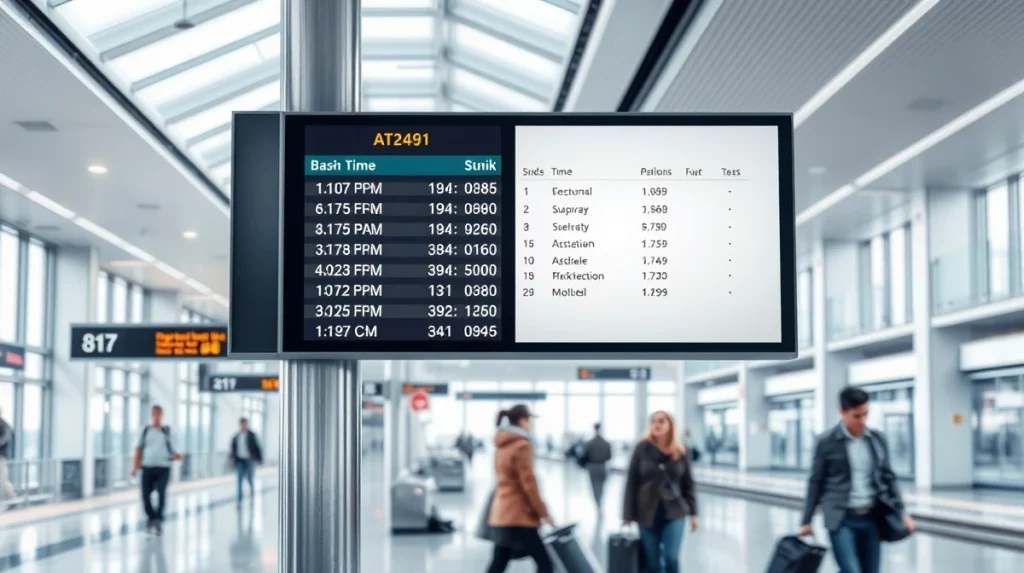
The global passenger information system market is undergoing significant transformation, driven by rising urbanization, increasing public transit ridership, and technological innovation. As of March 2026, these systems, which provide real-time travel information to commuters, are critical components of modern transportation infrastructure. Key players like Siemens AG, Alstom SA, and Cisco Systems are competing in a landscape shaped by the demand for smarter, more connected cities. This analysis examines the market’s trajectory, core technologies, and the factors influencing its projected expansion through the next decade.
Passenger Information System Market Drivers and Current Landscape
Several powerful forces are propelling the passenger information system market forward. Primarily, global urban population growth has strained existing transit networks, necessitating investments in efficiency and passenger experience. Consequently, transportation authorities worldwide are prioritizing digital upgrades. Furthermore, government initiatives promoting public transit to reduce congestion and emissions have unlocked substantial funding. For example, infrastructure bills in various nations often allocate specific budgets for intelligent transportation systems. Additionally, the passenger expectation for seamless, app-integrated travel information has become standard, pushing operators to adopt advanced solutions.
Also read: M Series ANC Token Presale Launches with Detailed Vesting
The competitive landscape is notably diverse, featuring established industrial giants and specialized technology firms. Major players include:
- Advantech Co., Ltd. (Taiwan) and Hitachi Ltd. (Japan): Leaders in hardware and integrated system solutions.
- Alstom SA (France) and Siemens AG (Germany): Dominant forces in railway and mass transit systems, offering comprehensive information displays and control software.
- Cisco Systems (US) and Huawei Technologies Co., Ltd. (China): Provide the critical networking and communication backbone for system connectivity.
- Wabtec Corporation (US) and Cubic Corporation (US): Specialize in transit analytics and fare collection integration.
Technological Innovations Shaping the Future
Technological advancement serves as the primary engine for market evolution. Modern systems have moved far beyond simple LED arrival boards. Today, they integrate multiple data streams to deliver predictive and personalized information. For instance, the incorporation of Internet of Things (IoT) sensors on vehicles and tracks allows for hyper-accurate real-time positioning. Moreover, artificial intelligence and machine learning algorithms analyze historical and live data to predict delays and suggest optimal routes, thereby improving network resilience.
Also read: Pepeto Presale Attracts Investor Interest Amid Meme Coin Rally
The Integration of 5G and Open Data Standards
A key trend is the rollout of 5G connectivity in transit corridors. This high-speed, low-latency network enables the instantaneous transmission of high-definition video, crowd analytics, and rich media to passenger devices and large-format displays. Simultaneously, the adoption of open data standards, like General Transit Feed Specification (GTFS) Realtime, allows third-party app developers to build services. This ecosystem approach multiplies the value of the core passenger information system. As a result, passengers access information through their preferred channel, whether a station display, a mobile app, or a voice assistant.
Regional Market Analysis and Implementation Challenges
Market growth varies significantly by region, influenced by local infrastructure maturity and investment cycles. North America and Europe, with their aging but extensive transit networks, represent major markets for modernization and replacement projects. Conversely, the Asia-Pacific region, particularly China and India, presents immense opportunities for new installations in expanding metro and high-speed rail projects. However, the market faces consistent challenges. High initial capital expenditure can deter municipal authorities, and complex system integration with legacy infrastructure remains a technical hurdle. Furthermore, cybersecurity concerns for connected transit networks demand robust and ongoing investment in protection.
The table below outlines core system components and their functions:
| Component | Primary Function |
|---|---|
| Onboard Display Units | Show next stop, route map, and service announcements inside vehicles. |
| Station/Stop Displays | Provide real-time arrival/departure times and service alerts. |
| Control & Management Software | The central brain that aggregates data and manages content across all endpoints. |
| Communication Network | Transmits data between control centers, vehicles, and displays (often using LTE/5G or Wi-Fi). |
| Passenger Mobile Solutions | Apps and SMS services delivering personalized journey information. |
Conclusion
The passenger information system market is fundamentally linked to the global shift toward efficient, user-centric public transportation. Growth through 2031 will be fueled by technological convergence, including AI, IoT, and high-speed connectivity, alongside sustained public infrastructure investment. While challenges around cost and integration persist, the demand for accurate, accessible, and real-time traveler information is unequivocal. The continued innovation from key market players will therefore play a critical role in shaping the future of urban mobility and the daily commute for millions of passengers worldwide.
FAQs
Q1: What is a passenger information system (PIS)?
A passenger information system is an integrated set of hardware and software components that collect, process, and disseminate real-time travel information to public transport users. This includes displays at stations, announcements on vehicles, and data feeds for mobile applications.
Q2: What are the main benefits of implementing a modern PIS?
Modern systems significantly enhance the passenger experience by reducing uncertainty and wait-time stress. For operators, they improve network efficiency, manage crowd flow, and provide valuable operational data. They also increase overall public transit attractiveness and ridership.
Q3: Which technology is most critical for next-generation PIS?
While multiple technologies are important, robust and high-speed communication networks (like 5G) are foundational. They enable the reliable, real-time data transfer required for accurate predictions and seamless multi-channel information delivery.
Q4: How does a PIS handle service disruptions?
Advanced systems use automated alerts triggered by operational data. Control center software can instantly update all connected displays and apps with alternative route suggestions, delay estimates, and shuttle bus information, thereby keeping passengers informed during incidents.
Q5: Are there different types of PIS for different modes of transport?
Yes, while the core function is similar, system specifications differ. Railway and metro systems often require more robust, high-capacity networks for moving vehicles. Bus systems might prioritize GPS-based tracking and solar-powered displays at stops. Airport systems integrate with flight information databases.

This article was produced with AI assistance and reviewed by our editorial team for accuracy and quality.