On-Chain Finance Surges: $120B Milestone Signals Unstoppable Commercialization Wave
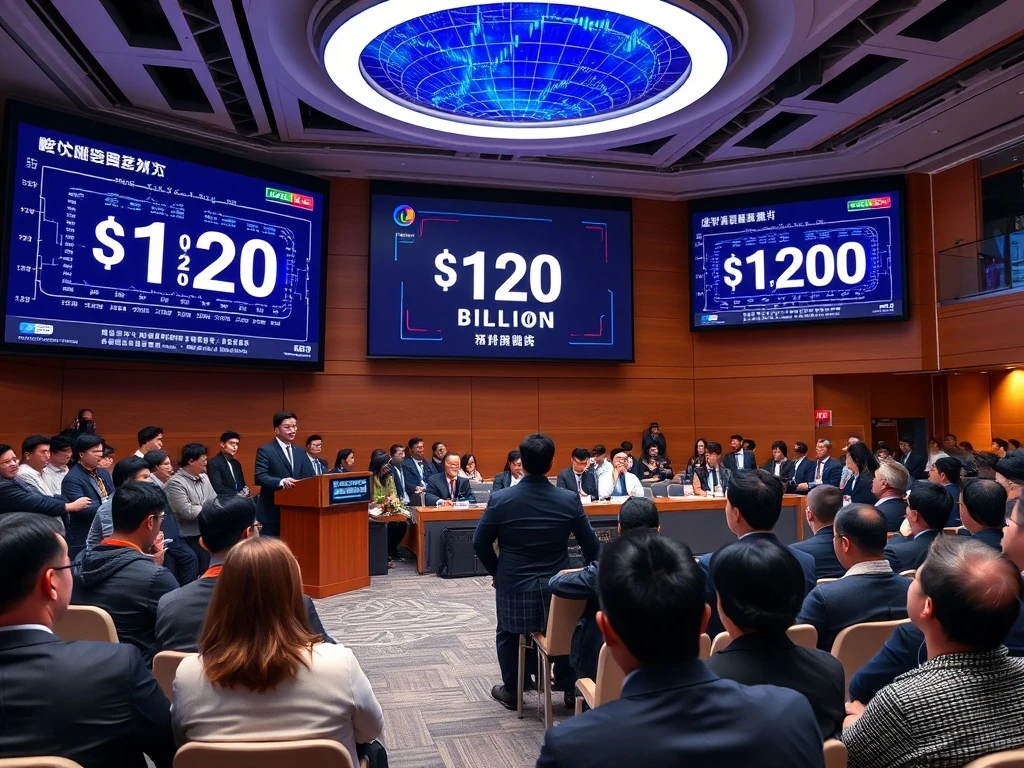
SEOUL, South Korea – January 28, 2025 – The blockchain industry has reached a key commercialization milestone with $120 billion now deposited in on-chain finance systems globally, according to Derik Han, Head of Asia-Pacific at Mysten Labs. This substantial figure emerged during the ninth News1 Blockchain Leaders Club event, signaling a definitive shift from experimental technology to practical financial infrastructure. Industry analysts now recognize this moment as a critical turning point for mainstream blockchain adoption.
On-Chain Finance Reaches Critical Mass with $120 Billion
The $120 billion deposited across global on-chain finance platforms represents more than just capital accumulation. This figure demonstrates growing institutional confidence in blockchain-based financial systems. Furthermore, it highlights the maturation of Layer 1 infrastructure supporting these services. According to Han’s presentation, these funds now generate numerous real-world commercial applications. Consequently, blockchain technology moves beyond theoretical potential into practical utility.
Also read: Bitcoin Spot ETFs Shatter Positive Streak With $296 Million Outflow
Financial institutions increasingly adopt on-chain solutions for several reasons. First, they offer enhanced transparency through immutable ledgers. Second, they provide improved settlement speeds compared to traditional systems. Third, they enable programmable financial instruments through smart contracts. Major banking consortiums have quietly integrated blockchain rails throughout 2024. This integration now processes substantial transaction volumes daily.
The Asian Blockchain Leadership Perspective
Derik Han’s insights carry particular weight given Asia-Pacific’s blockchain leadership position. The region accounts for approximately 45% of global blockchain development activity. South Korea specifically maintains one of the world’s most sophisticated cryptocurrency regulatory frameworks. Additionally, Singapore serves as a major blockchain innovation hub. Therefore, announcements from Seoul-based events often signal broader industry trends.
Also read: Bitcoin Strategy Divide: GameStop's 4,710 BTC Hold Contrasts With Nation's Massive Sell-Off
The News1 Blockchain Leaders Club event itself represents significant industry authority. This gathering regularly features top executives from leading blockchain projects. Previous speakers include representatives from Ethereum Foundation, Polygon Labs, and Solana Foundation. Consequently, Han’s $120 billion announcement carries substantial credibility within industry circles.
Sui Blockchain Emerges as Major On-Chain Finance Platform
Despite launching just two years ago in 2023, the Sui blockchain now holds $2 billion in on-chain finance assets. This rapid growth demonstrates the platform’s technical capabilities and market acceptance. Moreover, Sui has processed a cumulative 12 billion transactions since its mainnet launch. Performance metrics consistently show Sui as the fastest existing Layer 1 blockchain. These speed enhancements result from continuous protocol improvements throughout 2024.
Sui’s architecture differs significantly from earlier blockchain designs. It utilizes a unique object-centric data model rather than traditional account-based systems. This approach enables parallel transaction processing. Consequently, Sui maintains consistent performance even during network congestion periods. Major financial institutions have specifically noted this reliability advantage.
| Blockchain | Launch Year | On-Chain Finance Assets | Cumulative Transactions | Peak TPS |
|---|---|---|---|---|
| Sui | 2023 | $2 billion | 12 billion | 297,000 |
| Solana | 2020 | $18 billion | 275 billion | 65,000 |
| Avalanche | 2020 | $7 billion | 1.8 billion | 4,500 |
| Ethereum | 2015 | $85 billion | 2.1 trillion | 100 |
The table above illustrates Sui’s remarkable performance metrics despite its recent launch. Transaction processing speed (TPS) represents a critical factor for financial applications. High-frequency trading and payment systems require sub-second finality. Sui’s architecture specifically addresses these financial industry requirements.
Real-World Commercial Applications Drive Adoption
On-chain finance now supports numerous practical business applications beyond cryptocurrency trading. Supply chain financing represents one significant growth area. Companies now tokenize invoices and purchase orders on blockchain networks. This tokenization enables faster settlement between trading partners. Additionally, it reduces fraud risks through transparent audit trails.
Cross-border payments constitute another major application category. Traditional international transfers often require multiple banking intermediaries. These intermediaries create delays and increase costs. Conversely, blockchain-based systems enable direct peer-to-peer transfers. Major remittance corridors now process billions monthly through on-chain systems.
- Trade Finance: Letters of credit and bills of lading digitization
- Asset Tokenization: Real estate, commodities, and intellectual property
- Decentralized Insurance: Parametric insurance products with automated claims
- Institutional DeFi: Permissioned liquidity pools for regulated entities
- Carbon Credit Markets: Transparent environmental credit trading
These applications demonstrate blockchain’s expanding role in traditional finance. Regulatory clarity in major jurisdictions has accelerated this adoption throughout 2024. The European Union’s Markets in Crypto-Assets (MiCA) regulation provides comprehensive guidelines. Similarly, Hong Kong and Singapore have established clear licensing frameworks. Consequently, financial institutions now operate with greater regulatory certainty.
Solving Fragmented Liquidity Challenges
Derik Han specifically highlighted fragmented liquidity as a remaining challenge. Currently, liquidity exists across multiple blockchain networks and traditional systems. This fragmentation creates inefficiencies for large-scale financial operations. However, Layer 1 blockchains actively collaborate with financial companies to address this issue. Cross-chain interoperability protocols represent one solution approach.
Several initiatives now bridge different blockchain networks. These bridges enable asset transfers between separate ecosystems. For example, wrapped assets allow Bitcoin utilization on Ethereum-compatible networks. Similarly, cross-chain messaging protocols allow communication between different Layer 1 platforms. Major financial institutions participate in standardization efforts through industry consortia.
Technical Infrastructure Enables Commercial Scale
Layer 1 blockchain improvements throughout 2024 have enabled commercial-scale operations. Transaction throughput has increased dramatically across major networks. Additionally, transaction costs have decreased significantly through various optimization techniques. These improvements result from both protocol upgrades and hardware advancements.
Validator node hardware now utilizes specialized processing units. These units accelerate cryptographic operations essential for blockchain consensus. Furthermore, network bandwidth improvements enable faster block propagation. Major cloud providers now offer blockchain-optimized infrastructure services. Consequently, enterprise adoption faces fewer technical barriers than previous years.
Security enhancements represent another critical development area. Formal verification tools now audit smart contracts before deployment. These tools mathematically prove contract correctness under specified conditions. Additionally, decentralized oracle networks provide reliable external data feeds. These feeds enable sophisticated financial instruments previously impossible on blockchain networks.
Global Regulatory Field Evolution
Regulatory developments significantly influence on-chain finance growth. The Financial Action Task Force (FATF) now provides clear cryptocurrency guidelines. These guidelines help standardize anti-money laundering procedures globally. Additionally, the International Organization of Securities Commissions (IOSCO) published cryptocurrency market standards in late 2024.
National regulators increasingly recognize blockchain’s financial infrastructure potential. The Monetary Authority of Singapore launched Project Guardian in 2023. This initiative explores decentralized finance applications in wholesale funding markets. Similarly, the Bank for International Settlements Innovation Hub conducts multiple blockchain experiments. These experiments test central bank digital currency implementations and cross-border payment systems.
Corporate adoption follows regulatory clarity. Major payment processors now integrate blockchain settlement options. Additionally, asset management firms offer cryptocurrency investment products. These products include exchange-traded funds (ETFs) and separately managed accounts. Institutional custody solutions have matured significantly throughout 2024. Consequently, large-scale capital allocation faces fewer operational hurdles.
Conclusion
The $120 billion deposited in on-chain finance systems marks a definitive commercialization milestone for blockchain technology. Derik Han’s announcement at the Seoul blockchain event highlights accelerating institutional adoption. Furthermore, Sui blockchain’s rapid growth demonstrates next-generation Layer 1 capabilities. Real-world applications now drive substantial transaction volumes across multiple sectors. However, fragmented liquidity remains a challenge requiring continued industry collaboration. The on-chain finance ecosystem continues evolving toward greater integration with traditional financial systems. This evolution promises increased efficiency, transparency, and accessibility across global finance.
FAQs
Q1: What exactly is on-chain finance?
On-chain finance refers to financial services and applications built directly on blockchain networks. These services utilize smart contracts for automated execution and maintain transparent records on distributed ledgers. Examples include decentralized lending platforms, tokenized asset markets, and blockchain-based payment systems.
Q2: How does Sui blockchain achieve faster transaction speeds?
Sui utilizes a unique object-centric data model and parallel transaction processing. Unlike traditional blockchains that process transactions sequentially, Sui processes independent transactions simultaneously. This architectural approach, combined with the Move programming language, enables consistent high throughput even during network congestion.
Q3: What types of institutions are adopting on-chain finance?
Traditional banks, asset managers, insurance companies, and fintech firms increasingly adopt on-chain solutions. Major payment processors integrate blockchain settlement options. Additionally, supply chain companies utilize blockchain for trade finance and invoice tokenization. Regulatory clarity has accelerated institutional participation throughout 2024.
Q4: How does on-chain finance differ from traditional decentralized finance (DeFi)?
While DeFi typically refers to permissionless, retail-focused applications, on-chain finance encompasses broader institutional adoption. It includes permissioned systems for regulated entities, hybrid models combining blockchain and traditional infrastructure, and enterprise-focused applications beyond cryptocurrency trading.
Q5: What are the main challenges facing on-chain finance adoption?
Fragmented liquidity across different blockchain networks remains a significant challenge. Regulatory variations between jurisdictions create compliance complexities. Additionally, technical integration with legacy financial systems requires substantial development resources. However, industry consortia and standardization efforts actively address these challenges.

This article was produced with AI assistance and reviewed by our editorial team for accuracy and quality.