DEXs vs CEXs: OKX CEO’s Critical Rebuttal to Claims of Sameness Sparks Industry Debate
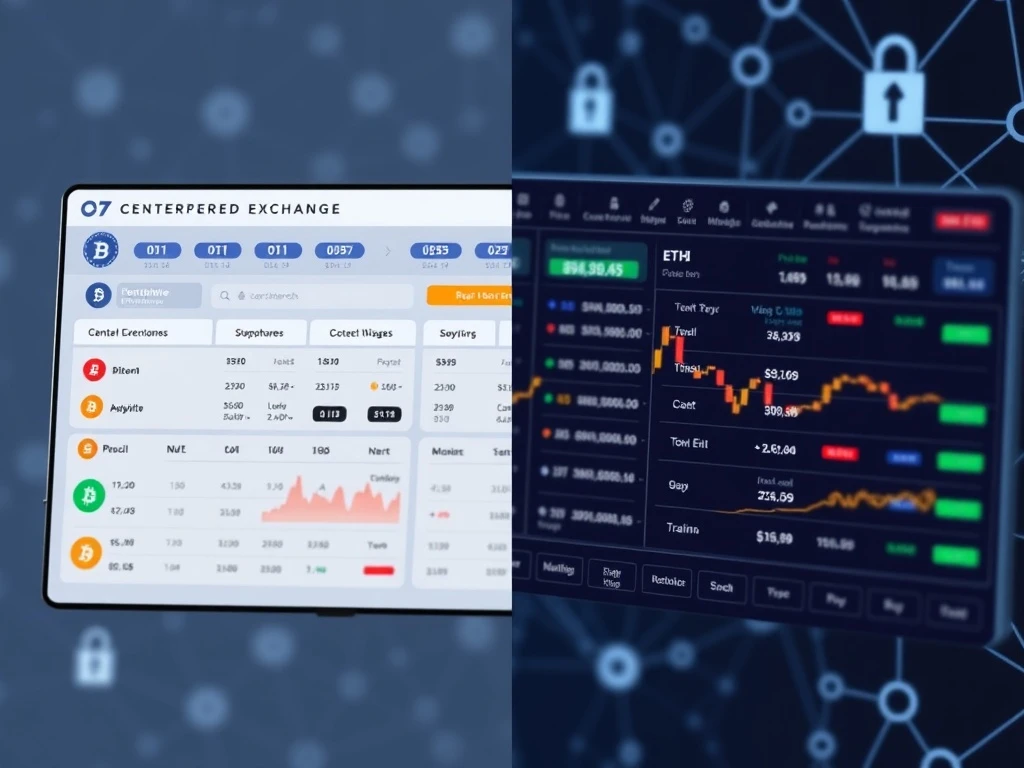
In a significant industry development on March 15, 2025, OKX CEO Star Xu directly challenged growing assertions that decentralized and centralized cryptocurrency exchanges serve identical functions, sparking renewed debate about fundamental platform responsibilities and user protection standards across global digital asset markets.
OKX CEO Challenges Core Assumptions About Exchange Equivalence
Star Xu, founder and CEO of major cryptocurrency exchange OKX, recently articulated a clear distinction between centralized exchanges (CEXs) and decentralized exchanges (DEXs). Consequently, his comments directly responded to broader industry discussions about listing standards. Specifically, Xu emphasized that CEXs bear significant accountability for the tokens they list, unlike DEXs that typically offer permissionless trading.
“Centralized exchanges must implement rigorous due diligence processes,” Xu stated during a recent industry conference. “We conduct comprehensive security audits, evaluate project teams, and assess regulatory compliance before listing any digital asset.”
This position contrasts sharply with arguments from Binance co-founder Changpeng Zhao, who has advocated for more open access models. Zhao previously suggested that users should decide what to trade, with platforms providing maximum choice. However, Xu’s perspective highlights a fundamental philosophical divide about exchange responsibilities.
Historical Context of the Centralized Versus Decentralized Debate
The tension between centralized and decentralized exchange models has existed since cryptocurrency’s early days. Initially, centralized platforms dominated trading volume because they offered familiar interfaces and customer support. Meanwhile, decentralized exchanges emerged as alternatives emphasizing user sovereignty and censorship resistance.
Several key developments have shaped this ongoing debate:
- 2017-2018: Initial coin offering boom highlighted listing quality concerns
- 2020-2021: DeFi summer dramatically increased DEX adoption
- 2022-2023: Major exchange collapses renewed focus on accountability
- 2024-2025: Regulatory frameworks began distinguishing between models
Industry analysts note that listing standards have become particularly contentious following several high-profile token failures. For instance, projects with inadequate security or fraudulent teams have sometimes caused significant user losses. Therefore, exchanges face increasing pressure to implement protective measures.
Expert Perspectives on Exchange Responsibilities
Financial regulation experts emphasize that different exchange models naturally create different obligations. Dr. Elena Rodriguez, a blockchain governance researcher at Stanford University, explains, “Centralized exchanges function as intermediaries holding customer assets. This custodial relationship creates legal and ethical duties that don’t exist in purely peer-to-peer systems.”
Rodriguez further notes that global regulators increasingly recognize this distinction. The European Union’s Markets in Crypto-Assets (MiCA) regulation, for example, imposes specific requirements on centralized service providers. Meanwhile, decentralized protocols face different compliance expectations focused on developer accountability.
Industry data supports Xu’s emphasis on differentiated approaches. According to CryptoCompare’s 2024 Exchange Review, centralized exchanges delisted approximately 15% more tokens than the previous year. This trend reflects growing caution about regulatory exposure and reputational risk.
Technical and Operational Differences Between Models
The debate extends beyond philosophical differences to concrete operational distinctions. Centralized exchanges typically control order books, manage user wallets, and facilitate fiat conversions. Conversely, decentralized exchanges operate through smart contracts and automated market makers without intermediary control.
| Aspect | Centralized Exchanges (CEXs) | Decentralized Exchanges (DEXs) |
|---|---|---|
| Custody | Exchange holds user assets | Users retain asset control |
| Listing Process | Vetting and approval required | Typically permissionless |
| Regulatory Compliance | KYC/AML requirements | Varies by jurisdiction |
| Dispute Resolution | Centralized customer support | Community or smart contract based |
| Trading Speed | Generally faster | Subject to blockchain confirmation |
These operational differences create distinct risk profiles. Centralized exchanges can implement security measures like cold storage and insurance funds. However, they also represent single points of failure. Decentralized exchanges eliminate custodial risk but introduce smart contract vulnerabilities and potential liquidity issues.
Market Impact and User Protection Considerations
The listing debate has significant implications for market integrity and investor protection. Proponents of open access argue that excessive gatekeeping limits innovation and financial inclusion. They point to successful projects that might have been excluded under strict listing criteria during early development stages.
However, advocates for rigorous vetting emphasize consumer protection. “When users trust an exchange with their funds, they expect some quality assurance,” notes Michael Chen, a fintech analyst at Bloomberg Intelligence. “The question isn’t whether to list everything, but where to draw reasonable lines.”
Market data reveals interesting patterns. According to CoinGecko statistics, the top 10 centralized exchanges list an average of 350 tokens each. Meanwhile, leading decentralized exchanges like Uniswap host over 1,500 trading pairs. This discrepancy highlights different approaches to market access and curation.
Regulatory Developments Shaping the Landscape
Global regulatory trends increasingly acknowledge the CEX/DEX distinction. The U.S. Securities and Exchange Commission has brought enforcement actions against centralized platforms for unregistered securities offerings. Simultaneously, decentralized protocols face different legal questions about developer liability and decentralization thresholds.
International standards are also evolving. The Financial Action Task Force (FATF) recently updated guidance on virtual asset service providers. Their recommendations differentiate between centralized and decentralized models regarding anti-money laundering obligations. Consequently, exchanges must navigate complex compliance landscapes.
Industry responses to these developments vary significantly. Some centralized exchanges have implemented increasingly strict listing policies. Others have created separate innovation zones for higher-risk tokens. Decentralized protocols, meanwhile, explore governance mechanisms for content moderation without central control.
Future Implications for Exchange Development
The ongoing debate will likely influence exchange evolution in several ways. Hybrid models combining centralized and decentralized features are gaining traction. These platforms might offer custodial services with decentralized settlement or implement community-based listing governance.
Technological advancements could further blur traditional distinctions. Zero-knowledge proofs and other privacy-enhancing technologies might enable verification without full disclosure. Similarly, decentralized identity solutions could facilitate compliance while preserving user sovereignty.
Market structure may continue evolving toward specialization. Some platforms might focus on rigorous vetting for institutional clients. Others could prioritize maximum accessibility for experimental assets. This differentiation could benefit users by providing clearer expectations about platform approaches.
Conclusion
The debate between OKX CEO Star Xu and industry counterparts highlights fundamental questions about cryptocurrency exchange responsibilities. Centralized and decentralized platforms serve different functions with distinct advantages and obligations. As regulatory frameworks mature and markets evolve, these distinctions will likely become increasingly important for user protection and market integrity. The industry must balance innovation with responsibility, recognizing that one-size-fits-all approaches rarely work in complex financial ecosystems.
FAQs
Q1: What is the main difference between CEXs and DEXs according to OKX’s CEO?
Star Xu emphasizes that centralized exchanges bear accountability for token listings through due diligence, while decentralized exchanges typically offer permissionless access without the same vetting responsibilities.
Q2: How do regulatory approaches differ for centralized versus decentralized exchanges?
Regulators typically impose stricter requirements on centralized exchanges regarding customer protection, anti-money laundering, and securities compliance, while decentralized protocols face evolving standards about developer liability and decentralization thresholds.
Q3: What are the security trade-offs between CEXs and DEXs?
Centralized exchanges can implement institutional security measures like insurance and cold storage but represent single points of failure. Decentralized exchanges eliminate custodial risk but introduce smart contract vulnerabilities and rely on user security practices.
Q4: How might hybrid exchange models address these debates?
Hybrid models combining centralized interfaces with decentralized settlement or community-based governance could offer balanced approaches, providing user-friendly experiences while maintaining certain decentralized benefits.
Q5: What trends are shaping the future of cryptocurrency exchange listings?
Increasing regulatory clarity, market specialization, technological advancements in verification, and growing institutional participation are all influencing how exchanges approach token listings and user protection standards.