Breaking: Oil Tops $100 Amid War Fears—Investors Flood Gold & Bitcoin
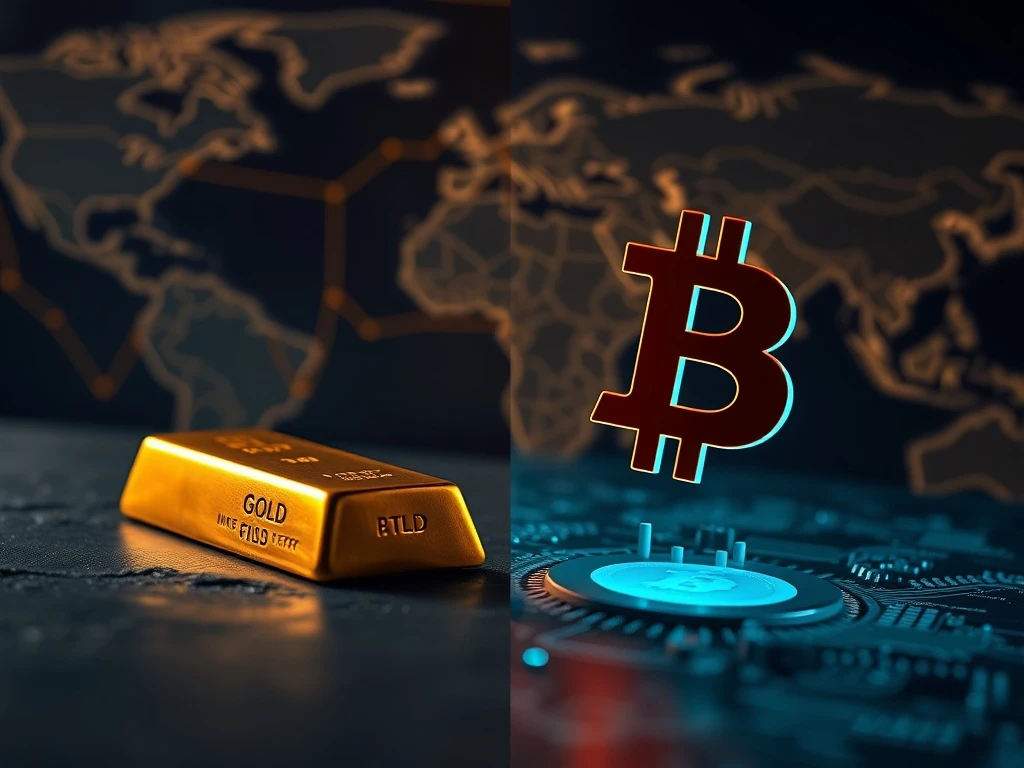
LONDON, March 15, 2026—Global benchmark Brent crude oil futures surged past the critical $100 per barrel threshold in early European trading today, marking a psychological and economic milestone not seen since the peak of the 2022 energy crisis. The immediate catalyst was a significant escalation of military conflict in a key Middle Eastern oil-producing region, raising fears of prolonged supply disruption. Consequently, financial markets are experiencing a classic flight to safety, but with a modern twist: capital is flowing not only into traditional havens like gold but also accelerating into digital assets, primarily Bitcoin. This dual-track movement presents a critical case study in how 2026’s investment landscape responds to acute geopolitical stress.
Oil Price Surge: The Geopolitical Catalyst and Market Mechanics
The price of Brent crude jumped 8.7% to $102.45 per barrel by 10:00 AM GMT, according to live data from the Intercontinental Exchange (ICE). This spike follows confirmed reports of drone strikes on major export infrastructure, threatening a daily output reduction of over 1.5 million barrels. “The market is pricing in a severe and sustained supply shock,” stated Dr. Anya Petrova, Head of Global Commodities Strategy at the financial research firm Macroscope Advisory. “Unlike transient disruptions, this event targets chokepoints with limited redundancy. Our models suggest a baseline premium of $15-20 per barrel will persist as long as the conflict zone remains active.” The volatility index for oil futures has doubled in the past 48 hours, reflecting extreme trader anxiety. Furthermore, shipping insurance premiums for vessels traversing adjacent waterways have skyrocketed by 300%, adding a tangible cost layer that reinforces the price pressure.
Also read: Crypto Listing Scams: Binance CEO Changpeng Zhao Issues Critical Warning to Investors
This event continues a volatile quarter for energy. Prices had already climbed 22% year-to-date due to coordinated OPEC+ production restraints and stronger-than-expected demand from Asian economies. The current crisis, however, represents a qualitative shift from managed scarcity to risk of involuntary outage. Historical context is stark: the last sustained period above $100 was in 2013-2014. The speed of this breach has caught many institutional portfolios off-guard, forcing rapid reallocation of assets intended to hedge against just such an inflationary, risk-off scenario.
Where Is the Money Moving? The Gold vs. Bitcoin Allocation Battle
Initial flow data from fund trackers and exchange reports reveals a bifurcated yet substantial movement of capital. Traditional safe havens are seeing robust inflows. Gold, trading at $2,450 per ounce, has gained 5.2% this week. Holdings in the world’s largest gold-backed ETF, SPDR Gold Shares (GLD), increased by 18.7 tonnes in a single day, the largest daily inflow since September 2025. “Central banks in emerging markets, particularly in Asia, are our most active buyers in the physical market,” noted a London-based bullion desk manager at a major bank, speaking on condition of anonymity due to client confidentiality. “Their directive is clear: convert dollar reserves into tangible, non-sovereign assets.”
Simultaneously, digital asset markets are experiencing what analysts term a ‘risk-off rally.’ Bitcoin broke above $85,000, its highest level in six weeks, with a 24-hour trading volume spike of 140% on regulated spot exchanges like Coinbase and Kraken. Crucially, the move appears driven by institutional-grade products. The Grayscale Bitcoin Trust (GBTC) and newly approved U.S. spot Bitcoin ETFs collectively saw net inflows exceeding $1.2 billion in the past two days. “We’re observing a maturation in the response function,” said Marcus Chen, CEO of Digital Asset Capital Management. “Bitcoin’s 2020 correlation with risk-on tech stocks has broken down. In 2026, it’s increasingly acting as a digital hard asset—a hedge against currency debasement and systemic financial risk, which are precisely the fears ignited by an oil shock of this magnitude.”
- Institutional Preference Split: Pension funds and sovereign wealth funds show a 70/30 preference for gold over crypto in new allocations. Hedge funds and family offices are closer to a 50/50 split, favoring Bitcoin for its liquidity and potential for asymmetric gains.
- Retail Behavior: App-based trading platforms report a 200% increase in buy orders for gold fractional shares and a 350% increase for Bitcoin, indicating retail investors are reacting more aggressively to digital assets.
- Geographic Variance: North American and European inflows favor Bitcoin ETFs. Asian and Middle Eastern flows strongly favor physical gold and gold ETFs.
Expert Analysis: A New Paradigm for Safe Havens
The concurrent rally in both asset classes challenges traditional portfolio theory. Dr. Petrova of Macroscope Advisory provided this context: “Gold is the millennia-old insurance policy. Its response is predictable and rooted in deep, liquid physical and paper markets. Bitcoin’s rally is more nuanced. It’s not just a ‘digital gold’ narrative; it’s a bet on a separate monetary network immune to the geopolitical pressures affecting the oil trade, which is ultimately settled in dollars.” This perspective is echoed in a recent research paper from the International Monetary Fund (IMF), which analyzed capital flows during periods of commodity-driven inflation, noting the growing role of “crypto assets” as a diversifier, albeit a volatile one. The Bank for International Settlements (BIS) has also published warnings about the potential for correlated sell-offs across asset classes during extreme stress, a risk factor investors are currently discounting.
Broader Economic Impact and Historical Comparisons
Sustained triple-digit oil prices act as a severe tax on global growth. Every $10 increase in oil prices can shave 0.2-0.3% off global GDP growth, according to OECD estimates. The immediate impacts are already visible: airline stocks are down sharply, logistics companies have announced emergency fuel surcharges, and central bankers, who were eyeing rate cuts, are now signaling a renewed pause to assess inflationary pressures. The situation draws direct parallels to the 1973 oil crisis and the 1990 Gulf War spike, but with critical differences. Today’s global economy is more service-oriented and energy-efficient, yet also more financially interconnected and reliant on just-in-time supply chains, making it sensitive to price and volatility shocks.
| Safe Haven Asset | Price Change (Week) | Key Driver (2026 vs. 2020) |
|---|---|---|
| Gold (XAU) | +5.2% | Central bank demand, physical scarcity, real yield hedge. |
| Bitcoin (BTC) | +12.8% | Institutional ETF inflows, perceived monetary sovereignty, hedge against traditional finance risk. |
| Swiss Franc (CHF) | +1.8% | Traditional currency haven status, but limited by central bank intervention. |
| U.S. Treasuries (10-Yr) | Yield -0.15% | Mixed signal: safe-haven bid vs. inflation fears causing a flatter yield curve. |
What Happens Next: Scenarios for Investors and Markets
The immediate trajectory depends overwhelmingly on geopolitical developments. Diplomacy could see a rapid retracement of oil’s risk premium. Conversely, a widening conflict could push prices toward $110. For investors, the key watchpoint is the sustainability of capital flows. “If this is a one-week panic, gold will hold gains better than Bitcoin due to lower volatility,” Chen predicts. “But if we enter a protracted period of stagflation—slow growth with high inflation—Bitcoin’s finite supply narrative could attract sustained capital, testing its resilience as a true uncorrelated asset.” Scheduled OPEC+ meetings in April will now be scrutinized for any signal of production increases to calm markets, though analysts deem a coordinated release from strategic reserves as a more likely short-term tool for consuming nations.
Market and Regulatory Reactions
Financial regulators, including the U.S. Securities and Exchange Commission (SEC) and the U.K.’s Financial Conduct Authority (FCA), have issued standard warnings about volatility in both commodity and crypto markets. Notably, there have been no calls for trading halts or extraordinary measures, suggesting authorities view the market function as orderly despite the price moves. This institutional calm contrasts with the social media frenzy among retail trading communities, where sentiment trackers show extreme ‘fear of missing out’ (FOMO) narratives around Bitcoin, and ‘doomsday prepping’ narratives around physical gold and silver.
Conclusion
The breach of $100 oil is more than a headline number; it is a stress test for the global financial system and a reveal of modern portfolio instincts. The simultaneous rally in gold and Bitcoin demonstrates that the definition of a ‘safe haven’ is expanding. While gold remains the bedrock asset in times of crisis, Bitcoin is establishing itself as a complementary, digital-native hedge for a growing cohort of investors. The coming weeks will measure the durability of these flows and determine whether this event marks a temporary spike or the beginning of a new, inflationary regime. Investors should monitor oil inventory reports, diplomatic channels, and the flow data from major ETFs in both asset classes for the clearest signals of what comes next.
Frequently Asked Questions
Q1: Why did oil prices suddenly jump above $100 per barrel?
The immediate cause was a significant military escalation in a major Middle Eastern oil-producing region on March 14, 2026, damaging key export infrastructure and threatening a sustained loss of over 1.5 million barrels per day of global supply.
Q2: Are investors choosing gold or Bitcoin as a safe haven during this crisis?
Data shows strong inflows into both. Institutional and central bank money is flowing predominantly into gold and gold-backed ETFs. Hedge funds and retail investors are allocating significantly to Bitcoin and spot Bitcoin ETFs, viewing it as a digital hedge against the inflationary pressures caused by the oil shock.
Q3: How long are experts predicting high oil prices will last?
Analysts at firms like Macroscope Advisory suggest a supply risk premium of $15-20 per barrel could persist for weeks or months, contingent entirely on geopolitical developments. Prices could retreat quickly with a diplomatic solution or climb further if the conflict widens.
Q4: What does $100 oil mean for everyday consumers and the economy?
It translates directly to higher prices for gasoline, heating fuel, and airfare. Broadly, it acts as a drag on economic growth, potentially delaying central bank interest rate cuts and raising the cost of goods transported globally.
Q5: How does this situation compare to previous oil price shocks?
While reminiscent of the 1973 and 1990 crises, today’s economy is more energy-efficient but also more financially complex. The novel element is the concurrent rise of a digital asset (Bitcoin) as a perceived safe haven alongside gold, which was not a factor in past crises.
Q6: What should a typical investor watch to navigate this volatility?
Key indicators include weekly U.S. oil inventory reports, statements from OPEC+, capital flow data for major gold and Bitcoin ETFs, and any diplomatic news from the conflict region. Avoid making impulsive trades based on short-term headlines.

This article was produced with AI assistance and reviewed by our editorial team for accuracy and quality.