NYSE Tokenized Settlement Will Revolutionize Finance Through Public Blockchain Expansion, Predicts CryptoQuant CEO
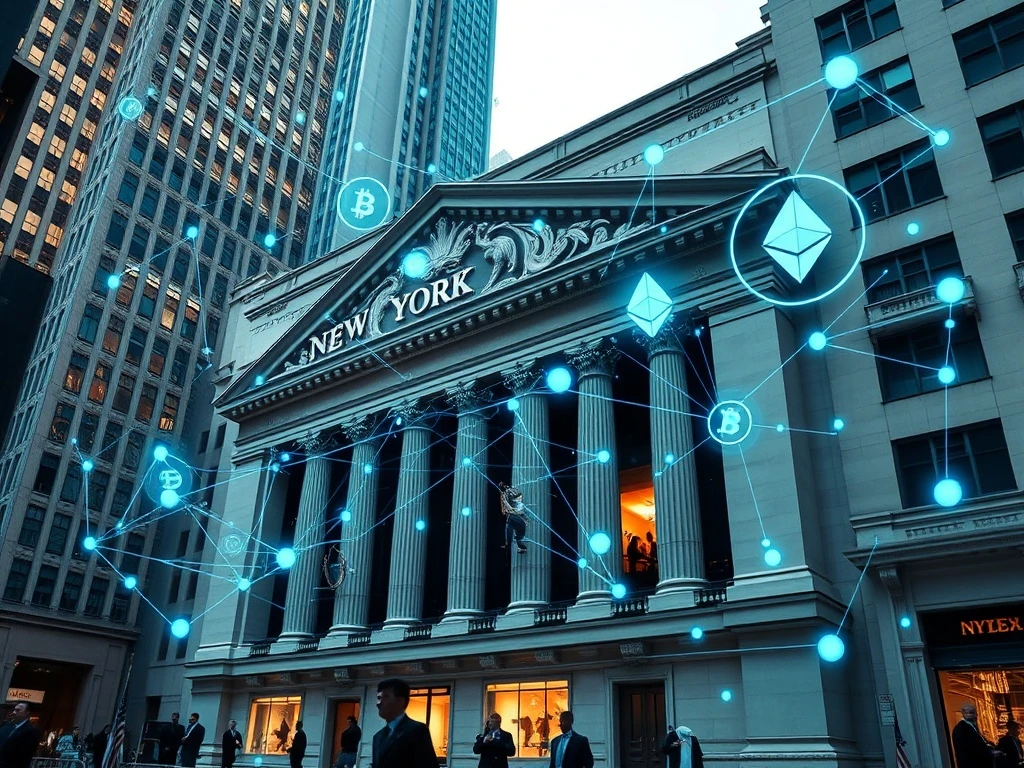
NEW YORK, March 2025 – The New York Stock Exchange’s original move toward tokenized settlement systems will inevitably expand to public blockchains, according to CryptoQuant CEO Ju Ki-young. This prediction follows confirmed reports that the world’s largest stock exchange plans to launch 24/7 trading for U.S. equities through an on-chain tokenized platform. Consequently, this development represents a major moment for traditional finance embracing blockchain technology. Moreover, industry analysts now recognize this initiative as potentially the most significant institutional cryptocurrency adoption story of the decade.
NYSE Tokenized Settlement System Architecture
The NYSE’s tokenized settlement initiative will initially operate on a permissioned blockchain network. This controlled environment allows the exchange to maintain regulatory compliance while testing new technological frameworks. However, Ju Ki-young emphasizes that public chains will eventually play a vital role in this ecosystem. Specifically, he draws a compelling parallel with Bitcoin’s evolution in traditional markets. Initially, investors gained exposure through indirect vehicles like the Grayscale Bitcoin Trust and corporate holdings. Subsequently, spot Bitcoin ETFs gained approval as regulatory frameworks matured. Similarly, tokenized securities will likely follow this gradual integration path.
Tokenization converts traditional financial assets into digital tokens on a blockchain. These tokens represent ownership and can help faster, more transparent settlements. The NYSE’s system aims to reduce settlement times from the current T+2 standard to near-instantaneous processing. Furthermore, this technology enables fractional ownership of high-value assets. Industry experts anticipate this will democratize access to investment opportunities previously reserved for institutional players.
Public Blockchain Integration Timeline
Financial institutions typically adopt new technologies through phased implementation strategies. The NYSE will probably begin with a closed, permissioned system to ensure security and regulatory alignment. Over time, however, the exchange will likely integrate with public blockchains like Ethereum, Solana, or emerging institutional-grade networks. This expansion will require significant regulatory development and technological standardization. Regulatory bodies including the SEC and CFTC are currently establishing comprehensive rules for tokenized assets. These frameworks must address important aspects like investor protection, market manipulation prevention, and cross-border compliance.
Also read: Bitcoin Treasury Companies Face New Pressure as US-Iran Tensions Shift
Bitcoin Parallel Provides Roadmap
Ju Ki-young’s comparison to Bitcoin’s market integration offers valuable insights. Bitcoin first entered traditional portfolios through indirect investment vehicles. These included publicly traded trusts and corporate balance sheet allocations. As regulatory clarity improved, direct investment products like spot ETFs gained approval. This gradual approach allowed regulators to develop appropriate safeguards while enabling market growth. Tokenized securities appear to be following a similar trajectory. Initially, institutions will use controlled, private systems. Eventually, they will connect to public networks as infrastructure and regulations mature.
The table below illustrates key comparison points between Bitcoin’s integration and tokenized securities:
| Development Phase | Bitcoin Integration | Tokenized Securities |
|---|---|---|
| Initial Access | Private trusts, corporate holdings | Permissioned blockchain systems |
| Regulatory Evolution | SEC review, ETF approvals | SEC/CFTC tokenization rules |
| Market Infrastructure | Custody solutions, trading venues | Settlement systems, interoperability |
| Public Integration | Spot ETFs on traditional exchanges | Public blockchain compatibility |
Technical Requirements for Expansion
Public blockchain integration requires specific technological developments. First, interoperability standards must enable smooth communication between permissioned and public networks. Second, scalability solutions must handle the enormous transaction volumes of global equity markets. Third, privacy enhancements must protect sensitive trading data while maintaining transparency. Several projects are already addressing these challenges. For instance, zero-knowledge proofs can verify transactions without revealing underlying data. Additionally, layer-2 solutions can increase throughput while reducing costs.
Key technical considerations include:
- Interoperability protocols connecting different blockchain networks
- Regulatory compliance tools for automated reporting
- Cross-chain asset transfers ensuring settlement finality
- Identity verification systems meeting KYC/AML requirements
Market Impact and Future Implications
The NYSE’s tokenization initiative signals a fundamental shift in financial market structure. Traditional trading hours may become obsolete as 24/7 markets emerge. Settlement risk will decrease significantly with near-instant processing. Global market accessibility will improve through blockchain’s borderless nature. Market participants should prepare for several transformative changes. Trading firms will need to upgrade their technological infrastructure. Regulators will develop new oversight mechanisms. Investors will gain access to previously illiquid markets.
Institutional Adoption Accelerates
Major financial institutions are closely monitoring the NYSE’s progress. Successful implementation could trigger widespread adoption across global exchanges. The London Stock Exchange, Tokyo Stock Exchange, and NASDAQ have all announced blockchain research initiatives. These developments suggest a coordinated move toward modernized market infrastructure. Furthermore, central banks are exploring wholesale CBDCs that could integrate with tokenized settlement systems. This convergence could create a fully digitized financial ecosystem within the next decade.
Industry experts identify several immediate benefits:
- Reduced counterparty risk through atomic settlements
- Lower operational costs by automating manual processes
- Enhanced liquidity through fractional ownership
- Improved transparency with immutable audit trails
Regulatory Space Evolution
Regulatory development remains the primary factor influencing expansion timelines. The SEC has established a dedicated task force for digital asset securities. This group focuses specifically on tokenization and blockchain settlement. Their work will determine how public blockchain integration proceeds. Key regulatory considerations include investor protection standards, market surveillance requirements, and international coordination. The CFTC simultaneously addresses commodity aspects of tokenized assets. Both agencies recognize the need for clear, consistent rules that encourage innovation while maintaining market integrity.
Recent regulatory developments include:
- The SEC’s proposed rules for digital asset securities trading
- CFTC guidance on tokenized commodity derivatives
- International IOSCO principles for crypto-asset markets
- FINRA’s review of broker-dealer digital asset activities
Conclusion
The NYSE tokenized settlement system represents a watershed moment for financial markets. CryptoQuant CEO Ju Ki-young correctly identifies public blockchain expansion as the inevitable next phase. This evolution mirrors Bitcoin’s gradual integration into traditional finance. As regulatory frameworks mature and technical standards develop, compatibility with public chains will become essential. Consequently, market participants should prepare for a transformed financial environment where traditional and blockchain systems operate seamlessly. The NYSE’s initiative may ultimately catalyze global adoption of tokenized assets across public and private networks.
FAQs
Q1: What is tokenized settlement?
Tokenized settlement converts traditional financial assets into digital tokens on a blockchain, enabling faster, more transparent processing of transactions and ownership transfers.
Q2: Why would the NYSE use public blockchains?
Public blockchains offer greater transparency, security through decentralization, network effects, and potential cost efficiencies compared to purely private systems.
Q3: How does this relate to Bitcoin’s market evolution?
Both followed gradual integration paths: Bitcoin through trusts then ETFs, tokenization through private systems then public chains, as regulations and infrastructure matured.
Q4: What are the main regulatory challenges?
Regulators must establish rules for investor protection, market manipulation prevention, cross-border compliance, and integration between traditional and blockchain systems.
Q5: When might public blockchain integration occur?
While timelines depend on regulatory and technical developments, industry experts suggest meaningful integration could begin within 3-5 years as standards mature.

This article was produced with AI assistance and reviewed by our editorial team for accuracy and quality.