NYSE Blockchain Trading Platform: A Revolutionary Leap for 24/7 Tokenized Stocks and ETFs
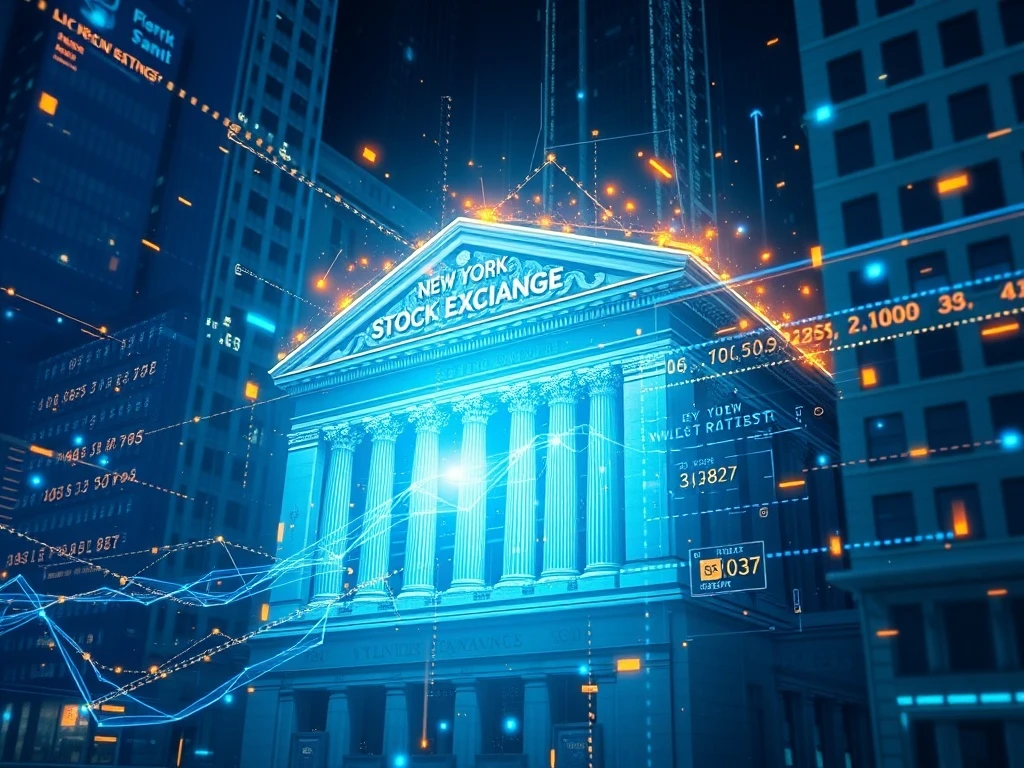
In a landmark move that could redefine global finance, the New York Stock Exchange (NYSE) announced on Monday its development of a innovative 24/7 blockchain trading platform for tokenized stocks and exchange-traded funds (ETFs). This initiative, spearheaded by NYSE Group President Lynn Martin, represents the most significant institutional foray yet into merging traditional equity markets with the efficiency of distributed ledger technology. The platform, which remains subject to regulatory approval, aims to provide instant settlement and global accessibility, fundamentally challenging the conventional T+1 settlement cycle that has governed U.S. markets for decades.
NYSE Blockchain Trading Platform: Core Architecture and Vision
The proposed platform is a technical hybrid, designed to utilize the NYSE’s established market strengths while integrating blockchain’s transformative potential. Consequently, the system will combine the exchange’s high-speed Pillar matching engine with a novel, blockchain-based post-trade infrastructure. This architecture promises multi-chain support for custody and settlement, offering rare flexibility. Furthermore, trades on this new venue could be funded and settled in real-time using stablecoins, a stark contrast to the current system that relies on traditional banking rails and a one-day settlement lag.
Also read: Crypto Clarity Act Gains Significant Backing as Armstrong Shifts Stance, Pressuring Congress
This development is not an isolated project but a central pillar of the broader digital strategy pursued by the NYSE’s parent company, the Intercontinental Exchange (ICE). ICE operates six major clearinghouses globally, including the world’s largest for energy and credit default swaps. Michael Blaugrund, ICE’s Vice President of Strategic Initiatives, described supporting tokenized securities as a “major step” toward building comprehensive on-chain market infrastructure. The strategy explicitly includes building clearing infrastructure, enabling 24/7 trading, and exploring the integration of tokenized collateral.
The Drive for Market Modernization and Global Access
The push for extended trading hours and faster settlement is a direct response to escalating global demand for U.S. equities. Traditionally, the NYSE’s trading window has been limited to regular business hours, excluding a vast portion of international investors in different time zones. In October 2024, the NYSE revealed plans to file with the U.S. Securities and Exchange Commission (SEC) to extend weekday trading to 22 hours. Notably, its competitor, the tech-focused Nasdaq exchange, announced similar 24-hour weekday trading plans in March 2025, indicating an industry-wide shift.
Also read: XRP Price Prediction: Analyst Eyes $2 Target Before Potential Retest of Gaussian Channel Support
Tokenization itself is the process of issuing traditional assets, like stocks or real estate, as digital tokens on a blockchain ledger. These tokenized stocks provide investors with direct exposure to the underlying company’s price. They also unlock powerful advantages including:
- 24/7 Market Accessibility: Trading is not confined to exchange operating hours.
- Fractional Ownership: Investors can purchase fractions of high-value shares.
- Instant Settlement (T+0): Eliminates counterparty risk and frees up capital.
- Programmability: Enables automated functions like dividend distributions.
Regulatory Hurdles and the Path to “Fully Onchain” Finance
The platform’s launch is unequivocally contingent on regulatory approval from bodies like the SEC. This regulatory scrutiny will focus on investor protection, market integrity, and anti-money laundering compliance within a 24/7 digital environment. The NYSE’s approach appears deliberately cautious, emphasizing its 200-year legacy of trust and high regulatory standards. President Lynn Martin stated the goal is to lead the industry toward “fully on-chain solutions” by marrying this established trust with state-of-the-art technology.
ICE is actively collaborating with major financial institutions to lay the necessary groundwork. The company is working with banks such as BNY Mellon and Citibank to support tokenized deposits across its clearinghouses. This initiative is vital for helping member firms manage liquidity and collateral outside of traditional banking hours, a prerequisite for streamlined 24/7 operations. The table below outlines the key differences between traditional and proposed tokenized trading:
| Aspect | Traditional NYSE Trading | Proposed Tokenized Platform |
|---|---|---|
| Settlement Cycle | T+1 (Trade date plus one day) | Instant (T+0 or real-time) |
| Trading Hours | Limited weekday hours (~6.5 hours) | 24 hours a day, 7 days a week |
| Settlement Asset | U.S. Dollars via banking systems | Potentially regulated stablecoins |
| Ownership Structure | Whole shares held in broker accounts | Digital tokens enabling fractional ownership |
| Custody | Centralized with brokers & depositories | Blockchain-based, with multi-chain support |
Broader Market Impact and the Future of Real-World Asset Tokenization
The NYSE’s entry significantly validates the entire Real-World Asset (RWA) tokenization sector. This move signals to other global exchanges, asset managers, and regulators that blockchain integration is a viable future for capital markets. It creates a potential bridge between the multi-trillion-dollar traditional finance (TradFi) ecosystem and the emerging decentralized finance (DeFi) space. For instance, tokenized stocks could eventually be used as collateral in DeFi lending protocols, creating new liquidity pathways.
However, challenges remain beyond regulation. These include achieving effortless interoperability between different blockchains, ensuring sturdy cybersecurity for digital assets, and educating a massive base of traditional investors about the benefits and mechanics of tokenized securities. The success of this platform will also depend on liquidity; attracting sufficient trading volume to create deep, efficient markets for tokenized versions of popular stocks and ETFs is paramount.
A Cautious Yet Transformative Step Forward
Analysts view the NYSE’s announcement as a carefully calculated, incremental step rather than a sudden revolution. By building on its existing Pillar engine and emphasizing regulatory compliance, the exchange mitigates risk while pursuing innovation. This strategy contrasts with purely native crypto exchanges by offering a familiar, trusted brand to institutional investors. The development timeline will be lengthy, but the direction is clear: the infrastructure of global finance is undergoing a foundational upgrade, with blockchain technology and tokenization at its core.
Conclusion
The NYSE blockchain trading platform for tokenized stocks and ETFs represents a historic convergence of traditional finance and digital innovation. By targeting 24/7 trading, instant settlement, and fractional ownership, the initiative addresses critical limitations of today’s equity markets. While regulatory approval is the immediate gatekeeper, the NYSE’s commitment underscores a broader, irreversible trend toward the tokenization of real-world assets. This platform has the potential to enhance global market accessibility, improve operational efficiency, and ultimately democratize access to the world’s premier capital markets, marking a new chapter in the 200-year history of the New York Stock Exchange.
FAQs
Q1: What are tokenized stocks?
Tokenized stocks are digital representations of traditional company shares issued and recorded on a blockchain. Each token corresponds to a share (or a fraction of a share) of the underlying stock, providing the same economic exposure but with the technological benefits of a digital asset.
Q2: How would the NYSE blockchain platform change settlement?
It would shift settlement from the current T+1 cycle (trade date plus one day) to instant or real-time settlement (T+0). This would be facilitated using stablecoins or tokenized deposits, eliminating counterparty risk and freeing up capital faster for investors.
Q3: When will the NYSE’s 24/7 trading platform launch?
There is no official launch date. The platform is currently in development and remains subject to regulatory approval from the U.S. Securities and Exchange Commission (SEC) and other relevant bodies. The process could take a considerable amount of time.
Q4: Is this platform related to cryptocurrency trading?
Not directly. The platform is designed for trading tokenized versions of traditional securities like stocks and ETFs. While it uses blockchain technology and may utilize stablecoins for settlement, its primary assets are representations of regulated, real-world equities, not native cryptocurrencies like Bitcoin.
Q5: What are the main benefits for an average investor?
Potential benefits include the ability to trade U.S. stocks at any time of day or night, access to fractional shares of expensive stocks, and faster settlement of trades. However, these benefits must be weighed against the newness of the technology and the specific rules and risks of the platform once it is launched.

This article was produced with AI assistance and reviewed by our editorial team for accuracy and quality.