Bitcoin Mining Mystery Solved: How NiceHash’s Untagged Blocks Exposed Critical Attribution Gaps
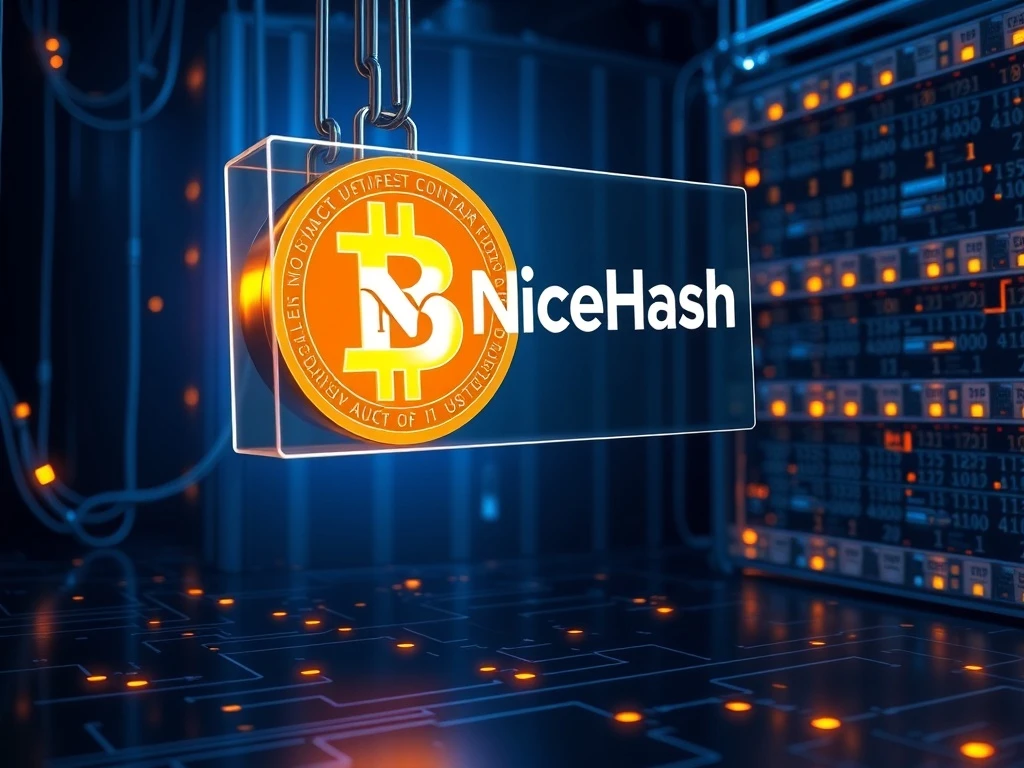
In late 2025, the cryptocurrency community witnessed a fascinating episode that revealed fundamental truths about Bitcoin mining attribution when two untagged blocks sparked widespread speculation about a solo miner striking the proverbial Bitcoin lottery. This incident, centered around blocks 932129 and 932167, ultimately led NiceHash to clarify their origin, highlighting significant gaps in how the market interprets on-chain data and the persistent myths surrounding solo mining success.
The Untagged Bitcoin Blocks Phenomenon
Social media platforms erupted with speculation on October 23, 2025, when blockchain explorers displayed two consecutive Bitcoin blocks without visible pool identification. Typically, mining pools tag their blocks with recognizable identifiers in the coinbase transaction, allowing services like mempool.space and Blockchain.com to attribute blocks correctly. However, when blocks 932129 and 932167 appeared without these markers, the cryptocurrency community quickly jumped to conclusions.
Also read: AAVE Exchange Balances Surge to 2.23M, Signaling Intensifying Sell Pressure
Many observers immediately assumed a solo miner had successfully mined these blocks independently, triggering the familiar “Bitcoin lottery” narrative where individual miners beat astronomical odds to claim the full 3.125 BTC block reward plus fees. This assumption gained traction rapidly across Twitter, Reddit, and specialized crypto forums, demonstrating how quickly unverified narratives can spread in digital asset communities.
The Technical Reality Behind Block Attribution
Blockchain attribution operates through voluntary metadata rather than protocol-enforced identification. Mining pools typically include their names in the coinbase transaction’s input field, but this practice remains optional rather than mandatory. When this field appears empty or contains unfamiliar data, blockchain explorers may display blocks as “unknown” or “untagged,” creating immediate ambiguity.
Also read: BYDFi Simplifies Crypto: How the Exchange Is Opening Trading to Everyone in 2026
NiceHash CEO Sasa Coh explained the technical reality in an exclusive statement to Crypto News Insights: “The misconception here is only that the blocks were not labeled by mempool, though they were tagged with NiceHashMining. We did not want to stir up any speculation.” This clarification revealed that the blocks contained identification that certain explorers simply failed to recognize or display properly.
NiceHash’s Internal Testing Revealed
NiceHash operates fundamentally differently from traditional mining pools. The company runs a hashrate marketplace connecting sellers of computational power with buyers seeking mining capacity. This unique position in the mining ecosystem means NiceHash occasionally mines blocks directly during product development and testing phases.
Coh confirmed that both untagged blocks resulted from internal testing for an upcoming product suite. “We cannot disclose any details yet, but we are working on a new set of products that are going to provide a full suite of functionalities on top of the existing marketplace,” he stated. The company mined two additional blocks the following day, further demonstrating their active development in mining infrastructure.
The Solo Mining Reality Check
The incident prompted renewed discussion about solo mining viability in 2025. While technically possible, solo mining represents an extreme statistical challenge given Bitcoin’s current network difficulty. The probability of any single mining device finding a block independently approaches lottery-like odds, making consistent profitability nearly impossible for individual operators.
Coh provided concrete data about NiceHash’s involvement in solo mining: “Easy Mining at NiceHash was involved in 17 out of the total 36 mined solo blocks in 2025.” This statistic reveals that even successful solo mining often involves specialized services rather than completely independent operations. The table below illustrates the dramatic contrast between solo and pool mining approaches:
| Mining Type | Reward Structure | Payout Frequency | Variance Level | Typical Participants |
|---|---|---|---|---|
| Solo Mining | Full block reward | Highly irregular | Extremely high | Hobbyists, specialized services |
| Pool Mining | Proportional shares | Regular (daily/weekly) | Low to moderate | Professional miners, institutions |
Institutional Mining Challenges in 2025
The 2024 Bitcoin halving significantly impacted mining economics, reducing block rewards from 6.25 to 3.125 BTC. This 50% reduction in primary revenue forced institutional mining operations to implement sophisticated strategies for survival and profitability. Major mining companies now employ several approaches to maintain operations:
- Energy diversification incorporating renewable sources
- Geographic optimization for regulatory and cost advantages
- Revenue stream expansion into AI and high-performance computing
- Advanced hedging strategies against Bitcoin price volatility
- Equipment efficiency maximization through liquid cooling and optimization
These institutional realities contrast sharply with the romanticized solo miner narrative. Professional operations cannot rely on chance or lottery-like events for sustainability. Instead, they deploy industrial-scale infrastructure with carefully calculated risk management and predictable revenue models.
Blockchain Transparency Limitations
The NiceHash incident exposed fundamental limitations in blockchain transparency. While Bitcoin’s ledger provides complete transaction visibility, metadata interpretation depends heavily on third-party services and conventions rather than protocol guarantees. This creates several important implications for market participants:
First, attribution gaps can lead to market misinformation when observers draw incorrect conclusions from incomplete data. Second, the incident demonstrates how narrative formation in cryptocurrency often outpaces verification. Third, it highlights the need for improved standardization in block identification practices across the mining industry.
The Evolution of Mining Attribution Standards
Since Bitcoin’s early days, mining attribution has evolved from complete anonymity to increasing transparency. Early miners rarely identified themselves, making block origins completely mysterious. As mining professionalized and pools emerged, voluntary tagging became standard practice for marketing and transparency purposes.
In 2025, several developments are pushing attribution toward greater standardization:
- Improved explorer algorithms that recognize more pool identifiers
- Industry initiatives promoting consistent tagging practices
- Regulatory pressure in certain jurisdictions requiring identification
- Academic research developing more sophisticated attribution methods
Despite these advances, the NiceHash incident demonstrates that attribution remains imperfect. When new entities enter mining or existing players develop new products, identification gaps can temporarily reappear, potentially triggering market speculation.
Market Psychology and Bitcoin Narratives
The rapid spread of the “solo miner lottery” narrative reveals enduring psychological patterns in cryptocurrency markets. Several factors contribute to this phenomenon:
The human brain naturally seeks patterns and compelling stories, especially around sudden wealth events. Bitcoin’s history contains genuine rags-to-riches stories that reinforce lottery-style thinking. Social media algorithms prioritize engaging content, which often means amplifying dramatic narratives over nuanced explanations.
This psychological field creates fertile ground for misinformation when combined with technical ambiguities like untagged blocks. The NiceHash clarification provides a valuable case study in how cryptocurrency communities can balance healthy skepticism with technical understanding.
Conclusion
The NiceHash untagged blocks incident of 2025 offers critical insights into Bitcoin mining attribution, market psychology, and blockchain transparency. While initially sparking solo miner speculation, the reality involved internal testing for upcoming products, highlighting how quickly assumptions can form around incomplete on-chain data. This episode underscores the importance of verification in cryptocurrency reporting and the need for continued improvement in mining attribution standards. As Bitcoin mining evolves toward greater institutionalization and professionalism, understanding these attribution mechanisms becomes increasingly vital for accurate market analysis and informed participation in the cryptocurrency ecosystem.
FAQs
Q1: What caused the Bitcoin blocks to appear untagged?
The blocks contained NiceHash identification that certain blockchain explorers failed to recognize or display properly, not because they were actually untagged in the blockchain data itself.
Q2: How common is solo mining in 2025?
Extremely rare. Only 36 solo-mined blocks occurred in 2025, with NiceHash’s Easy Mining service involved in 17 of those, representing specialized operations rather than typical individual miners.
Q3: Why do mining pools tag their blocks?
Pools use tags for marketing, transparency, and community recognition. While voluntary, tagging has become standard practice to help blockchain explorers attribute blocks correctly.
Q4: Can blocks be completely anonymous on Bitcoin?
Technically yes, since tagging remains optional. However, sophisticated analysis can often trace blocks to specific miners or pools through other on-chain patterns and external data.
Q5: How has Bitcoin mining changed since the 2024 halving?
The halving reduced block rewards by 50%, forcing miners to improve efficiency, diversify revenue streams, and implement more sophisticated business models to maintain profitability amid increasing competition.

This article was produced with AI assistance and reviewed by our editorial team for accuracy and quality.