Neynar acquires Farcaster in a novel Web3 consolidation that reshapes decentralized social networking
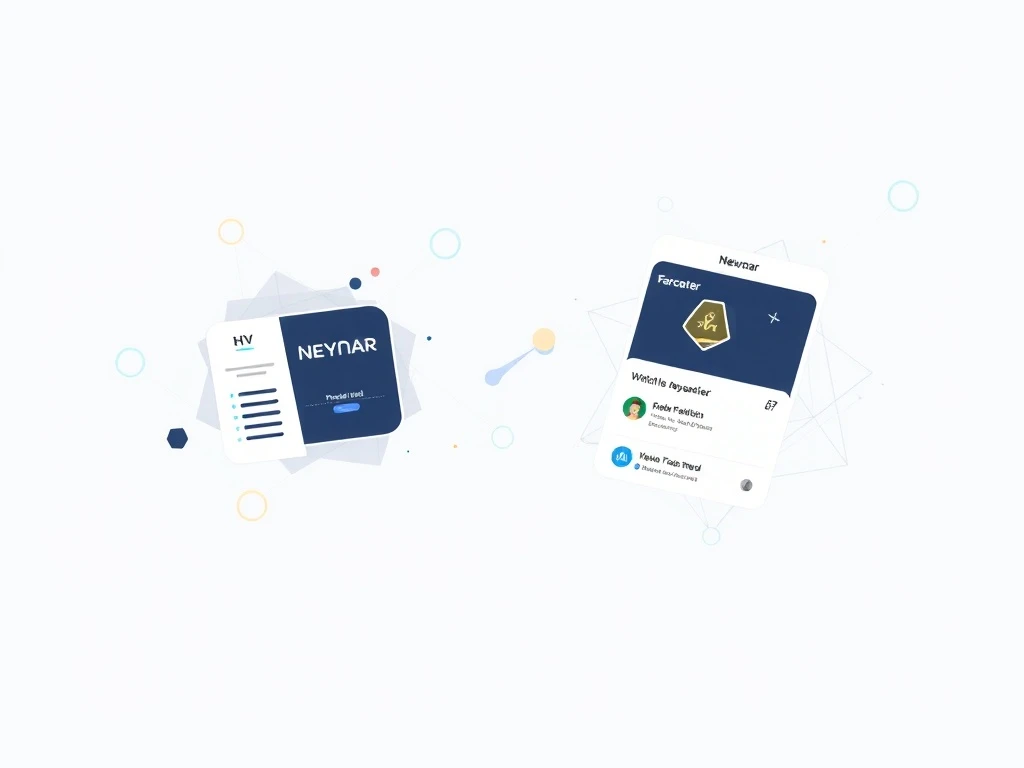
In a move that signals a major consolidation within the decentralized technology sector, Web3 infrastructure builder Neynar has announced its definitive acquisition of the prominent decentralized social media protocol Feycaster. This strategic acquisition, confirmed on March 21, 2025, grants Neynar administrative control over Farcaster’s core applications and marks a central moment for user-owned social networking. Consequently, the industry is now closely watching how this integration will influence developer tools and end-user experiences across the burgeoning Web3 market.
Neynar acquires Farcaster: A strategic Web3 power play
The acquisition represents a logical convergence of complementary forces within the decentralized web. Neynar, established as a critical backend infrastructure provider, offers a suite of developer-focused APIs and services that power applications on networks like Farcaster. Meanwhile, Farcaster itself operates as a permissionless social protocol, allowing developers to build independent clients—or “frontends”—on a shared, user-controlled social graph. By bringing these entities under one administrative umbrella, the deal potentially streamlines development and accelerates platform growth. However, the undisclosed financial terms surrounding the transaction, contrasted with Farcaster’s reported $1 billion valuation, invite significant analysis regarding the deal’s structure and future revenue models.
Also read: Bitcoin Capital Rotation Triggers Critical Signal, Points to $41,400 Price Floor
Industry analysts immediately recognized the transaction’s profound implications. “This isn’t just a company buying another app,” noted Dr. Anya Sharma, a technology governance researcher at the Stanford Center for Internet and Society, whose work focuses on decentralized networks. “It’s a foundational infrastructure layer merging with a premier social protocol. The primary challenge will be maintaining Farcaster’s credibly neutral and permissionless ethos while employing Neynar’s resources for scaling and usability.” This balance between growth and decentralization principles forms the core narrative of the acquisition.
The technical and philosophical integration challenge
From a technical standpoint, Neynar’s existing tools—such as its high-performance hubs for data storage and its APIs for fetching casts and profiles—are already deeply integrated with the Farcaster protocol. Therefore, the administrative shift may result in more tightly coupled optimizations. For instance, developers could see enhanced reliability and new feature rollouts for building social applications. Conversely, the community will scrutinize any changes to protocol governance or client neutrality. Historically, decentralized networks like Ethereum thrive through client diversity, where multiple independent teams build software that interacts with the same core protocol. Neynar’s leadership has consistently emphasized its commitment to this principle.
Decentralized social media sector undergoes seismic shift
This acquisition occurs within a rapidly evolving competitive arena. The broader decentralized social (DeSo) space includes other protocols like Lens Protocol and Bluesky’s AT Protocol. Each offers a different technical approach to solving the central problem of platform lock-in and data ownership. The table below provides a concise comparison of key players following this deal.
| Protocol/Entity | Key Differentiator | Primary Backer/Steward | Status |
|---|---|---|---|
| Farcaster | Sufficiently decentralized protocol with a focus on a shared social graph and client choice. | Neynar (Post-Acquisition) | Active, high-growth phase. |
| Lens Protocol | NFT-based social graph profiles, strong DeFi integration, built on Polygon. | Aave Companies | Active development, expanding ecosystem. |
| Bluesky (AT Protocol) | Authenticated Transfer (AT) Protocol, federation-focused, originating from Twitter’s founder. | Bluesky PBC | Public web app, growing user base. |
Furthermore, the deal underscores a maturation phase for Web3. Early-stage funding often fuels protocol development, but sustainable operational models require sturdy infrastructure and clear paths to monetization. Neynar’s acquisition suggests a vertical integration strategy, controlling both the foundational tools and a major consumer-facing protocol built upon them. This model could enhance efficiency but also concentrates influence, a point of discussion for a community that values decentralization above all.
Evidence of a maturing market phase
Data from the past 24 months supports this trend of consolidation. Developer activity on Farcaster, measured by unique repositories and commits on platforms like GitHub, saw a 300% increase year-over-year prior to the announcement. Simultaneously, venture funding for broader Web3 social infrastructure projects plateaued, indicating a shift from speculative investment to strategic mergers and operational scaling. This acquisition fits squarely within that observed market correction, moving resources towards entities demonstrating real traction and viable technology stacks.
Immediate impacts and future roadmap for developers and users
For the existing ecosystem of Farcaster builders and its daily active users, the immediate changes may be subtle. Neynar has publicly committed to a fluid transition. Key areas of focus will likely include:
- Enhanced API Stability and Rate Limits: Developers can expect more reliable and scalable access to network data.
- Accelerated Protocol Development: Roadmap features, such as improved storage mechanics or new engagement primitives, may see faster iteration.
- Business Model Clarification: The need to support a billion-dollar asset will pressure Neynar to articulate sustainable monetization, potentially through premium enterprise APIs or service tiers, while keeping core protocol access free.
For end-users on popular Farcaster clients like Warpcast, the experience should remain consistent in the short term. The long-term promise, however, is a more solid and feature-rich network. Ultimately, the success metric will be whether user growth continues and new, innovative applications emerge from developers empowered by a stronger, unified backend.
Conclusion
The acquisition of Farcaster by Neynar marks a definitive inflection point for Web3 social networking. This strategic move consolidates critical infrastructure with a leading social protocol, aiming to drive the next wave of scalable, user-centric applications. While the financial details remain confidential, the strategic intent is clear: to create a more cohesive and powerful stack for decentralized social development. The broader industry will now observe how Neynar navigates the inherent tension between centralized administrative efficiency and the decentralized, permissionless ideals that attracted users to Farcaster in the first place. The outcome of this integration will significantly influence the trajectory of decentralized social media for years to come.
FAQs
Q1: What does Neynar do, and why did it acquire Farcaster?
Neynar provides essential backend infrastructure and APIs for building on decentralized networks like Farcaster. The acquisition allows it to align administrative control of a major social protocol with its existing developer tools, aiming to accelerate growth and improve the overall stack.
Q2: Will Farcaster become less decentralized because of this deal?
The core Farcaster protocol remains permissionless and open-source. The acquisition grants Neynar administrative control over certain applications and development resources, not ownership of the underlying decentralized network. The community and multiple independent client developers will continue to steward the protocol’s decentralized nature.
Q3: How will this affect current Farcaster users on apps like Warpcast?
For most users, the day-to-day experience should not change immediately. The long-term goal is to improve network performance, reliability, and the pace of new feature development, which should benefit all applications built on Farcaster.
Q4: What was Farcaster’s valuation, and why weren’t the financial terms disclosed?
Farcaster was reportedly valued at $1 billion. Private companies often do not disclose exact financial terms of acquisitions. The structure may involve stock, cash, or earn-outs based on future performance, details typically kept confidential between the parties.
Q5: What does this mean for other decentralized social networks like Lens or Bluesky?
This consolidation validates the Web3 social sector but also increases competition. It sets a precedent for vertical integration of tools and protocols. Other networks may pursue similar partnerships or differentiate further through unique features, governance models, or integrations to maintain their competitive edge.

This article was produced with AI assistance and reviewed by our editorial team for accuracy and quality.