Polymarket Nevada Restraining Order Sparks Critical Showdown Over CFTC Control
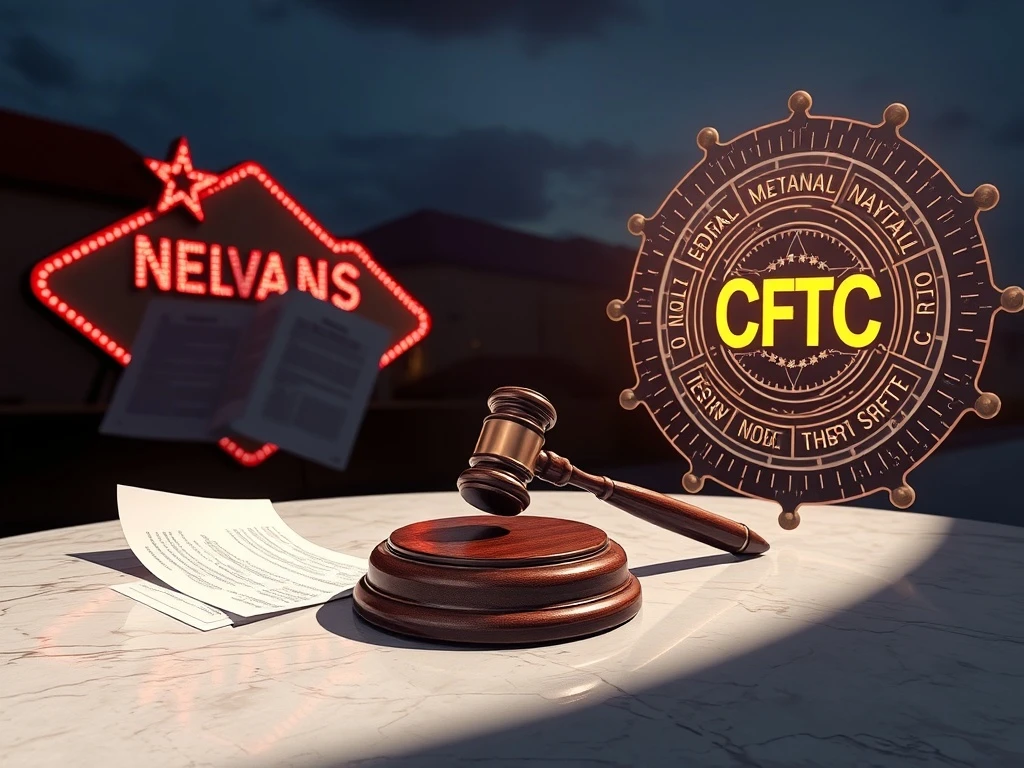
A Nevada court has delivered a significant blow to blockchain prediction market Polymarket, issuing a temporary restraining order that directly challenges the Commodity Futures Trading Commission’s claimed exclusive jurisdiction and igniting a important legal battle over whether event contracts constitute gambling or regulated financial products. This February 2025 development represents a important moment in the ongoing regulatory clash between state gambling authorities and federal commodities regulators, with profound implications for the entire prediction markets industry.
Nevada Court Issues Restraining Order Against Polymarket
A Nevada state judge granted the Nevada Gaming Control Board a 14-day temporary restraining order against Polymarket operator Blockratize on Thursday. Consequently, the court has barred the platform from offering event-based contracts to Nevada residents while the case develops. The judge scheduled a preliminary injunction hearing for February 11, 2025. Importantly, the order relies on Nevada gambling statutes, finding at this preliminary stage that Polymarket’s sports and other event markets constitute unlicensed wagering rather than regulated financial products.
Also read: Bitcoin ETF Outflows Surge: Investors Pull Billions From Crypto Funds
The court cited “immediate” and “irreparable” harm to Nevada’s ability to police betting integrity, prevent underage gambling, and maintain suitability standards if the platform continued operating without a gaming license. Furthermore, the judge rejected Blockratize’s contention that the Commodity Exchange Act gives the CFTC exclusive jurisdiction over its event contracts. Instead, the court concluded that Nevada retains the authority to apply its own gaming laws alongside federal regulation.
Legal Precedent and Immediate Impacts
This ruling establishes several critical legal precedents. First, it affirms that states can exercise concurrent jurisdiction over prediction markets despite CFTC oversight. Second, it prioritizes consumer protection concerns over technological innovation arguments. Third, it creates immediate operational challenges for Polymarket, which must now implement geofencing technology to block Nevada users or face potential contempt charges. Sports and gaming lawyer Daniel Wallach provided the court order to journalists, highlighting the legal community’s close attention to this developing case.
Also read: Bitcoin Price Prediction: Analyzing BTC's Reaction to Fed Policy and the Emerging Pepeto Presale
CFTC Jurisdiction Faces State-Level Challenge
The Nevada case represents the most direct challenge yet to the CFTC’s asserted authority over prediction markets. Since 2022, the CFTC has taken an increasingly active role in regulating event contracts, designating certain platforms as contract markets under the Commodity Exchange Act. However, states have consistently pushed back, arguing that prediction markets involving sports outcomes or political events fundamentally constitute gambling rather than legitimate financial derivatives.
This jurisdictional conflict stems from several key factors:
- Regulatory Gap: Prediction markets exist in a legal gray area between traditional financial derivatives and gambling products
- Consumer Protection: States emphasize age verification and responsible gaming tools that CFTC-regulated platforms may lack
- Revenue Protection: Licensed gambling operators in states like Nevada face potential revenue loss from unregulated competitors
- Technological Innovation: Blockchain technology enables global platforms that challenge traditional jurisdictional boundaries
Historical Context of Regulatory Conflict
The current conflict has deep historical roots. Traditional prediction markets have faced regulatory scrutiny for decades, with the Iowa Electronic Markets operating under specific CFTC no-action letters since 1992. However, blockchain-based platforms like Polymarket represent a fundamentally different scale and accessibility. The CFTC first asserted jurisdiction over event contracts in 2014 through its settlement with Intrade, establishing that certain prediction market contracts qualify as prohibited off-exchange binary options. This precedent now faces its most serious test as states increasingly assert their regulatory authority.
Tennessee and Other States Join Enforcement Push
Nevada’s action follows a broader enforcement pattern emerging across multiple states. Last month, Tennessee’s Sports Wagering Council ordered Kalshi, Polymarket, and Crypto.com’s North American Derivatives Exchange to halt sports event contracts for state residents. The council also mandated that these platforms void Tennessee trades and refund users. Tennessee regulators argued forcefully that these products constitute sports bets subject to state gambling regulation rather than financial derivatives.
The Tennessee order emphasized significant consumer protection gaps, including inadequate age verification systems and insufficient responsible gaming tools. These concerns mirror those raised by Nevada authorities and suggest a coordinated approach among state regulators. The following table illustrates the growing state-level enforcement pattern:
| State | Action Date | Platforms Affected | Primary Rationale |
|---|---|---|---|
| Nevada | February 2025 | Polymarket | Unlicensed gambling, consumer protection |
| Tennessee | January 2025 | Kalshi, Polymarket, Nadex | Sports betting regulation, age verification |
| Connecticut | December 2024 | Coinbase/Kalshi (lawsuit) | Jurisdictional challenge |
| Maryland | November 2024 | Kalshi | Adverse ruling on injunction |
Industry Response and Legal Strategy
The prediction markets industry has responded with aggressive legal strategies. In December 2024, Coinbase sued regulators in Connecticut, Illinois, and Michigan, asking federal courts to declare that prediction markets listed on CFTC-regulated venues fall under the Commodity Exchange Act and the CFTC’s claimed exclusive jurisdiction. This legal approach seeks to establish federal preemption over 50 separate state gambling codes, arguing that inconsistent state regulation creates an impossible compliance burden for national platforms.
Broader Implications for Prediction Markets Industry
The Nevada restraining order carries significant implications beyond Polymarket’s immediate operations. First, it creates substantial legal uncertainty for all prediction market platforms operating in the United States. Second, it may accelerate congressional action to clarify the regulatory status of event contracts. Third, it could force platforms to choose between pursuing state gambling licenses or restricting operations to CFTC-compliant products only.
Several key developments will shape the industry’s future:
- February 11 Hearing: The preliminary injunction hearing will provide clearer legal guidance
- CFTC Response: The commission may intervene to defend its jurisdictional claims
- Other State Actions: Additional states may follow Nevada and Tennessee’s lead
- Platform Adaptation: Operators may modify product offerings to address regulatory concerns
- Federal Legislation: Congressional committees may propose clarifying legislation
Expert Perspectives on Regulatory Future
Legal experts remain divided on the ultimate outcome of this jurisdictional conflict. Some argue that the CFTC’s expertise in derivatives markets makes it the appropriate regulator for event contracts with economic purposes. Others contend that prediction markets involving sports or entertainment outcomes fundamentally differ from traditional financial derivatives and properly belong under state gambling authorities. The resolution may require either Supreme Court intervention or congressional action to establish clear jurisdictional boundaries.
Consumer Protection Remains Central Concern
Both state regulators and the CFTC emphasize consumer protection, but their approaches differ significantly. State gambling authorities typically mandate resilient age verification, self-exclusion programs, spending limits, and problem gambling resources. CFTC regulation focuses more on market integrity, transparency, and anti-fraud measures. The Nevada court specifically highlighted concerns about underage access and the absence of responsible gaming tools on Polymarket’s platform.
This consumer protection focus reflects broader regulatory trends in cryptocurrency and blockchain industries. Regulators increasingly demand that innovative financial technologies incorporate traditional safeguards. Consequently, prediction market platforms may need to implement more comprehensive compliance systems regardless of which regulatory framework ultimately prevails.
Conclusion
The Nevada court’s temporary restraining order against Polymarket represents a critical juncture in the evolving regulation of prediction markets. This decision directly challenges the CFTC’s claimed exclusive jurisdiction and affirms states’ authority to apply gambling laws to event contracts. The February 11 preliminary injunction hearing will provide further clarity, but the broader conflict between state and federal regulators will likely continue through multiple legal venues. Ultimately, this case may force Congress or higher courts to establish clear jurisdictional boundaries for blockchain-based prediction markets, balancing innovation with consumer protection and regulatory certainty.
FAQs
Q1: What exactly did the Nevada court order against Polymarket?
The Nevada court granted a 14-day temporary restraining order that prohibits Polymarket from offering event-based contracts to Nevada residents. The court found preliminary evidence that these contracts constitute unlicensed gambling under state law rather than regulated financial products.
Q2: How does this affect the CFTC’s authority over prediction markets?
The ruling challenges the CFTC’s claimed exclusive jurisdiction by affirming that states can apply their own gambling laws alongside federal regulation. This creates potential conflicts between state and federal regulatory approaches that may require higher court resolution.
Q3: What are the main consumer protection concerns raised by Nevada regulators?
Nevada authorities highlighted inadequate age verification systems, lack of responsible gaming tools, absence of spending limits, and insufficient problem gambling resources on Polymarket’s platform compared to licensed gambling operators.
Q4: How have other states responded to prediction markets?
Tennessee recently ordered multiple platforms to halt operations, while Connecticut, Illinois, Michigan, Maryland, and New Jersey have taken various regulatory actions or faced legal challenges regarding prediction market jurisdiction.
Q5: What happens next in the legal process?
A preliminary injunction hearing is scheduled for February 11, 2025. This hearing will determine whether the temporary restraining order becomes a longer-term injunction while the case proceeds through the legal system, potentially to higher courts.

This article was produced with AI assistance and reviewed by our editorial team for accuracy and quality.