NCAA Demands CFTC Halt Sports Prediction Markets in Explosive Regulatory Clash
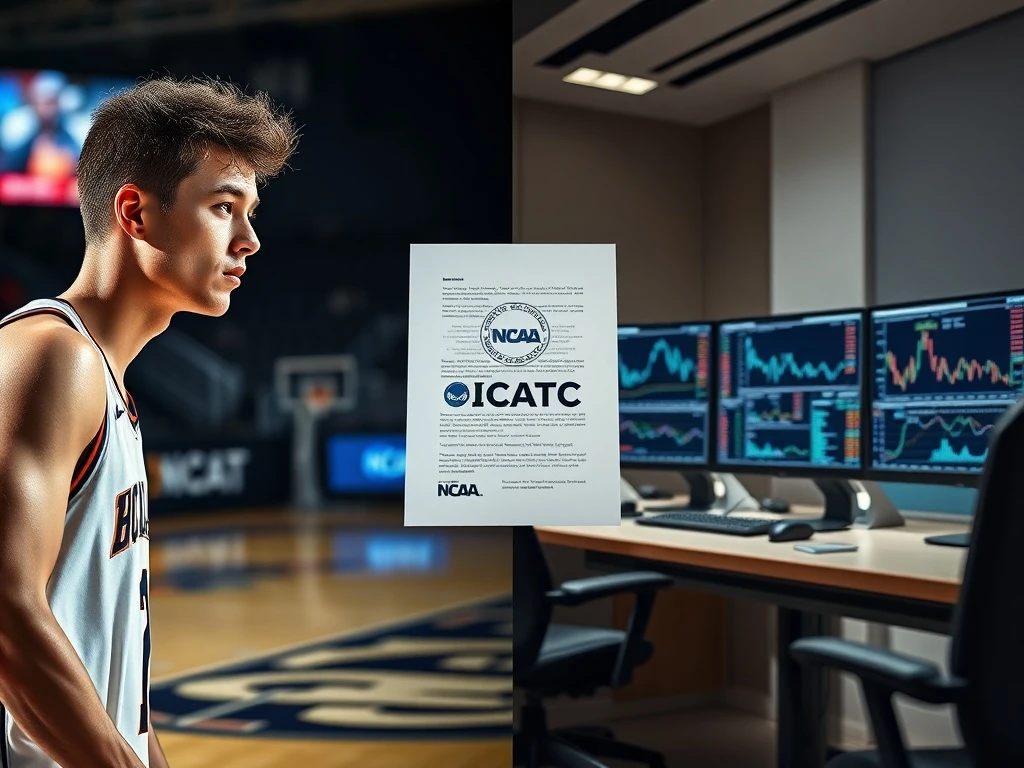
In a decisive move that pits collegiate sports governance against financial market regulators, the National Collegiate Athletic Association (NCAA) has formally requested the Commodity Futures Trading Commission (CFTC) to immediately suspend all sports prediction markets. This urgent plea, reported first by CoinDesk on March 15, 2025, from the NCAA’s Indianapolis headquarters, signals a major escalation in the debate over how to regulate the burgeoning world of event-based financial contracts. The NCAA argues these markets, which allow users to speculate on sports outcomes, pose a severe and unmitigated threat to the well-being of student-athletes and the fundamental integrity of competition itself.
NCAA CFTC Sports Prediction Markets Face Immediate Scrutiny
The NCAA’s detailed letter to the CFTC presents a stark warning. Consequently, the organization contends that these prediction platforms function almost identically to traditional sports betting. However, they critically lack the comprehensive consumer safeguards mandated for licensed sportsbooks. Specifically, the NCAA highlights a significant regulatory gap. While the Commodity Exchange Act provides a federal framework for these derivative markets, it does not enforce the strict state-level regulations governing legal sports betting.
This jurisdictional loophole creates a dangerous environment. For instance, platforms can potentially operate without verifying user age, restricting aggressive advertising, or implementing rigorous systems to monitor for match-fixing and insider trading. “The current sector is a wild west,” stated a senior NCAA official familiar with the filing, who spoke on condition of anonymity. “We have a duty to protect our students from exploitation and our games from corruption.” The association is calling for a temporary but complete halt to these markets. Their goal is to allow time for the development of a strong, properly regulated system that includes input from sports governing bodies.
The Regulatory Battle Over Sports Betting and Derivatives
This conflict did not emerge overnight. It represents the latest front in a long-running struggle to define the legal boundaries of wagering on sports outcomes. The 2018 Supreme Court decision in Murphy v. NCAA overturned the federal ban on sports betting, empowering states to legalize and regulate it. Since then, 38 states and Washington D.C. have launched some form of legal sports betting, generating billions in revenue and establishing detailed rules for operator conduct, age verification, and integrity monitoring.
Also read: Bitcoin Treasury Companies Face New Pressure as US-Iran Tensions Shift
Simultaneously, a parallel market evolved. Prediction markets like Polymarket and Kalshi allow users to buy and sell shares based on the outcome of real-world events, including sports. These platforms argue they are trading platforms for “event contracts,” not gambling sites, and thus fall under the CFTC’s purview for regulating derivatives. The table below illustrates the key regulatory distinctions highlighted by the NCAA:
| Regulatory Aspect | State-Licensed Sports Betting | CFTC-Regulated Prediction Markets |
|---|---|---|
| Age Verification | Mandatory (21+ in most states) | Not federally mandated by CFTC rules |
| Advertising Restrictions | Heavily regulated by states | Largely unregulated at the federal level |
| Integrity Monitoring | Required partnerships with leagues & regulators | Left to platform discretion |
| Consumer Fund Protection | Often required (e.g., segregated accounts) | Varies by platform |
| Jurisdiction | State Gaming Commissions | Commodity Futures Trading Commission (CFTC) |
This bifurcated system, according to the NCAA’s filing, creates an uneven playing field. It allows prediction markets to offer products that are substantively similar to sports bets while avoiding the stricter consumer protection rules that states impose on their licensees. The association fears this disparity not only harms consumers but also undermines the integrity protocols that leagues and states have painstakingly built.
Expert Analysis on Market Integrity and Athlete Pressure
Sports law and financial regulation experts are closely watching this development. Dr. Anita Vance, a professor of sports law at Georgetown University, explains the core concern. “The integrity risk isn’t necessarily higher with prediction markets from a technical standpoint,” she notes. “However, the regulatory arbitrage—using a federal derivatives framework to avoid state gambling laws—means critical safeguards may be missing. This includes mandatory reporting of suspicious activity to sports integrity units.”
Furthermore, the potential for harm extends beyond game-fixing. The constant speculation on player performance and game outcomes, amplified by easily accessible trading platforms, can create immense psychological pressure on amateur athletes. A 2024 study published in the Journal of Sport and Social Issues found a correlation between the proliferation of betting markets and increased online harassment targeted at college athletes following poor performances. The NCAA’s letter explicitly references this duty of care, arguing that the association must shield its students from becoming the unwitting subjects of a public financial market.
Potential Impacts and the Road Ahead for Prediction Markets
The CFTC now faces a significant policy decision. The commission has historically taken a cautious but permissive approach to event contracts. For example, in 2022, it allowed Kalshi to offer political election contracts, setting a precedent. Denying the NCAA’s request would affirm the status quo, potentially inviting Congressional scrutiny. Conversely, granting a halt would disrupt a growing sector of the fintech industry and likely trigger legal challenges from prediction market operators.
The immediate impacts of the NCAA’s action are already unfolding:
- Market Volatility: Trading volumes on sports-related prediction contracts have shown increased volatility following the news.
- Political Attention: Several members of Congress have issued statements, indicating potential hearings on the topic.
- Operator Response: Major prediction market platforms are preparing legal and lobbying defenses, arguing their models provide valuable price discovery and are distinct from gambling.
- State Reaction: State gaming commissions, which have seen tax revenue from legal sports betting, may join the NCAA in calling for a more level regulatory field.
This situation also raises broader questions about the convergence of finance, technology, and sports. As these markets grow, other professional leagues like the NFL or NBA may follow the NCAA’s lead. The outcome of this clash could establish a definitive regulatory template for all event-based financial products in the United States.
Conclusion
The NCAA’s formal request for the CFTC to halt sports prediction markets marks a major moment in the intersection of athletics, finance, and regulation. This move underscores a fundamental tension between innovative financial technologies and the traditional safeguards built to protect sports integrity and vulnerable participants. The core issue revolves around whether these markets represent harmless financial derivatives or unregulated gambling that bypasses critical consumer protections. The CFTC’s response will not only determine the immediate fate of these platforms but will also set a critical precedent for how society governs the speculative analysis of real-world events. The resolution of this explosive regulatory clash will have lasting implications for student-athletes, consumers, and the evolving field of both sports and financial markets.
FAQs
Q1: What exactly are the sports prediction markets the NCAA wants halted?
These are online platforms, often blockchain-based, where users can buy and sell “shares” in the outcome of sporting events. For example, you could buy a share that pays out if a specific team wins. They are regulated as event contracts or swaps by the CFTC, not as sports bets by state gaming commissions.
Q2: Why is the NCAA targeting the CFTC and not the individual platforms?
The NCAA is targeting the regulator because the CFTC holds the federal authority to approve or disapprove these markets. By asking the commission to use its regulatory power to halt them, the NCAA seeks a systemic solution rather than pursuing individual platforms one by one, which would be less efficient.
Q3: How are these prediction markets different from betting on FanDuel or DraftKings?
The core activity—wagering on an outcome—is similar. The key difference is regulatory classification. FanDuel and DraftKings operate under state gambling licenses with strict rules on age, advertising, and integrity. Prediction markets operate under federal CFTC rules for derivatives, which currently lack equivalent sports-specific consumer protections.
Q4: What happens if the CFTC agrees to the NCAA’s request?
If the CFTC issues an order to halt, platforms offering sports prediction contracts would have to suspend those markets immediately. This would likely lead to legal challenges from the platforms, arguing the CFTC is overstepping its authority or acting arbitrarily.
Q5: Does this affect cryptocurrency-based prediction markets more than others?
While many prominent prediction markets use cryptocurrency for transactions, the NCAA’s request is based on the nature of the contract, not the payment method. The regulatory concerns about age verification, advertising, and integrity monitoring apply equally to any platform offering these sports-based event contracts, regardless of whether they use dollars or digital assets.

This article was produced with AI assistance and reviewed by our editorial team for accuracy and quality.