NATO Arctic Security: Critical Alliance Moves to Block Russian and Chinese Influence
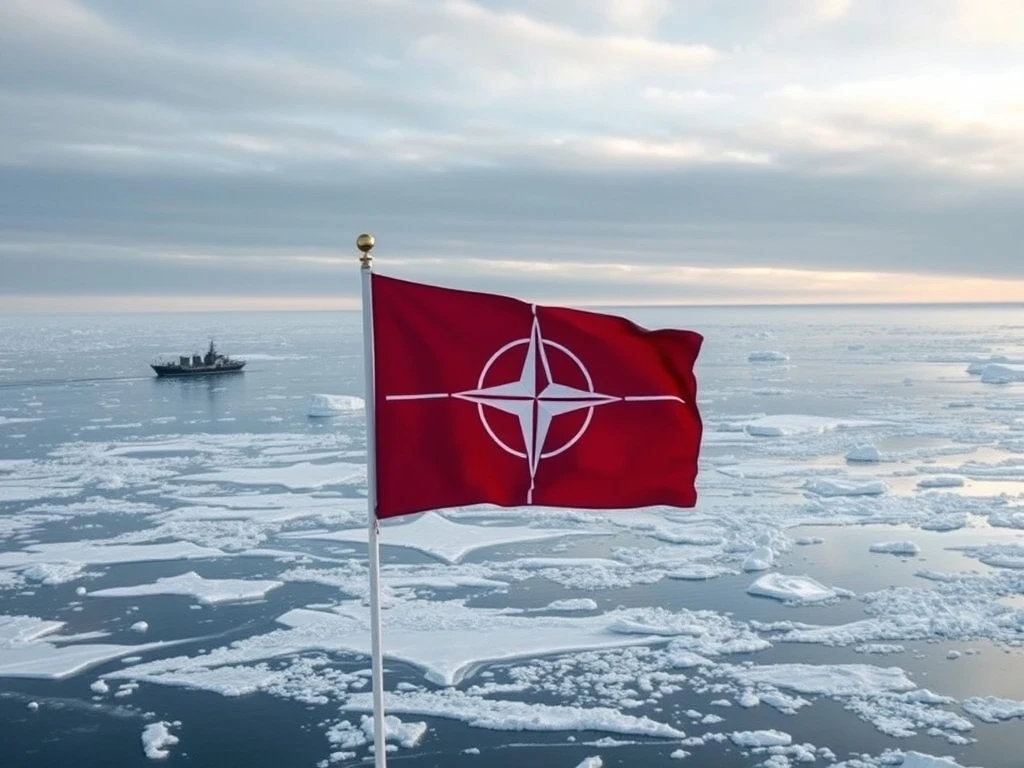
BRUSSELS, Belgium – NATO allies are now accelerating critical discussions about establishing a comprehensive Arctic security framework, a strategic move directly aimed at countering expanding Russian and Chinese influence in the resource-rich polar region. According to a recent statement from an alliance spokesperson, these intensified talks, which build upon earlier concepts mentioned by former U.S. President Donald Trump, focus on a collective defense posture. The primary objective is to prevent Moscow and Beijing from establishing a permanent economic or military foothold, particularly in Greenland. This development marks a significant escalation in the geopolitical contest for the High North, an area undergoing rapid transformation due to climate change and strategic competition.
NATO Arctic Security Framework Takes Shape
The proposed Arctic security framework represents a coordinated shift in alliance strategy. Consequently, the seven NATO member states with Arctic territories—the United States, Canada, Denmark, Norway, Iceland, Sweden, and Finland—will play pivotal roles. The spokesperson emphasized that cooperation will extend specifically to Denmark and Greenland, an autonomous Danish territory. This focus on Greenland is strategic, given its vast size and crucial geographic position between the North Atlantic and the Arctic Ocean. Furthermore, the framework seeks to integrate military, economic, and environmental security measures into a unified approach.
Historically, the Arctic has been a zone of low tension, governed by cooperative agreements like the Arctic Council. However, Russia’s substantial military modernization in its northern regions, including the reactivation of Soviet-era bases and deployment of advanced missile systems, has altered the security calculus. Simultaneously, China’s self-declared status as a “near-Arctic state” and its investments in polar research, infrastructure, and resource projects have raised concerns among Western allies. These actions collectively signal a new era of strategic competition in a region once defined by scientific collaboration.
Countering Russian and Chinese Strategic Ambitions
Russia maintains the longest Arctic coastline and has consistently asserted its sovereignty over the Northern Sea Route. The Kremlin has invested heavily in its Northern Fleet, coastal defense networks, and air defense systems along its Arctic frontier. For instance, Russia has established new Arctic command structures and renovated numerous airfields and ports. These moves provide Russia with significant power projection capabilities and control over key maritime passages.
Conversely, China’s Arctic strategy, outlined in its 2018 white paper, emphasizes scientific research, economic development through the “Polar Silk Road,” and securing access to energy and mineral resources. Chinese state-owned enterprises have pursued investments in mining and port projects across the Arctic, including in Greenland and Iceland. While officially peaceful, these activities are viewed by NATO analysts as potential vectors for dual-use infrastructure that could support future military logistics or intelligence gathering. The alliance’s new framework directly addresses these layered challenges by promoting collective vigilance and resource-sharing among member states.
Expert Analysis on Geopolitical Implications
Security analysts note that NATO’s renewed Arctic focus is a logical response to a changing strategic environment. “The melting ice caps are opening new sea lanes and revealing untapped resources, making the Arctic a theater of great power competition,” explains Dr. Elina Treyger, a senior fellow at the Center for Strategic and International Studies. “NATO’s move is less about militarization and more about ensuring stability and upholding international norms in the face of revisionist actions.”
Moreover, the involvement of non-Arctic NATO members is crucial. For example, the United Kingdom and France have increased their submarine patrols and cold-weather training exercises. This broader participation underscores the alliance’s understanding that Arctic security is inextricably linked to transatlantic security as a whole. A secure Arctic helps protect the northern flank of North America and Europe, making it a collective defense priority under Article 5 of the NATO treaty.
The Greenland Factor in Alliance Strategy
Greenland occupies a central position in NATO’s Arctic calculations. Its location offers control over maritime approaches to North America and serves as a vital platform for early-warning systems. The United States maintains Thule Air Base in northern Greenland, a key site for space surveillance and missile warning. Recent years have seen reports of Chinese interest in financing airport upgrades and rare-earth mineral mining projects on the island. Although Greenland’s government has stated its foreign policy aligns with Denmark’s, the potential for economic dependency creating political leverage remains a concern for alliance planners.
Therefore, NATO’s framework aims to bolster cooperation with Copenhagen and Nuuk to offer viable, transparent alternatives for Greenland’s development. This includes supporting sustainable infrastructure projects and ensuring security partnerships that respect Greenland’s autonomy while safeguarding allied interests. The strategy is multifaceted, combining diplomatic engagement, economic support, and defensive assurances to preempt coercive tactics by competitors.
Timeline of Escalating Arctic Focus
The evolution of NATO’s Arctic posture has been gradual but unmistakable.
- 2009: NATO conducts its first major Arctic exercise, “Cold Response.”
- 2014: Following Russia’s annexation of Crimea, NATO begins reassessing northern flank security.
- 2018: China publishes its Arctic policy, declaring its “near-Arctic state” status.
- 2019: Then-U.S. President Donald Trump publicly discusses purchasing Greenland, highlighting its strategic value.
- 2022: Finland and Sweden apply for NATO membership, dramatically extending the alliance’s Arctic border with Russia.
- 2024-Present: NATO establishes a new regional defense plan for the Arctic and increases exercise tempo, leading to the current framework discussions.
Operational and Environmental Considerations
Implementing an Arctic security framework presents unique challenges. The extreme environment demands specialized equipment, training, and sustainment capabilities. NATO forces must operate in conditions of extreme cold, limited visibility, and vast distances. Additionally, the alliance must balance security needs with environmental protection in a fragile ecosystem. Military activities, therefore, require careful planning to minimize ecological impact. This dual requirement makes the framework not just a military plan but also a commitment to responsible stewardship, aligning with the concerns of indigenous communities and environmental groups.
Conclusion
In conclusion, NATO’s move to formalize an Arctic security framework signifies a decisive step in adapting to 21st-century geopolitical realities. The alliance aims to deter aggression, ensure stability, and protect the shared interests of member states through collective action. By focusing on Greenland and deepening cooperation among Arctic allies, NATO seeks to present a unified front against efforts by Russia and China to alter the regional balance of power. Ultimately, the success of this NATO Arctic security initiative will depend on sustained political commitment, adequate resource allocation, and a clear-eyed understanding of the complex interplay between military, economic, and environmental factors in the High North.
FAQs
Q1: Why is the Arctic becoming so important for NATO?
A1: The Arctic is gaining strategic importance due to climate change opening new sea routes, competition over vast natural resources, and increased military activities by Russia and China, which challenge regional stability and alliance security.
Q2: What specific role does Greenland play in NATO’s strategy?
A2: Greenland is geographically crucial, sitting astride key maritime approaches. NATO aims to cooperate with Denmark and Greenland to prevent external powers from gaining economic or military leverage there, thus protecting the alliance’s northern flank.
Q3: How is China involved in the Arctic if it’s not an Arctic state?
A3: China engages as a “near-Arctic state” through scientific research, investments in infrastructure and mining (like rare-earth projects in Greenland), and promoting its Polar Silk Road initiative to gain influence and access to resources.
Q4: Is NATO militarizing the Arctic?
A4: NATO states its actions are defensive and reactive, aimed at ensuring stability and upholding international law in response to the significant military build-up by Russia. The focus includes enhanced surveillance, exercises, and preparedness, not offensive posturing.
Q5: What are the main challenges for NATO forces operating in the Arctic?
A5: Key challenges include the extreme cold and harsh weather, vast distances requiring specialized logistics, the need for ice-capable equipment, and the necessity to conduct operations while minimizing environmental impact in a fragile ecosystem.